MinuteRead
30 min
Book summary
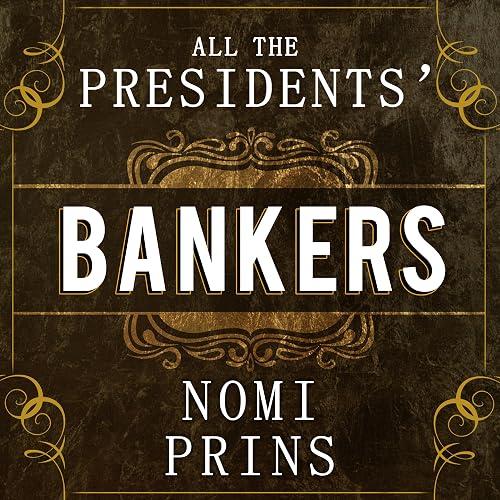
by Nomi Prins
Premium summary · Opens in the app · 30 min read
In the autumn of 1907, the United States government faced a problem it could not solve. A financial panic was spreading through New York, banks were failing, and the Treasury Department lacked the resources to stop the collapse. So the president did what presidents had learned to do in moments of crisis. He turned to a private citizen.
**Author:** Nomi Prins **Estimated Reading Time:** 45 minutes
The hidden history of how America's most powerful bankers shaped presidential decisions, influenced foreign policy, and built a financial system that serves their interests across more than a century. You will discover how the alliance between Wall Street and Washington evolved from the era of J.P. Morgan through the 2008 financial crisis, and why this relationship remains the defining feature of American economic power.
This book is for anyone who wants to understand why financial crises keep happening, why bankers so rarely face consequences, and how the relationship between money and political power truly operates. It is for readers who sense that something fundamental is broken in the American financial system and want to understand the historical roots of that dysfunction.
In the autumn of 1907, the United States government faced a problem it could not solve. A financial panic was spreading through New York, banks were failing, and the Treasury Department lacked the resources to stop the collapse. So the president did what presidents had learned to do in moments of crisis. He turned to a private citizen. J.P. Morgan was not elected. He held no public office. Yet when the financial system teetered on the edge of ruin, it was Morgan who summoned the nation's leading bankers to his library on Madison Avenue, locked the doors, and demanded they contribute to a rescue fund. It was Morgan who decided which institutions would survive and which would fail. It was Morgan, more than any government official, who saved the American economy. This moment captures the central tension that Nomi Prins explores throughout her sweeping history of American finance. The United States presents itself as a democracy where power flows from the people through their elected representatives. But beneath that democratic surface runs a deeper current of influence, one that has shaped American policy for more than a century. The men who control the nation's capital have always had a seat at the table where decisions are made. Prins brings a unique perspective to this story. She spent years working inside the financial system, at Goldman Sachs and Bear Stearns, before leaving to document how that system actually operates. Her insider knowledge allows her to see patterns that outside observers miss. She understands the language of finance, the culture of banking, and the subtle ways that power is exercised far from public view. The story she tells spans more than a hundred years, from the age of the robber barons through two world wars, the Great Depression, the Cold War, and the financial crisis of 2008. Throughout this history, a consistent pattern emerges. Presidents come and go. Political parties rise and fall.…
Continue reading in the MinuteRead app
Get the complete 30-minute summary of All the Presidents' Bankers
Get the complete summary in the appAmerican presidents have consistently relied on powerful bankers to shape economic policy and manage financial crises.
The Federal Reserve was designed in secret by bankers and politicians at Jekyll Island in 1910.
World War I transformed the United States from a debtor to a creditor nation, enhancing the power of American banks.
The stock market crash of 1929 was the predictable result of years of reckless speculation and deregulation.
The Glass-Steagall Act of 1933 separated commercial and investment banking, creating a firewall that stabilized the fina
The Bretton Woods system established the dollar as the world's reserve currency, giving American banks significant advan
"All the Presidents' Bankers" is a strong fit if you want practical ideas around history, economics, politics, especially themes like american presidents have consistently relied on powerful bankers to shape economic policy and manage financial crises; the federal reserve was designed in secret by bankers and politicians at jekyll island in 1910. The MinuteRead summary distills these concepts into a focused read, whether you're deciding whether to buy the book or applying its lessons at work.
Motivated to help readers with by the end of the nineteenth century, Nomi Prins wrote “All the Presidents' Bankers” to package those ideas for a fast, focused read. In “All the Presidents' Bankers”, Nomi Prins focuses on by the end of the nineteenth century. Through “All the Presidents' Bankers”, Nomi Prins distills the core ideas on history into lessons readers can absorb in a single short sitting. Readers turn to this work when they want Nomi Prins's perspective on the subject without working …
Continue Reading
Access the complete 30-minute summary and thousands more nonfiction books in the MinuteRead app.

Continue reading the complete summary in the MinuteRead app.