MinuteRead
30 min
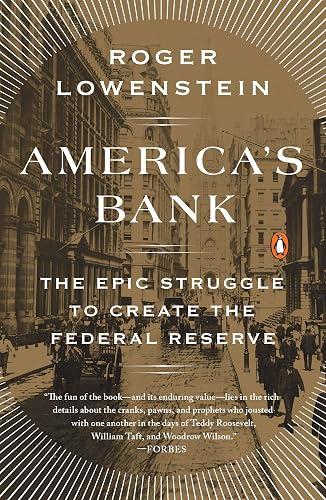
In the autumn of 1907, the United States of America, already the world's largest economy, came within days of financial collapse. Banks across the country were failing. Depositors lined up in the streets to withdraw their money. Businesses could not meet payrolls. The stock market plunged. And in the midst of this chaos, the nation's fate rested not with the government, but with one aging private banker named J. Pierpont Morgan.
**Author:** Roger Lowenstein
**Estimated Reading Time:** 45 minutes
**What You'll Learn:**
- Why America's banking system was uniquely chaotic and unstable before 1913 - How the Panic of 1907 nearly collapsed the entire economy - The secret meeting on Jekyll Island that changed financial history - How political compromise shaped the Federal Reserve's unusual design - Why the fight over central banking reveals enduring tensions in American democracy
**Who This Book Is For:**
This book is for anyone curious about how institutions shape economic life. It speaks to readers interested in financial history, political reform, the roots of modern banking, and the long American struggle to balance democratic ideals with economic necessity. If you have ever wondered why the Federal Reserve exists in its peculiar form, or how a nation so suspicious of centralized power eventually created a central bank, this book will answer those questions.
In the autumn of 1907, the United States of America, already the world's largest economy, came within days of financial collapse. Banks across the country were failing. Depositors lined up in the streets to withdraw their money. Businesses could not meet payrolls. The stock market plunged. And in the midst of this chaos, the nation's fate rested not with the government, but with one aging private banker named J. Pierpont Morgan. Morgan was seventy years old, semi-retired, and suffering from a severe cold when the crisis began. Yet for three weeks, he summoned the country's leading financiers to his private library on Madison Avenue, where he brokered emergency loans, organized rescue packages, and essentially functioned as America's central bank. He did this because no institution existed to do the job. The United States, alone among major industrial nations, had no central banking authority. This was not an accident. It was the product of a long and deliberate national choice. Americans had spent generations dismantling and resisting centralized financial power. Andrew Jackson had killed the Second Bank of the United States in the 1830s. The Civil War had created a national currency but no national banking authority. By the early twentieth century, the country operated with a patchwork of thousands of state and national banks, each issuing its own notes, each holding its own reserves, and none capable of responding to a systemic crisis. The result was a monetary system that was both primitive and dangerous. America had become an industrial powerhouse with the financial architecture of a developing nation. The dollar was not a respected international currency. Financial panics occurred with alarming regularity. And ordinary people paid the price through bank failures, lost savings, and economic depressions. This book tells the story of how that changed. It is a story of crisis and reform,…
Continue reading in the MinuteRead app
Get the complete 30-minute summary of America's Bank
Get the complete summary in the appBefore 1913, America had no central bank and no unified currency, operating with thousands of different bank notes of va
The resistance to central banking was rooted in Andrew Jackson's destruction of the Second Bank and a lasting cultural s
The Panic of 1907 exposed the system's weakness, forcing J.P. Morgan to act as a private central bank to save the econom
The Jekyll Island meeting of 1910 brought together bankers and politicians to secretly draft a banking reform plan.
The Money Trust investigation revealed the concentration of financial power in the hands of a few elite bankers.
The progressive movement created the political conditions that made banking reform possible.
"America's Bank" is a strong fit if you want practical ideas around history, economics, finance, especially themes like before 1913, america had no central bank and no unified currency, operating with thousands of different bank notes of va; the resistance to central banking was rooted in andrew jackson's destruction of the second bank and a lasting cultural s. The MinuteRead summary distills these concepts into a focused read, whether you're deciding whether to buy the book or applying its lessons at work.
Motivated to help readers with "America was a monetary Babel with thousands of currencies; each state regulated its own banks and they, Roger Lowenstein wrote “America's Bank” to package those ideas for a fast, focused read. In “America's Bank”, Roger Lowenstein focuses on "America was a monetary Babel with thousands of currencies; each state regulated its own banks and they. Through “America's Bank”, Roger Lowenstein distills the core ideas on history into lessons readers can absorb in a single…
View all summaries by Roger LowensteinContinue Reading
Access the complete 30-minute summary and thousands more nonfiction books in the MinuteRead app.

Continue reading the complete summary in the MinuteRead app.