MinuteRead
30 min
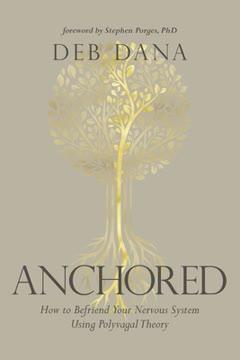
Book summary
by Deb Dana
Premium summary · Opens in the app · 30 min read
There is a moment, often unnoticed, when everything changes. A conversation shifts. A room feels different. Your chest tightens or your shoulders drop. Something inside you decides, before you consciously know it, whether you are safe or in danger. That decision shapes what you think, what you feel, what you say, and what you do next.
**Author:** Deb Dana
**Estimated Reading Time:** 45 minutes
**What You'll Learn:**
- Why your nervous system, not your thoughts, drives most of your reactions - The three evolutionary states that shape every experience you have - How to recognize when you are in safety, fight or flight, or shutdown - Practical ways to anchor yourself in a state of connection and calm - How to reshape old patterns and rewrite the stories you tell yourself - Why co-regulation with others is a biological necessity, not a luxury
**Who This Book Is For:**
Anyone who has ever felt hijacked by their own reactions. Anyone who has wondered why they sometimes lash out, shut down, or feel disconnected from life. Anyone who wants to understand the hidden biology beneath their emotions and build a more resilient, connected way of living.
There is a moment, often unnoticed, when everything changes. A conversation shifts. A room feels different. Your chest tightens or your shoulders drop. Something inside you decides, before you consciously know it, whether you are safe or in danger. That decision shapes what you think, what you feel, what you say, and what you do next. Most of us have been taught that our thoughts drive our experience. We believe that if we can just think differently, we will feel differently. We try to reframe, to stay positive, to talk ourselves out of anxiety or anger or numbness. And sometimes it works, briefly. But then something happens, a tone of voice, a look, a memory, and we find ourselves reacting in ways that seem to come from nowhere. The missing piece is the nervous system. Beneath every thought and feeling, beneath every story we tell about who we are and why we do what we do, there is a biological process running constantly. It is scanning for safety and danger. It is shaping our physiology. It is deciding, before our conscious mind gets involved, which version of ourselves will show up in any given moment. This is the territory of Polyvagal Theory, developed by Dr. Stephen Porges. For decades, Porges has mapped the intricate ways our nervous system evolved, how it responds to the world, and why connection with others is not just pleasant but essential for survival. His work has transformed how clinicians understand trauma, anxiety, depression, and the everyday struggles of being human. But the science can feel dense. The terminology is unfamiliar. The concepts are complex. Many people encounter Polyvagal Theory and sense that it holds something important, but they struggle to translate it into their daily lives. This book is that translation. Deb Dana has spent years working with Polyvagal Theory, not just as a clinician but as…
Continue reading in the MinuteRead app
Get the complete 30-minute summary of Anchored
Get the complete summary in the appYour nervous system has three states: ventral vagal (connection), sympathetic (fight or flight), and dorsal vagal (shutd
Neuroception is your nervous system's unconscious detection of safety and danger. It shapes your experience before you a
Co-regulation is a biological necessity. You need others to help you regulate, and they need you.
The social engagement system connects your face to your heart. It broadcasts signals of safety or warning to others.
Each autonomic state is a landscape. Learning to recognize these landscapes helps you navigate your inner world.
The ventral vagal state is your home base. Anchoring in safety is the practice of finding your way back to it.
"Anchored" is a strong fit if you want practical ideas around health & fitness, psychology, self help, especially themes like your nervous system has three states: ventral vagal (connection), sympathetic (fight or flight), and dorsal vagal (shutd; neuroception is your nervous system's unconscious detection of safety and danger. it shapes your experience before you a. The MinuteRead summary distills these concepts into a focused read, whether you're deciding whether to buy the book or applying its lessons at work.
Deb Dana is a renowned clinician, consultant, and educator specializing in complex trauma and polyvagal theory. As the Coordinator of the Traumatic Stress Research Consortium at Indiana University's Kinsey Institute, she brings extensive expertise to her work. Dana developed the Rhythm of Regulation clinical training series, which has gained international recognition. She frequently lectures worldwide on applying polyvagal theory to support trauma survivors. Her contributions to the field includ…
View all summaries by Deb DanaContinue Reading
Access the complete 30-minute summary and thousands more nonfiction books in the MinuteRead app.

Continue reading the complete summary in the MinuteRead app.