MinuteRead
30 min
Book summary
Premium summary · Opens in the app · 30 min read
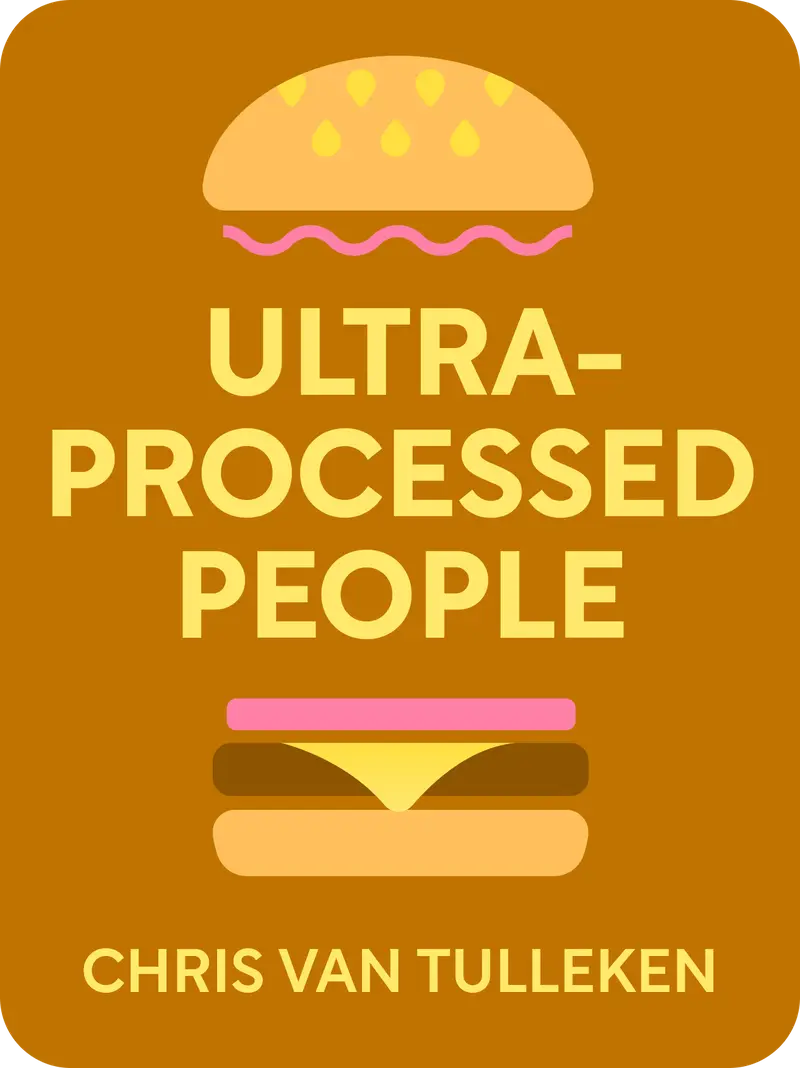
In 2019, Chris van Tulleken stood in a supermarket aisle holding a packaged snack and realized he could not identify a single ingredient in it. He was a medical doctor with a PhD in molecular virology, an associate professor at University College London, and a practicing infectious diseases physician. He had spent years studying biology, chemistry, and human health. Yet the food in his hands was a complete mystery to him.
**Author:** Chris van Tulleken **Estimated Reading Time:** 45 minutes
**What You'll Learn:** - Why ultra-processed food now makes up 60 percent of the average diet in the UK and USA - How industrial food formulations bypass your body's natural appetite controls - Why willpower alone cannot solve the problem - What happens to your body when you stop eating ultra-processed food - The environmental and political dimensions of the UPF crisis - Practical strategies for reducing UPF in your life
**Who This Book Is For:** Anyone who eats. Anyone who has struggled with weight. Anyone who has wondered why they cannot stop eating certain foods. Anyone concerned about the health of their children, their community, or the planet. This book is for people who want to understand what has happened to our food system and what they can do about it.
In 2019, Chris van Tulleken stood in a supermarket aisle holding a packaged snack and realized he could not identify a single ingredient in it. He was a medical doctor with a PhD in molecular virology, an associate professor at University College London, and a practicing infectious diseases physician. He had spent years studying biology, chemistry, and human health. Yet the food in his hands was a complete mystery to him. This moment sparked an investigation that would consume the next several years of his life. What he discovered was both simple and deeply alarming. The food that now dominates our diets is not really food at all. It is an industrial product, engineered in laboratories and factories, designed not to nourish us but to be cheap to produce, easy to transport, and impossible to stop eating. The term for this category of products is ultra-processed food, or UPF. And it now makes up as much as 60 percent of the average diet in the UK and the USA. Among children and adolescents, the percentage is even higher. This represents the most profound change in human nutrition since our ancestors first began cooking food over fire hundreds of thousands of years ago. The problem is not simply that UPF is unhealthy. The problem is that UPF has fundamentally altered our relationship with food. It has disrupted the biological systems that regulate hunger and fullness. It has changed the composition of our gut microbiome. It has created a food environment where making healthy choices requires constant vigilance against an industrial system designed to override our natural instincts. For decades, we have been told that the obesity epidemic is a simple matter of calories in versus calories out. We have been told that we need more willpower, more exercise, more self-control. We have been told that sugar is the enemy, or…
Continue reading in the MinuteRead app
Get the complete 30-minute summary of Ultra-processed People
Get the complete summary in the appUltra-processed food is not really food. It is an industrial formulation designed for profit, not nourishment.
UPF now makes up 60 percent of the average diet in the UK and USA.
The problem is not sugar, fat, or salt. The problem is the processing itself.
UPF disrupts appetite regulation, causing people to eat 500 more calories per day without realizing it.
The food industry follows the tobacco playbook to protect profits at the expense of health.
UPF damages the gut microbiome through emulsifiers, artificial sweeteners, and lack of fiber.
"Ultra-processed People" is a strong fit if you want practical ideas around health & fitness, health, science, especially themes like ultra-processed food is not really food. it is an industrial formulation designed for profit, not nourishment; upf now makes up 60 percent of the average diet in the uk and usa. The MinuteRead summary distills these concepts into a focused read, whether you're deciding whether to buy the book or applying its lessons at work.
Chris van Tulleken is a medical professional and broadcaster with impressive credentials. He holds a medical degree from Oxford and a PhD in molecular virology. As an associate professor at University College London and practicing infectious diseases doctor, he brings significant expertise to his work. Van Tulleken is also known for his broadcasting career, having won two BAFTAs for his work on BBC television and radio, where he creates content for both children and adults. His academic backgrou…
View all summaries by Chris van TullekenContinue Reading
Access the complete 30-minute summary and thousands more nonfiction books in the MinuteRead app.

Continue reading the complete summary in the MinuteRead app.