MinuteRead
30 min
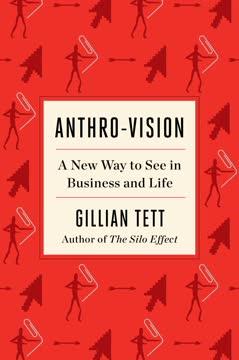
Book summary
by Gillian Tett
Premium summary · Opens in the app · 30 min read
In the years leading up to the 2008 financial crisis, a small group of people inside the global banking system sensed that something was deeply wrong. They could not always articulate precisely what troubled them. The numbers on spreadsheets looked impressive. The risk models suggested everything was under control. The regulators seemed satisfied. And yet, beneath the surface of the financial world, strange things were happening.
By Gillian Tett
**Estimated Reading Time:** 45 minutes
**What You'll Learn:**
- Why anthropology offers a powerful lens for understanding modern problems - How to make the strange familiar and the familiar strange - Why financial crises, corporate failures, and political upheavals often stem from cultural blind spots - Practical ways to apply anthropological thinking to your work and life
**Who This Book Is For:**
Anyone who has ever felt that traditional business tools miss something essential about human behavior. Leaders navigating cultural differences. Investors seeking to understand risk. Professionals trying to make sense of a connected but fragmented world. And curious readers who want a fresh way to see what is hidden in plain sight.
In the years leading up to the 2008 financial crisis, a small group of people inside the global banking system sensed that something was deeply wrong. They could not always articulate precisely what troubled them. The numbers on spreadsheets looked impressive. The risk models suggested everything was under control. The regulators seemed satisfied. And yet, beneath the surface of the financial world, strange things were happening. Gillian Tett was one of the few journalists who saw the crisis coming. Her advantage was not superior mathematical modeling or insider access to proprietary trading data. It was something far less common in the world of finance: she had trained as an anthropologist. Tett had spent years studying marriage rituals in Tajikistan, living among communities whose customs and social structures were entirely different from her own. That experience taught her to observe human behavior with fresh eyes, to pay attention to what people did rather than what they said, and to recognize that the most important truths often hide in the gaps between official narratives and actual practice. When she later became a financial journalist, she brought this anthropological lens with her. While other reporters attended press conferences and read quarterly reports, Tett paid attention to the culture of finance itself. She noticed that bankers formed a tight-knit tribe with their own rituals, language, and unspoken assumptions. She observed how the structure of trading floors shaped behavior. She listened carefully to what financiers did not say, and she watched for the social silences that revealed hidden risks. What she saw alarmed her. The financial world had become an echo chamber, a closed cultural system where everyone reinforced everyone else's beliefs. The complex instruments being created were not just financial products; they were expressions of a particular worldview, one that assumed markets were rational, risk could be precisely measured, and the future would resemble the recent past. The crisis that followed was not, in Tett's view, simply a failure of regulation or greed. It was a failure of…
Continue reading in the MinuteRead app
Get the complete 30-minute summary of Anthro-Vision
Get the complete summary in the appAnthropology offers a way to see around corners, spot what is hidden in plain sight, and gain empathy for others.
Make the strange familiar by understanding unfamiliar cultures on their own terms.
Make the familiar strange by questioning your own assumptions and practices.
Listen for social silence: what people do not say is often as important as what they do say.
The 2008 financial crisis was caused by cultural blind spots, not just technical failures.
WEIRD people (Western, Educated, Industrialized, Rich, Democratic) are outliers, not the norm.
"Anthro-Vision" is a strong fit if you want practical ideas around anthropology, business, economics, especially themes like anthropology offers a way to see around corners, spot what is hidden in plain sight, and gain empathy for others; make the strange familiar by understanding unfamiliar cultures on their own terms. The MinuteRead summary distills these concepts into a focused read, whether you're deciding whether to buy the book or applying its lessons at work.
Gillian Tett is a British author and journalist at the Financial Times, serving as a markets and finance columnist and U.S. Managing Editor. She gained recognition for her early warnings about the 2007 financial crisis, writing extensively about complex financial instruments that contributed to the downturn. Tett's background in anthropology, including a PhD from Cambridge, informs her unique approach to analyzing financial markets and cultural trends. Her work combines anthropological insights …
View all summaries by Gillian TettContinue Reading
Access the complete 30-minute summary and thousands more nonfiction books in the MinuteRead app.

Continue reading the complete summary in the MinuteRead app.