MinuteRead
30 min
Book summary
by James Suzman
Premium summary · Opens in the app · 30 min read
Most books about work begin with the factory, the office, or the farm. They treat work as something humans invented, a social arrangement we can redesign at will. James Suzman begins somewhere else entirely. He begins with physics.
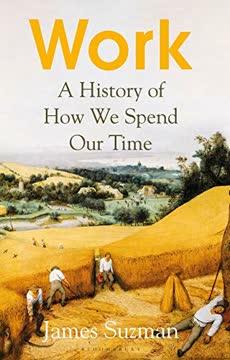
**A History of How We Spend Our Time** By James Suzman
**Estimated Reading Time:** 45 minutes
**What You'll Learn:** Why work defines life itself, how energy and entropy shape every living system, what hunter-gatherers can teach us about affluence without abundance, how fire and tools rewired human evolution, why agriculture was a trap as much as a triumph, how cities created entirely new ways of being human, what the Industrial Revolution did to our relationship with time, why efficiency culture took over modern work, how automation challenges everything we believe about value, and what environmental limits mean for the future of how we spend our days.
**Who This Book Is For:** Anyone who has ever wondered why we work the way we do. Anyone feeling trapped by the rhythms of modern professional life. Anyone curious about what hunter-gatherers understood that we have forgotten. Anyone trying to imagine what meaningful work might look like in an age of ecological crisis and technological disruption.
Most books about work begin with the factory, the office, or the farm. They treat work as something humans invented, a social arrangement we can redesign at will. James Suzman begins somewhere else entirely. He begins with physics. To live is to work. This is not a metaphor or a motivational slogan. It is a statement about energy. Every living organism, from the simplest bacterium to the most complex mammal, must capture energy from its environment and convert it into the activity of staying alive. A plant turning sunlight into sugar is working. A lion stalking a gazelle is working. A human checking email is working. The forms differ dramatically, but the underlying reality is the same. Life is a process of energy capture and conversion, and that process is work. Suzman is an anthropologist who spent decades living with the Ju/'hoansi people of southern Africa, one of the last remaining hunter-gatherer societies. That experience gave him a perspective most economists and historians lack. He saw people who worked far fewer hours than modern professionals, who had no concept of accumulating surplus, and who nonetheless described themselves as living well. They were not poor in their own eyes. They simply had modest material desires that their environment could meet without constant struggle. This observation cracked open a question that drives the entire book. If hunter-gatherers worked fifteen to twenty hours a week and spent the rest of their time resting, socializing, and playing, what happened? How did humans go from that to the forty-plus-hour workweek, the endless pursuit of productivity gains, and the creeping sense that there is never enough time? The answer spans 300,000 years of human history. It involves fire, tools, farming, cities, factories, and the…
Continue reading in the MinuteRead app
Get the complete 30-minute summary of Work
Get the complete summary in the appWork is a physical process rooted in energy and entropy. Every living organism works to capture energy and maintain orde
Hunter-gatherers worked fifteen to twenty hours per week and considered themselves affluent because their modest desires
Fire was the first great energy revolution. Cooking externalized digestion, freeing up energy that was invested in large
Agriculture was not an unambiguous improvement. Early farmers worked harder, ate worse, and suffered more disease than t
Cities enabled specialization, markets, and writing. They also created new forms of interdependence and new vulnerabilit
The Industrial Revolution was an energy revolution. Coal provided energy density that transformed production, but also i
"Work" is a strong fit if you want practical ideas around history, anthropology, economics, especially themes like work is a physical process rooted in energy and entropy. every living organism works to capture energy and maintain orde; hunter-gatherers worked fifteen to twenty hours per week and considered themselves affluent because their modest desires. The MinuteRead summary distills these concepts into a focused read, whether you're deciding whether to buy the book or applying its lessons at work.
James Suzman is an anthropologist specializing in the Khoisan peoples of southern Africa. He is the director of Anthropos Ltd, a think tank applying anthropological methods to contemporary social and economic problems. Suzman's expertise in hunter-gatherer societies informs his perspective on work and its role in human history. His previous book, "Affluence Without Abundance," explored similar themes. Suzman's writing style is accessible and engaging, drawing on a wide range of disciplines to su…
View all summaries by James SuzmanContinue Reading
Access the complete 30-minute summary and thousands more nonfiction books in the MinuteRead app.

Continue reading the complete summary in the MinuteRead app.