MinuteRead
30 min
Book summary
by James Clear
Premium summary · Opens in the app · 30 min read
In the summer of 2002, James Clear was a high school junior recovering from a devastating injury. A baseball bat had struck him squarely in the face during a game, sending him to the hospital with a broken nose, multiple skull fractures, and two shattered eye sockets. He was placed in a medically induced coma and, when he woke up, he faced a long road of rehabilitation. He had to relearn basic functions like walking and driving. His baseball career, which had been his identity, seemed over.
**Author:** James Clear **Estimated Reading Time:** 45 minutes
- Why tiny changes produce remarkable results through the power of compounding - How to build identity-based habits that last instead of relying on motivation - The Four Laws of Behavior Change and how to apply them systematically - How to design your environment so good habits become inevitable - Practical strategies for breaking bad habits permanently - How to create systems that make progress automatic
This book is for anyone who has ever set a goal, worked hard for a few weeks, and then watched their motivation fade. It is for people who want to exercise more, read more, write more, save more, or simply become better versions of themselves but keep getting stuck in cycles of starting and stopping. It is for those who have blamed themselves for lacking willpower when the real problem was always their system. If you have ever wondered why change is so hard, this book will show you that the answer is not more discipline. The answer is better design.
In the summer of 2002, James Clear was a high school junior recovering from a devastating injury. A baseball bat had struck him squarely in the face during a game, sending him to the hospital with a broken nose, multiple skull fractures, and two shattered eye sockets. He was placed in a medically induced coma and, when he woke up, he faced a long road of rehabilitation. He had to relearn basic functions like walking and driving. His baseball career, which had been his identity, seemed over. But Clear did not try to make a dramatic comeback overnight. Instead, he focused on small, consistent actions. He made his bed every morning. He went to physical therapy. He lifted weights, starting with embarrassingly light loads. He kept a meticulous log of his workouts. He focused on getting one percent better each day rather than trying to transform himself all at once. Six years later, he was named the top male athlete at Denison University and was selected for the ESPN Academic All-America team. The transformation was not the result of a single heroic effort. It was the product of hundreds of tiny habits compounded over time. This experience taught Clear something profound: the quality of your life depends on the quality of your habits. Yet most people approach habit change in exactly the wrong way. They try to make massive changes overnight. They rely on motivation and willpower. They focus on outcomes rather than systems. And when they inevitably fail, they blame themselves. The problem is not you. The problem is your system. Clear argues that we do not rise to the level of our goals.…
Continue reading in the MinuteRead app
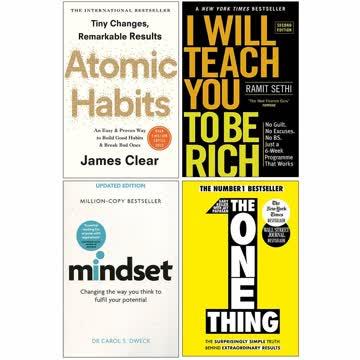
Get the complete 30-minute summary of Atomic Habits / I Will Teach You To Be Rich / Mindset / The One Thing
Get the complete summary in the appHabits are the compound interest of self-improvement. Small changes produce remarkable results over time.
Focus on systems, not goals. Goals set direction. Systems make progress.
True behavior change is identity change. Become the type of person who performs the habit.
Every habit consists of cue, craving, response, and reward.
Make good habits obvious by designing your environment and using implementation intentions.
Make good habits attractive by using temptation bundling and joining supportive communities.
"Atomic Habits / I Will Teach You To Be Rich / Mindset / The One Thing" is a strong fit if you want practical ideas around self help, business, personal development, especially themes like habits are the compound interest of self-improvement. small changes produce remarkable results over time; focus on systems, not goals. goals set direction. systems make progress. The MinuteRead summary distills these concepts into a focused read, whether you're deciding whether to buy the book or applying its lessons at work.
James Clear is the author of "Atomic Habits: An Easy & Proven Way to Build Good Habits & Break Bad Ones." James Clear writes about habits, decision-making, and continuous improvement on his website, jamesclear.com, which receives millions of visitors monthly. His work has been featured in prominent publications like the New York Times and Time, and he has appeared on CBS This Morning. Clear is a sought-after speaker for Fortune 500 companies, and his strategies are utilized by professional sport…
View all summaries by James ClearContinue Reading
Access the complete 30-minute summary and thousands more nonfiction books in the MinuteRead app.

Continue reading the complete summary in the MinuteRead app.