MinuteRead
30 min
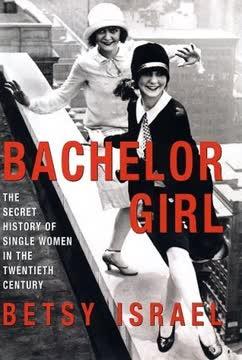
Book summary
by Betsy Israel
Premium summary · Opens in the app · 30 min read
In 1950, when a young woman from a respectable family packed a suitcase and moved into her own apartment, everyone understood what was happening. Her parents knew. Her neighbors knew. The doorman in the lobby of her new building knew. A girl who left home without a husband was not simply changing addresses. She was announcing something about herself, something that polite people discussed in lowered voices.
**Author:** Betsy Israel
**Estimated Reading Time:** 45 minutes
**What You'll Learn:** How single women have been perceived, judged, and celebrated across more than a century of American life, and how the "bachelor girl" evolved from a social problem into a symbol of independence.
**Who This Book Is For:** Anyone who has ever been single, studied women's history, wondered how their grandmother's choices shaped their own, or felt the strange mix of freedom and scrutiny that comes with living alone.
In 1950, when a young woman from a respectable family packed a suitcase and moved into her own apartment, everyone understood what was happening. Her parents knew. Her neighbors knew. The doorman in the lobby of her new building knew. A girl who left home without a husband was not simply changing addresses. She was announcing something about herself, something that polite people discussed in lowered voices. The meaning of her departure was clear to all, as was what she would be doing in that room of her own. This book is about those women. The ones who left. The ones who stayed but wanted to leave. The ones who built lives for themselves in small apartments and crowded boarding houses, who worked in offices and factories, who danced in jazz clubs and drank in speakeasies, who navigated the narrow space between what society expected of them and what they wanted for themselves. Betsy Israel's Bachelor Girl tells the story of single women in America from the late nineteenth century through the end of the twentieth century. It is a history that has been hiding in plain sight, scattered across newspaper advice columns, popular films, sociological studies, magazine articles, and the private letters of women who lived through it all. The single woman has been called many things over the years. Spinster. Old maid. Working girl. Bachelor girl. Bohemian. Flapper. Career woman. Singleton. Each label carried its own weight of judgment, its own assumptions about morality, desirability, and worth. Each generation of single women had to navigate a world that viewed them with suspicion, pity, or outright hostility, while simultaneously depending on their labor, their spending power, and their willingness to fill the roles that married women could not. Why does this history matter? Because the arguments we still have about single women today, about whether they are happy or lonely, liberated or selfish, complete or waiting, are not new arguments. They have been raging for more than a century. The terms change. The anxieties remain. Israel's approach is different from most histories of women's lives. Rather than focusing on famous feminists or political movements, she examines the ordinary single woman. The typist. The shop girl. The telephone operator. The woman…
Continue reading in the MinuteRead app
Get the complete 30-minute summary of Bachelor Girl
Get the complete summary in the appThe single woman has always existed, and she has always faced scrutiny, pity, and pressure to marry.
The bachelor girl emerged in the early twentieth century as a woman who chose independence, not just a woman who failed
Economic independence, earned through work, has been the foundation of single women's freedom.
The flapper era celebrated female independence while also framing it as a temporary phase.
The postwar era was the high point of the marriage-centered social order, and single women were pathologized as problems
The 1960s transformed single women's possibilities through the pill, feminism, and the counterculture.
"Bachelor Girl" is a strong fit if you want practical ideas around history, feminism, womens, especially themes like the single woman has always existed, and she has always faced scrutiny, pity, and pressure to marry; the bachelor girl emerged in the early twentieth century as a woman who chose independence, not just a woman who failed. The MinuteRead summary distills these concepts into a focused read, whether you're deciding whether to buy the book or applying its lessons at work.
Betsy Israel is an accomplished journalist and author with extensive experience in the publishing industry. Her work has appeared in numerous prestigious publications, including the New York Times, Elle, and Vogue. Israel has held columnist positions at Glamour, Us, and New York Woman, and was a contributing writer for Mirabella. In addition to her journalism career, she has written screenplays and authored "Grown-Up Fast: A True Story of Teenage Life in Suburban America." Israel resides in Manh…
View all summaries by Betsy IsraelContinue Reading
Access the complete 30-minute summary and thousands more nonfiction books in the MinuteRead app.

Continue reading the complete summary in the MinuteRead app.