MinuteRead
30 min
Book summary
Premium summary · Opens in the app · 30 min read
Every day, millions of people walk into gyms, training facilities, and fitness classes with the intention of getting stronger, faster, and healthier. They lift weights, run, jump, and push their bodies to new limits. Yet despite their dedication and effort, many of them will eventually find themselves sidelined by pain, injury, or chronic dysfunction. The frustrating truth is that most of these problems are not caused by bad luck or genetic misfortune. They are caused by poor movement.
**Author:** Kelly Starrett
**Estimated Reading Time:** 45 minutes
**What You'll Learn:** How to move safely and efficiently, build a stable spine, create powerful joints, address mobility restrictions, and treat your body as a complete system capable of peak performance.
**Who This Book Is For:** Athletes, coaches, fitness enthusiasts, and anyone who wants to move better, avoid preventable injuries, and understand the fundamental mechanics of human movement.
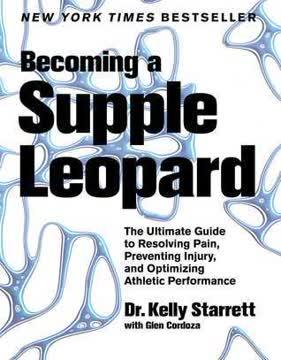
Every day, millions of people walk into gyms, training facilities, and fitness classes with the intention of getting stronger, faster, and healthier. They lift weights, run, jump, and push their bodies to new limits. Yet despite their dedication and effort, many of them will eventually find themselves sidelined by pain, injury, or chronic dysfunction. The frustrating truth is that most of these problems are not caused by bad luck or genetic misfortune. They are caused by poor movement. Kelly Starrett, a Doctor of Physical Therapy and founder of MobilityWOD, has spent years working with elite athletes, military personnel, and everyday fitness enthusiasts. Through his work, he has identified a fundamental problem: most people have never been taught how to move correctly. They have learned to compensate for poor positions, to work around mobility restrictions, and to generate force through unstable joints. The result is a body that leaks energy, breaks down under load, and eventually fails. The title of this book, Becoming a Supple Leopard, captures Starrett's vision perfectly. A leopard is powerful, agile, and capable of explosive movement. It can sprint, climb, and pounce with incredible force. But it is also supple, able to move through a full range of motion without restriction. The supple leopard represents the ideal human athlete: strong and powerful, yet mobile and resilient. The problem Starrett addresses is not limited to elite athletes. It affects anyone who sits at a desk for hours, anyone who experiences back pain, anyone who wants to play with their children without worrying about injury. The modern lifestyle has created a population of people who are simultaneously tight and weak, unable to move through full ranges of motion and unable to stabilize their bodies under load. What makes Starrett's approach different is his focus on mechanics before intensity. Most fitness programs emphasize how much you can lift, how fast you can run, or how many repetitions you can complete. Starrett argues that these metrics are meaningless if you are moving poorly. In fact, adding intensity to poor movement only accelerates the path to injury. The core insight of this book is that the human body is a system, and all parts of that system are connected. You cannot treat a knee problem without considering the hip. You cannot fix a shoulder issue without…
Continue reading in the MinuteRead app
Get the complete 30-minute summary of Becoming a Supple Leopard, 1st Edition
Get the complete summary in the appBrace your spine before every movement. The bracing sequence is the foundation of safe movement.
Move from your hips and shoulders, not your spine. The one-joint rule prevents injury.
Create torque in your joints. External rotation in flexion, internal rotation in extension.
Master the seven archetypes. These positions are the blueprint for functional movement.
Progress through the movement hierarchy. Master basic movements before attempting advanced ones.
Spend 10 to 15 minutes a day on mobility work. Address restrictions systematically.
"Becoming a Supple Leopard, 1st Edition" is a strong fit if you want practical ideas around health & fitness, fitness, health, especially themes like brace your spine before every movement. the bracing sequence is the foundation of safe movement; move from your hips and shoulders, not your spine. the one-joint rule prevents injury. The MinuteRead summary distills these concepts into a focused read, whether you're deciding whether to buy the book or applying its lessons at work.
Kelly Starrett is a Doctor of Physical Therapy, CrossFit gym owner, and movement specialist. He gained popularity through his website MobilityWOD.com, where he posts instructional videos on mobility and movement techniques. Starrett's expertise lies in helping athletes and individuals improve their physical performance and prevent injuries. His approach focuses on treating the body as a complete system, emphasizing correct form, mobility work, and self-maintenance. Starrett's work has been influ…
View all summaries by Kelly StarrettContinue Reading
Access the complete 30-minute summary and thousands more nonfiction books in the MinuteRead app.

Continue reading the complete summary in the MinuteRead app.