MinuteRead
30 min
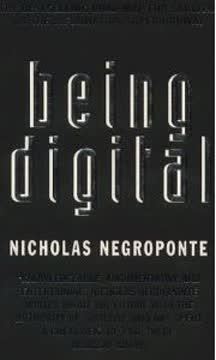
Nicholas Negroponte wrote *Being Digital* at a peculiar moment in history. The internet existed but was not yet a household utility. Mobile phones were bulky and expensive. The compact disc reigned supreme. Newspapers still printed millions of copies each morning. Yet from his position as the founder of the MIT Media Lab, Negroponte saw something that most people missed: the entire world of information and entertainment was about to undergo a transformation so profound that it would reshape econ
**Author:** Nicholas Negroponte
**Estimated Reading Time:** 45 minutes
**What You'll Learn:** Why the shift from atoms to bits is transforming every industry, how digital technology will reshape human-computer interaction, and what the post-information age means for your daily life.
**Who This Book Is For:** Anyone who wants to understand the fundamental forces driving the digital revolution, from business leaders navigating digital transformation to curious readers seeking clarity about where technology is heading.
Nicholas Negroponte wrote *Being Digital* at a peculiar moment in history. The internet existed but was not yet a household utility. Mobile phones were bulky and expensive. The compact disc reigned supreme. Newspapers still printed millions of copies each morning. Yet from his position as the founder of the MIT Media Lab, Negroponte saw something that most people missed: the entire world of information and entertainment was about to undergo a transformation so profound that it would reshape economies, cultures, and daily habits. The book's central observation is deceptively simple. For centuries, human beings have traded in atoms. Books, records, photographs, newspapers, and films all exist as physical objects. They have weight. They occupy space. They must be manufactured, stored, shipped, and sold. Moving a book from New York to London requires fuel, vehicles, and time. Moving a million books requires a fleet of trucks and a network of warehouses. Bits are different. A bit is the smallest unit of digital information, a simple choice between zero and one. Bits have no weight. They travel at nearly the speed of light. They can be copied perfectly, infinitely, at essentially no cost. A million copies of a digital book require no additional paper, no additional ink, no additional shipping containers. The first copy costs something to produce. The millionth copy costs nothing. This distinction between atoms and bits sounds almost trivial when stated plainly. Yet Negroponte understood that it contained the seeds of a revolution. When an industry's product can be converted from atoms to bits, every assumption that industry has made about its business becomes obsolete. The economics of scarcity, which governed publishing, music, film, and news for centuries, suddenly gives way to an economics of abundance. The distribution networks that took decades to build become unnecessary. The intermediaries who controlled access to information find their roles fundamentally altered. Negroponte was not merely describing a technological shift. He was describing a shift in how human beings would relate to information, to each other, and to the world around them. The digital revolution would change how we watch television, how we read news, how we communicate with friends, how we work, how we learn, and how we entertain ourselves. It would change the very texture of daily life. What…
Continue reading in the MinuteRead app
Get the complete 30-minute summary of Being Digital
Get the complete summary in the appThe shift from atoms to bits is irrevocable and unstoppable.
Bits are weightless, travel at light speed, and are inexpensive to copy.
All digital information is fundamentally the same: bits are bits.
The real power of digital technology is transformation, not efficiency.
The secret to interface design is to make it go away.
The best interface is like a well-trained English butler.
"Being Digital" is a strong fit if you want practical ideas around technology, science, business, especially themes like the shift from atoms to bits is irrevocable and unstoppable; bits are weightless, travel at light speed, and are inexpensive to copy. The MinuteRead summary distills these concepts into a focused read, whether you're deciding whether to buy the book or applying its lessons at work.
Nicholas Negroponte is a renowned technology visionary and founder of the MIT Media Lab. He is known for his pioneering work in computer-aided design, touch screens, and the digital revolution. Negroponte's expertise spans computer science, architecture, and media technology. He has been a prominent figure in advocating for the use of technology in education and global development. His book "Being Digital" gained widespread attention for its accurate predictions about the future of digital techn…
View all summaries by Nicholas NegroponteContinue Reading
Access the complete 30-minute summary and thousands more nonfiction books in the MinuteRead app.

Continue reading the complete summary in the MinuteRead app.