MinuteRead
30 min
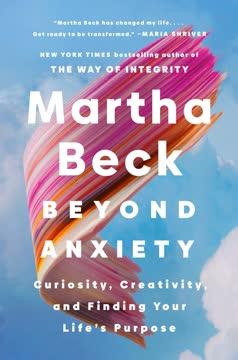
Book summary
Premium summary · Opens in the app · 30 min read
You know the feeling. Your chest tightens. Your thoughts race. You lie awake at night rehearsing conversations that haven't happened and catastrophes that probably never will. You tell yourself to relax, to breathe, to think positive, but the anxiety remains, humming beneath the surface of your life like an engine that never shuts off.
**Author:** Martha N. Beck
**Estimated Reading Time:** 45 minutes
**What You'll Learn:**
- Why anxiety is not the same as fear, and why that distinction changes everything - How your brain's two hemispheres create competing versions of reality - Why modern culture is engineered to keep you anxious - Practical techniques to calm your nervous system in minutes - How creativity, curiosity, and wonder can permanently replace anxiety - A framework for building a life that feels authentic, purposeful, and free
**Who This Book Is For:**
Anyone who has ever felt trapped in a loop of worry, dread, or overthinking. Anyone who senses that their anxiety is not a personal failure but a response to something larger. And anyone ready to stop merely coping with anxiety and start transforming it into creativity, connection, and calm.
You know the feeling. Your chest tightens. Your thoughts race. You lie awake at night rehearsing conversations that haven't happened and catastrophes that probably never will. You tell yourself to relax, to breathe, to think positive, but the anxiety remains, humming beneath the surface of your life like an engine that never shuts off. If this sounds familiar, you are not broken. You are not weak. You are experiencing something that millions of people experience every day, and the problem is not simply in your head. It is in the way your brain processes the world, the way your culture trains you to think, and the way you have learned to respond to uncertainty. Martha Beck wrote *Beyond Anxiety* because she spent decades watching brilliant, capable people suffer from a condition that felt impossible to escape. As a Harvard-trained sociologist and life coach, she saw the same pattern repeating across different lives, different careers, different circumstances. People would come to her feeling stuck, overwhelmed, and afraid. They would describe their anxiety as a personal flaw, a weakness they needed to overcome through sheer willpower. And the more they tried to fight it, the stronger it became. Beck's insight was simple but profound: anxiety is not a character defect. It is a neurological and cultural phenomenon. It arises when your brain's fear response gets stuck in the "on" position, fed by a constant stream of worried thoughts. And it is amplified by a society that rewards overthinking, productivity, and control while discouraging the very things that could set you free: curiosity, creativity, connection, and wonder. The problem is not that you feel fear. Fear is a gift. It tells you when a car is speeding toward you, when a relationship is toxic, when a situation is genuinely dangerous. Real fear is sharp, immediate, and useful. It gives you the energy to act, to protect yourself, to…
Continue reading in the MinuteRead app
Get the complete 30-minute summary of Beyond Anxiety
Get the complete summary in the appAnxiety is not fear. Real fear is sharp, immediate, and useful. Anxiety is a vague, persistent sense of dread with no cl
The anxiety spiral is a self-reinforcing cycle of worried thoughts and fear responses. Trying to think your way out of i
Your left hemisphere generates the stories that fuel anxiety. Your right hemisphere perceives the present moment without
WEIRD culture amplifies anxiety by rewarding productivity and material success while discouraging connection, creativity
Calming anxiety requires working with the body, not against it. Sighing, softening your gaze, and allowing movement send
Triggers are sense memories that activate the defense cascade even in safe situations. Understanding your triggers remov
"Beyond Anxiety" is a strong fit if you want practical ideas around health & fitness, self help, psychology, especially themes like anxiety is not fear. real fear is sharp, immediate, and useful. anxiety is a vague, persistent sense of dread with no cl; the anxiety spiral is a self-reinforcing cycle of worried thoughts and fear responses. trying to think your way out of i. The MinuteRead summary distills these concepts into a focused read, whether you're deciding whether to buy the book or applying its lessons at work.
Martha Beck is a Harvard-trained sociologist, bestselling author, speaker, and life coach. She has written multiple books on personal development and self-help topics. Beck is known for her engaging writing style, which blends humor, personal anecdotes, and practical advice. Her work often focuses on helping individuals find their purpose and live more fulfilling lives. Martha Beck has gained recognition for her unique approach to addressing anxiety and promoting creativity. She draws from vario…
View all summaries by Martha N. BeckContinue Reading
Access the complete 30-minute summary and thousands more nonfiction books in the MinuteRead app.

Continue reading the complete summary in the MinuteRead app.