MinuteRead
30 min
Book summary
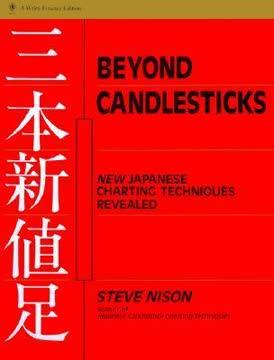
by Steve Nison
Premium summary · Opens in the app · 30 min read
For centuries, Japanese rice traders developed a sophisticated method of reading markets that remained almost entirely unknown to the Western world. They created charts that did more than track prices. They created visual representations of human emotion, fear, greed, and the eternal struggle between buyers and sellers.
**Author:** Steve Nison
**Estimated Reading Time:** 45 minutes
**What You'll Learn:** - How to read candlestick charts as visual stories of market psychology - The meaning behind real bodies, shadows, and single candle patterns - How dual candle patterns confirm reversals and continuations - Why Japanese charting methods like Renko, Kagi, and Three-Line Break charts offer unique perspectives - How to integrate candlestick analysis with broader technical tools - Practical trading tactics for risk management and market adaptation
**Who This Book Is For:** This book is for traders and investors who want to move beyond basic chart reading and develop a deeper understanding of market psychology. Whether you are new to technical analysis or an experienced chartist looking to expand your toolkit, this condensed edition will give you a practical foundation in Japanese charting techniques that have stood the test of time.
For centuries, Japanese rice traders developed a sophisticated method of reading markets that remained almost entirely unknown to the Western world. They created charts that did more than track prices. They created visual representations of human emotion, fear, greed, and the eternal struggle between buyers and sellers. Steve Nison introduced these techniques to Western audiences in the early 1990s, and in doing so, he changed how countless traders approach the markets. His first book on candlesticks opened the door. This follow-up work goes further, exploring not just candlestick patterns but an entire universe of Japanese technical analysis that had never been translated or explained for Western readers. The problem most traders face is not a lack of information. It is a lack of clarity. Standard bar charts and line charts show you where prices have been, but they do not help you feel the market. They do not reveal the emotional undercurrents that drive price movements. A candlestick chart, by contrast, tells a story. Each candle shows you where the session opened, where it closed, how high it reached, and how low it fell. More importantly, the relationship between these points reveals who won the battle that day. Consider this. In a bar chart, a day where prices opened at 50, rose to 55, fell to 45, and closed at 54 looks nearly identical to a day where prices opened at 50, rose to 55, fell to 45, and closed at 46. Both show the same range. Both show the same high and low. But the first day represents a strong recovery by buyers, while the second represents a collapse into the close. Candlestick charts make this distinction immediately visible through the size and color of the real body. This matters because markets are driven by psychology. Prices do not move randomly. They move because people are making…
Continue reading in the MinuteRead app
Get the complete 30-minute summary of Beyond Candlesticks
Get the complete summary in the appCandlestick charts reveal market psychology through the relationship between open, close, high, and low.
The real body shows who won the session. The shadows show how much resistance they faced.
A hammer after a downtrend is bullish. A hanging man after an uptrend is bearish.
A shooting star after an uptrend is a bearish reversal signal.
The dark cloud cover and piercing pattern show a shift in momentum over two sessions.
Engulfing patterns are more powerful than dark cloud cover and piercing patterns.
"Beyond Candlesticks" is a strong fit if you want practical ideas around finance, business, economics, especially themes like candlestick charts reveal market psychology through the relationship between open, close, high, and low; the real body shows who won the session. the shadows show how much resistance they faced. The MinuteRead summary distills these concepts into a focused read, whether you're deciding whether to buy the book or applying its lessons at work.
Steve Nison is widely regarded as the "father of candlesticks" in Western technical analysis. He has authored multiple books on Japanese candlestick charting techniques, with "Beyond Candlesticks" being a follow-up to his earlier works. Nison's expertise lies in adapting and popularizing traditional Japanese charting methods for modern financial markets. His books are considered essential reading for traders and analysts interested in candlestick analysis. Nison's work has significantly influenc…
View all summaries by Steve NisonContinue Reading
Access the complete 30-minute summary and thousands more nonfiction books in the MinuteRead app.

Continue reading the complete summary in the MinuteRead app.