MinuteRead
30 min
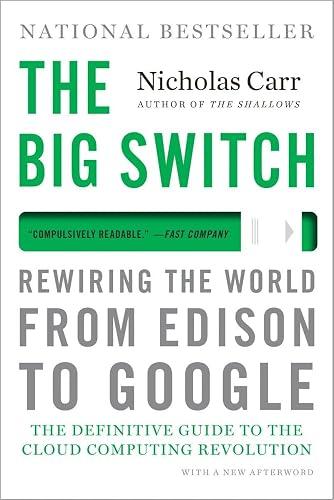
In the early years of the twentieth century, American manufacturing underwent a transformation so profound that it redefined the structure of business itself. Before this transformation, every factory that wanted electric power had to generate it on site. Companies built their own power plants, maintained their own dynamos, and employed their own engineers to keep the machinery running. This was simply how industry worked. Power generation was considered too important, too integral to operations
**Author:** Nicholas Carr
**Estimated Reading Time:** 45 minutes
**What You'll Learn:**
- Why the history of electricity perfectly predicts the future of computing - How cloud computing is dismantling the traditional IT department and reshaping entire industries - Why the internet economy creates extreme winner-take-all outcomes - What happens to culture, privacy, and human cognition when computing becomes a utility - How to position yourself and your organization for the post-cloud world
**Who This Book Is For:**
This book is for anyone who wants to understand the deeper forces reshaping technology, business, and society. If you have ever wondered why software companies no longer sell software, why media companies are struggling, or why your attention feels different than it did a decade ago, this book provides the essential framework. It is written for business leaders, technologists, students of media and culture, and curious readers who sense that something fundamental has shifted in how we live and work.
In the early years of the twentieth century, American manufacturing underwent a transformation so profound that it redefined the structure of business itself. Before this transformation, every factory that wanted electric power had to generate it on site. Companies built their own power plants, maintained their own dynamos, and employed their own engineers to keep the machinery running. This was simply how industry worked. Power generation was considered too important, too integral to operations, to entrust to an outside party. Then came Samuel Insull. Insull, a former assistant to Thomas Edison, saw something that almost no one else could see. He recognized that electricity was not a proprietary technology that individual companies needed to own. It was a utility, a shared resource that could be generated at massive scale and distributed over a network to thousands of customers at a fraction of the cost of private generation. Insull built the first large-scale electric utility in Chicago, and within two decades, the private power plant was obsolete. Companies that had once prided themselves on their self-sufficiency eagerly plugged into the grid. The savings were simply too large to ignore. A century later, we are living through the same revolution in computing. For decades, every company that wanted to use information technology had to build its own computing infrastructure. They bought servers, installed software, hired IT staff, and maintained data centers. This was simply how business worked. Computing power was considered too important, too integral to operations, to entrust to an outside party. Then came the internet, and with it, the realization that computing could be delivered over a network as a service. Companies like Amazon, Google, and Salesforce began building massive data centers and offering computing power, storage, and software on demand. The parallels…
Continue reading in the MinuteRead app
Get the complete 30-minute summary of The Big Switch
Get the complete summary in the appComputing is becoming a utility, just as electricity did a century ago. The economics of scale make this transition inev
The internet is becoming a single, vast computer. The physical location of hardware no longer matters.
Free services are not free. You pay with your attention and your data.
The great unbundling is dismantling media bundles. Each piece of content must now compete for attention on its own.
Attention is the scarce resource in the information economy. The companies that capture the most attention generate the
The platform economy is a winner-take-all economy. A small number of platform owners capture most of the value.
"The Big Switch" is a strong fit if you want practical ideas around technology, business, history, especially themes like computing is becoming a utility, just as electricity did a century ago. the economics of scale make this transition inev; the internet is becoming a single, vast computer. the physical location of hardware no longer matters. The MinuteRead summary distills these concepts into a focused read, whether you're deciding whether to buy the book or applying its lessons at work.
Motivated to help readers with "What happened to the generation of power a century ago is now happening to the processing of information.", Nicholas Carr wrote “The Big Switch” to package those ideas for a fast, focused read. In “The Big Switch”, Nicholas Carr focuses on "What happened to the generation of power a century ago is now happening to the processing of information.". Through “The Big Switch”, Nicholas Carr distills the core ideas on technology into lessons readers can absorb in a sing…
View all summaries by Nicholas CarrContinue Reading
Access the complete 30-minute summary and thousands more nonfiction books in the MinuteRead app.

Continue reading the complete summary in the MinuteRead app.