MinuteRead
30 min
Book summary
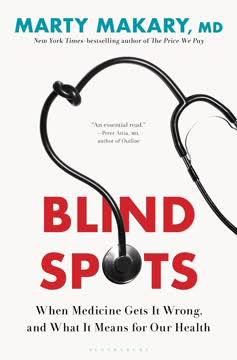
by Marty Makary
Premium summary · Opens in the app · 30 min read
In 2000, the American Academy of Pediatrics issued a recommendation that seemed sensible at the time. To protect children from peanut allergies, parents were told to avoid giving peanuts to infants and young children. The advice was logical. If peanuts cause allergic reactions, keep peanuts away from children. Doctors repeated it. Parents followed it. Schools banned peanut butter. Airlines stopped serving peanuts. An entire culture of avoidance took hold.
**Author:** Marty Makary
**Estimated Reading Time:** 45 minutes
**What You'll Learn:**
- Why some of medicine's most trusted recommendations turned out to be wrong - How cognitive biases prevent doctors and institutions from changing course - The hidden costs of medical dogma on patients and public health - What the peanut allergy epidemic reveals about how bad advice spreads - How questioning conventional wisdom can improve your own healthcare decisions
**Who This Book Is For:**
Anyone who has ever followed a medical recommendation without questioning it. Anyone who wants to understand why the healthcare system so often resists new evidence. And anyone who believes that asking hard questions is essential to progress.
In 2000, the American Academy of Pediatrics issued a recommendation that seemed sensible at the time. To protect children from peanut allergies, parents were told to avoid giving peanuts to infants and young children. The advice was logical. If peanuts cause allergic reactions, keep peanuts away from children. Doctors repeated it. Parents followed it. Schools banned peanut butter. Airlines stopped serving peanuts. An entire culture of avoidance took hold. There was only one problem. The recommendation was wrong. Over the following decade, peanut allergies in children tripled. Emergency room visits for severe allergic reactions soared. By 2019, roughly one in eighteen American children had a peanut allergy. The very advice intended to protect children had created an epidemic. This is not an isolated story. It is a pattern. Marty Makary, a surgeon and public health researcher at Johns Hopkins University, has spent his career investigating why modern medicine, for all its brilliance, so often gets things wrong. In *Blind Spots*, he examines the uncomfortable reality that many of the medical recommendations Americans have followed for decades were based on weak evidence, flawed assumptions, or institutional inertia rather than rigorous science. The problem is not that doctors are unintelligent or uncaring. The problem is structural. Medicine is a field that rewards conformity. Physicians are trained to follow protocols. Medical societies issue guidelines. Insurance companies reimburse based on those guidelines. Hospitals measure compliance. Challenging the consensus is rarely rewarded and often punished. When a recommendation becomes established, it takes on a life of its own. It gets repeated in medical schools, cited in journals, and embedded in practice. Over time, it becomes dogma. And dogma is resistant to evidence. Makary's central argument is that medicine has a blind spot problem. The field has developed remarkable tools for treating disease, but it has not developed equally strong tools for questioning its own assumptions. As a result, patients have been harmed by recommendations that were never properly tested. The peanut allergy story illustrates this perfectly. The 2000 recommendation was based on a…
Continue reading in the MinuteRead app
Get the complete 30-minute summary of Blind Spots
Get the complete summary in the appMedical dogma can harm patients. The peanut avoidance recommendation created an epidemic of allergies.
Plausible theories are not the same as proven facts. Test before you trust.
Cognitive dissonance makes people resistant to new evidence. Smart people are often better at rationalizing their belief
Institutional arrogance can delay action on known risks. Listen to frontline workers.
Standard practices are not always evidence-based. Question the status quo.
Regulatory decisions should be based on evidence, not fear. The breast implant ban is a cautionary tale.
"Blind Spots" is a strong fit if you want practical ideas around health & fitness, health, science, especially themes like medical dogma can harm patients. the peanut avoidance recommendation created an epidemic of allergies; plausible theories are not the same as proven facts. test before you trust. The MinuteRead summary distills these concepts into a focused read, whether you're deciding whether to buy the book or applying its lessons at work.
Dr. Marty Makary is a surgeon and researcher at Johns Hopkins University School of Medicine. He is known for his work on patient safety, including developing the surgery checklist adopted by the WHO. Makary advocates for transparency in healthcare and has authored over 150 publications. His book "Unaccountable" became a New York Times bestseller. He focuses on patient empowerment and speaks nationally on healthcare's future. Makary practices laparoscopic surgical oncology and directs the Johns H…
View all summaries by Marty MakaryContinue Reading
Access the complete 30-minute summary and thousands more nonfiction books in the MinuteRead app.

Continue reading the complete summary in the MinuteRead app.