MinuteRead
30 min
Book summary
Premium summary · Opens in the app · 30 min read
Every trader has stared at a chart and asked the same question: Is this price high or low?
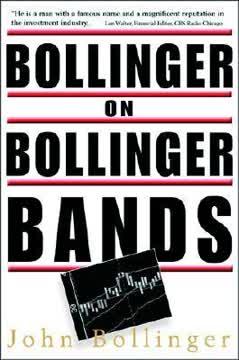
**Author:** John Bollinger
**Estimated Reading Time:** 48 minutes
**What You'll Learn:**
- Why "high" and "low" are relative concepts, not absolute price levels - How to read volatility cycles and anticipate major market moves - Three complete trading systems built around Bollinger Bands - How to combine volume indicators with band signals for confirmation - The difference between continuation signals and reversal signals - How to normalize any indicator using the %b formula
**Who This Book Is For:**
Traders and investors who want to move beyond basic chart reading and develop a systematic approach to understanding price action. Whether you are a day trader looking for precise entry signals or a longer-term investor seeking better timing, this book provides a complete framework for interpreting market behavior through the lens of volatility.
Every trader has stared at a chart and asked the same question: Is this price high or low? The question seems simple. But the answer is far more complex than most people realize. A stock trading at $50 might be historically cheap if it traded at $100 a year ago. Or it might be extraordinarily expensive if it traded at $10 a month ago. Absolute price tells you almost nothing about whether a security is overbought or oversold, stretched or compressed, ready to reverse or poised to continue. This is the problem John Bollinger set out to solve. In the early 1980s, Bollinger was managing money and growing increasingly frustrated with the tools available to technical analysts. Fixed trading bands, which plotted lines at set percentage distances from a moving average, were popular at the time. But they had a fatal flaw. Markets do not move at fixed percentages. A 5% band might work beautifully during calm periods and fail completely during volatile ones. The bands were either too wide to be useful or too narrow to contain normal price action. Bollinger's insight was both simple and profound. Instead of using fixed percentages, why not let the bands adapt to the market's own behavior? Why not use volatility itself to determine how wide the bands should be? The result was Bollinger Bands, a tool that has become one of the most widely used indicators in technical analysis. But Bollinger's contribution goes far beyond a single indicator. In this book, he lays out a complete framework for understanding markets through the lens of volatility. He shows how the bands can clarify price patterns, identify trend continuations, anticipate reversals, and normalize other indicators. He provides three distinct trading systems built around the bands. And he explains why volume confirmation is essential to making the whole approach work. What makes this book valuable is not just the technical details. It is the…
Continue reading in the MinuteRead app
Get the complete 30-minute summary of Bollinger on Bollinger Bands
Get the complete summary in the appHigh and low are relative, not absolute. Bollinger Bands define high and low relative to recent price action and volatil
Volatility is cyclical. Low volatility begets high volatility, and high volatility begets low volatility.
The Squeeze signals that a significant price move is likely. It does not predict direction.
Walking the bands is a continuation signal. Do not sell a security just because it has closed above the upper band durin
Volume confirmation is essential. Confirmed band tags suggest continuation. Unconfirmed band tags suggest potential reve
Divergences between price and indicators reveal weakening momentum and often precede reversals.
"Bollinger on Bollinger Bands" is a strong fit if you want practical ideas around finance, business, economics, especially themes like high and low are relative, not absolute. bollinger bands define high and low relative to recent price action and volatil; volatility is cyclical. low volatility begets high volatility, and high volatility begets low volatility. The MinuteRead summary distills these concepts into a focused read, whether you're deciding whether to buy the book or applying its lessons at work.
John Bollinger is a renowned figure in technical analysis and the creator of Bollinger Bands, a popular tool used in stock market trading. He developed this indicator to measure market volatility and identify potential trend reversals. Bollinger's work has significantly influenced the field of technical analysis, with his bands being widely adopted by traders and analysts worldwide. As an author, he has shared his expertise through books and educational materials, helping traders understand and …
View all summaries by John BollingerContinue Reading
Access the complete 30-minute summary and thousands more nonfiction books in the MinuteRead app.

Continue reading the complete summary in the MinuteRead app.