MinuteRead
30 min
Book summary
Premium summary · Opens in the app · 30 min read
Imagine standing at your front door, hand on the lock, checking it for the fifteenth time. You know the door is locked. You checked it moments ago. Yet something inside you insists that you check again. And again. And again. If you don't, something terrible might happen. The anxiety builds until you give in, and for a brief moment, relief washes over you. Then the doubt returns.
**Twentieth Anniversary Edition**
**By Jeffrey M. Schwartz**
**Estimated Reading Time:** 45 minutes
**What You'll Learn:**
- Why OCD is a medical condition, not a character flaw - How four specific brain structures create the "brain lock" that traps sufferers - A proven four-step method to break free from obsessive thoughts and compulsive behaviors - How to apply these techniques to other unwanted behaviors - How families can support recovery without enabling symptoms
**Who This Book Is For:**
Anyone who has ever felt trapped by unwanted thoughts, repetitive behaviors, or the exhausting cycle of anxiety and temporary relief. This book is for people living with OCD, their families, and anyone seeking a science-based approach to changing deeply ingrained mental patterns.
Imagine standing at your front door, hand on the lock, checking it for the fifteenth time. You know the door is locked. You checked it moments ago. Yet something inside you insists that you check again. And again. And again. If you don't, something terrible might happen. The anxiety builds until you give in, and for a brief moment, relief washes over you. Then the doubt returns. This is the daily reality for millions of people living with obsessive-compulsive disorder. They are not crazy. They are not weak. They are not lacking in willpower. They are experiencing a very real malfunction in the way their brains process information. For decades, OCD was considered a rare and untreatable condition. Patients were told they had deep psychological conflicts or unresolved childhood traumas. Traditional talk therapy often made things worse, as patients endlessly analyzed their obsessions without ever finding relief. The result was suffering that lasted years, sometimes a lifetime. Jeffrey Schwartz, a research psychiatrist at UCLA, spent his career challenging this bleak outlook. His work in brain imaging revealed something remarkable: OCD is not a mystery rooted in the unconscious mind. It is a biological condition caused by faulty wiring in specific brain structures. Even more remarkable, Schwartz discovered that patients could change this wiring through a systematic mental training program. The key insight of Schwartz's work is both simple and profound: the brain can change itself. This concept, known as neuroplasticity, was controversial when Schwartz first proposed it. The prevailing scientific view held that the adult brain was largely fixed. But Schwartz's brain scans told a different story. When patients applied his four-step method, the overactive brain circuits associated with OCD actually calmed down. The brain physically changed in response to mental effort. This book presents the method that made those changes possible. It is called the Four-Step Self-Treatment Method, and it has helped countless individuals reclaim their lives from OCD. The method does not require expensive equipment or years of therapy.…
Continue reading in the MinuteRead app
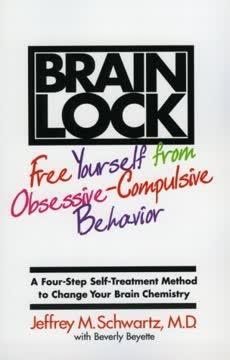
Get the complete 30-minute summary of Brain Lock, Twentieth Anniversary Edition
Get the complete summary in the appOCD is a medical condition caused by faulty brain circuitry, not a character flaw or psychological conflict.
"It's not me, it's my OCD." This phrase creates the distance necessary for change.
The four steps are Relabel, Reattribute, Refocus, and Revalue. Practice them consistently.
Relabel: Recognize obsessive thoughts and compulsive urges as symptoms of OCD.
Reattribute: Understand that symptoms are caused by a biochemical imbalance in the brain.
Refocus: Shift attention to constructive behaviors using the fifteen-minute rule.
"Brain Lock, Twentieth Anniversary Edition" is a strong fit if you want practical ideas around health & fitness, psychology, self help, especially themes like ocd is a medical condition caused by faulty brain circuitry, not a character flaw or psychological conflict; "it's not me, it's my ocd." this phrase creates the distance necessary for change. The MinuteRead summary distills these concepts into a focused read, whether you're deciding whether to buy the book or applying its lessons at work.
Jeffrey M. Schwartz is a Research Psychiatrist at the Department of Psychiatry & Biobehavioral Sciences at the University of California, Los Angeles. He is renowned for his work in the field of Obsessive-Compulsive Disorder (OCD) and has developed innovative treatment methods. Schwartz's research focuses on the application of cognitive-behavioral therapy techniques and mindfulness to treat OCD. He has conducted extensive studies on brain imaging and neuroplasticity, demonstrating how behavioral …
View all summaries by Jeffrey M. SchwartzContinue Reading
Access the complete 30-minute summary and thousands more nonfiction books in the MinuteRead app.

Continue reading the complete summary in the MinuteRead app.