MinuteRead
30 min
Book summary
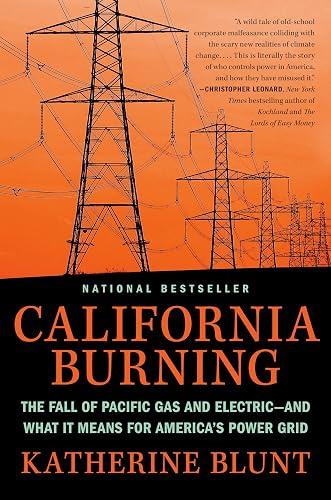
by Katherine Blunt
Premium summary · Opens in the app · 30 min read
Every day, millions of Californians flip a switch and expect the lights to come on. They charge their phones, run their refrigerators, power their hospitals, and keep their businesses alive, all through an invisible network of wires and transformers that stretches across one of the most geographically diverse states in the nation. For most of the twentieth century, this arrangement worked well enough. The utility that served them, Pacific Gas and Electric, was a stable, predictable institution.
**Author:** Katherine Blunt **Estimated Reading Time:** 45 minutes
**What You'll Learn:** - How a century-old utility became one of America's most dangerous companies - Why deregulation, profit pressure, and regulatory failure created a perfect storm - The human and financial cost of neglected infrastructure - What the PG&E story reveals about the future of utilities in a warming world
**Who This Book Is For:** Readers who want to understand how corporate incentives, regulatory blind spots, and climate change combined to produce one of the most consequential business failures in American history. This book is for anyone who has wondered how the lights stay on, what happens when they don't, and who pays the price.
Every day, millions of Californians flip a switch and expect the lights to come on. They charge their phones, run their refrigerators, power their hospitals, and keep their businesses alive, all through an invisible network of wires and transformers that stretches across one of the most geographically diverse states in the nation. For most of the twentieth century, this arrangement worked well enough. The utility that served them, Pacific Gas and Electric, was a stable, predictable institution. It delivered power, collected its regulated profits, and answered to a state commission that kept its rates fair and its service reliable. That arrangement no longer exists. Between 2010 and 2021, PG&E's equipment sparked some of the deadliest and most destructive wildfires in California history. The San Bruno pipeline explosion killed eight people in a suburban neighborhood. The Camp Fire killed eighty-five people and erased the town of Paradise from the map. The Dixie Fire burned nearly a million acres. Along the way, PG&E became the first utility in American history to be convicted of felonies for pipeline safety violations, then pleaded guilty to eighty-four counts of involuntary manslaughter, the deadliest corporate crime ever prosecuted in the United States. It filed for bankruptcy twice in less than two decades. How did a company that was once a model of American infrastructure become a symbol of corporate negligence? The answer is not simple, and it is not comforting. It involves a century of consolidation that created a monopoly with no real accountability. It involves a deregulation experiment that went catastrophically wrong. It involves executives who prioritized earnings growth over safety, regulators who looked the other way, and a legal system that struggled to punish a corporation in any meaningful way. And it involves a changing climate that turned California's forests into tinderboxes and its power lines into fuses. Katherine Blunt spent years investigating PG&E for The Wall Street Journal, interviewing more than two hundred people, reviewing thousands of pages of internal documents, and reconstructing the decisions that led to disaster.…
Continue reading in the MinuteRead app
Get the complete 30-minute summary of California Burning
Get the complete summary in the appPG&E's disasters were not accidents; they were the predictable result of a system that prioritized profit over safety.
The regulated monopoly model only works when regulators provide effective oversight, which California's regulators faile
Deregulation of essential services can create opportunities for manipulation and catastrophic market failures.
Deferred maintenance accumulates silently, and its costs are invisible until they explode into disaster.
Climate change makes aging infrastructure more vulnerable, creating a collision between neglect and environmental risk.
Inverse condemnation imposes strict liability on utilities, creating financial exposure that can exceed their ability to
"California Burning" is a strong fit if you want practical ideas around history, business, true crime, especially themes like pg&e's disasters were not accidents; they were the predictable result of a system that prioritized profit over safety; the regulated monopoly model only works when regulators provide effective oversight, which california's regulators faile. The MinuteRead summary distills these concepts into a focused read, whether you're deciding whether to buy the book or applying its lessons at work.
Motivated to help readers with "The big cities of the East are finding out that regulation, Katherine Blunt wrote “California Burning” to package those ideas for a fast, focused read. In “California Burning”, Katherine Blunt focuses on "The big cities of the East are finding out that regulation. Through “California Burning”, Katherine Blunt distills the core ideas on history into lessons readers can absorb in a single short sitting. Readers turn to this work when they want Katherine Blunt's pers…
Continue Reading
Access the complete 30-minute summary and thousands more nonfiction books in the MinuteRead app.

Continue reading the complete summary in the MinuteRead app.