MinuteRead
30 min
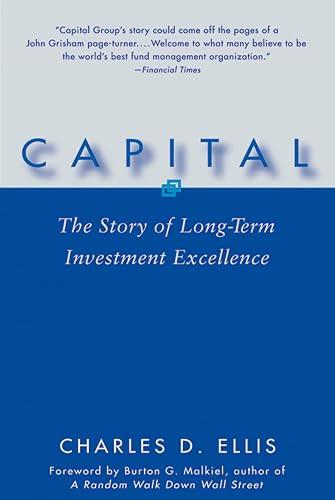
Most investment firms are built on a simple premise: find brilliant people, give them capital, and let them prove their genius. The star manager model dominates the industry. It produces famous names, dramatic wins, and spectacular failures. It also produces a fundamental instability. Stars leave. Stars age. Stars have bad years. And when a star departs, clients often discover that the firm's reputation was tied to a single person rather than a durable system.
**Author:** Charles D. Ellis
**Estimated Reading Time:** 45 minutes
**What You'll Learn:**
How a small Los Angeles investment firm grew into one of the world's most respected money managers by rejecting conventional wisdom about talent, structure, and success. You will learn the principles behind Capital Group's multiple-counselor system, its research-driven investment philosophy, its unusual approach to compensation and ownership, and the cultural commitments that produced decades of exceptional performance.
**Who This Book Is For:**
Investors who want to understand how professional money management actually works. Leaders who want to build organizations that retain exceptional talent. Students of business history who want to see how a private firm sustained excellence across generations. Anyone curious about what separates enduring investment firms from those that flame out.
Most investment firms are built on a simple premise: find brilliant people, give them capital, and let them prove their genius. The star manager model dominates the industry. It produces famous names, dramatic wins, and spectacular failures. It also produces a fundamental instability. Stars leave. Stars age. Stars have bad years. And when a star departs, clients often discover that the firm's reputation was tied to a single person rather than a durable system. Capital Group took a different path. Founded in Los Angeles in 1931 by Jonathan Bell Lovelace, the firm grew from a small investment operation into one of the largest and most respected money managers in the world. It did so not by finding the single best investor, but by building an organization that could develop many excellent investors and allow them to work together in a structure that amplified their strengths and contained their weaknesses. The story of Capital Group matters because it challenges nearly every assumption the investment industry holds dear. The industry assumes that concentrated decision-making produces better results. Capital distributed decision-making across multiple counselors. The industry assumes that compensation must be highly individualized to motivate performance. Capital built a compensation system that emphasized collective success and broad ownership. The industry assumes that growth requires selling equity or going public. Capital remained private and deliberately structured its ownership to keep shares in the hands of its people. Charles D. Ellis spent years studying Capital Group and was granted unusual access to the firm's history, people, and internal documents. The result is not a sanitized corporate history. It is a detailed examination of how an organization can succeed by taking the long view in an industry obsessed with quarterly results. The problem Capital Group solved is one that every knowledge-based organization faces. How do you attract exceptionally talented people without letting individual egos dominate? How do you maintain quality as you grow? How do you preserve a culture across generations of…
Continue reading in the MinuteRead app
Get the complete 30-minute summary of Capital
Get the complete summary in the appBuild the organization around talented people, not around a single star.
Conduct deep, firsthand research before making decisions.
Distribute decision-making across multiple people to reduce risk and scale expertise.
Give talented people real authority and responsibility, or they will leave.
Make integrity a cultural value, not just a compliance program.
Align compensation and ownership with long-term collective success.
"Capital" is a strong fit if you want practical ideas around finance, business, management, especially themes like build the organization around talented people, not around a single star; conduct deep, firsthand research before making decisions. The MinuteRead summary distills these concepts into a focused read, whether you're deciding whether to buy the book or applying its lessons at work.
Motivated to help readers with "In the final analysis, Charles D. Ellis wrote “Capital” to package those ideas for a fast, focused read. In “Capital”, Charles D. Ellis focuses on "In the final analysis. Through “Capital”, Charles D. Ellis distills the core ideas on finance into lessons readers can absorb in a single short sitting. Readers turn to this work when they want Charles D. Ellis's perspective on the subject without working through the entire original volume. Charles D. Ellis wrote “Capi…
View all summaries by Charles D. EllisContinue Reading
Access the complete 30-minute summary and thousands more nonfiction books in the MinuteRead app.

Continue reading the complete summary in the MinuteRead app.