MinuteRead
30 min
Book summary
Premium summary · Opens in the app · 30 min read
In 1974, a young economist named Peter L. Bernstein found himself in a peculiar position. He was running an investment management firm, yet he had just finished reading a stack of academic papers that suggested much of what his industry did was, at best, useless and, at worst, counterproductive. The papers came from economists like Paul Samuelson, Eugene Fama, and William Sharpe. Their message was unsettling: markets are efficient, prices reflect all available information, and professional money
**Author:** Peter L. Bernstein
**Estimated Reading Time:** 45 minutes
**What You'll Learn:** How a small group of academics revolutionized finance, why their ideas continue to evolve, and what this means for anyone who invests, manages money, or wants to understand how markets truly work.
**Who This Book Is For:** Investors, finance professionals, students of economics, and anyone curious about the intellectual foundations of modern financial markets.
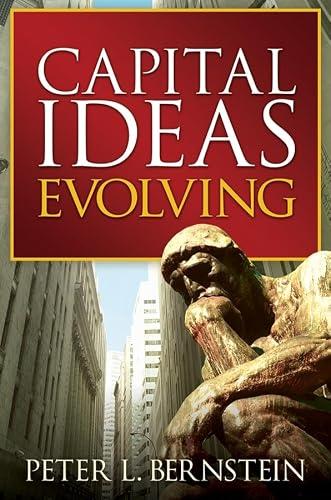
In 1974, a young economist named Peter L. Bernstein found himself in a peculiar position. He was running an investment management firm, yet he had just finished reading a stack of academic papers that suggested much of what his industry did was, at best, useless and, at worst, counterproductive. The papers came from economists like Paul Samuelson, Eugene Fama, and William Sharpe. Their message was unsettling: markets are efficient, prices reflect all available information, and professional money managers cannot consistently beat the market. Most practitioners responded to these ideas with dismissal or hostility. Bernstein responded differently. He recognized that the academics were not attacking the investment profession. They were offering something far more valuable: a framework for understanding how markets actually work, rather than how people wished they worked. This recognition launched Bernstein on a decades-long intellectual journey. He became the bridge between the ivory tower and Wall Street, translating dense academic research into practical wisdom for investors. His 1992 book, Capital Ideas, told the story of how a handful of theorists transformed finance from a collection of folk wisdom into a rigorous discipline. Capital Ideas Evolving, published in 2007, continued that story, examining how those original ideas had developed, been challenged, and been adapted in the years since. The central problem Bernstein addresses is straightforward but profound. For most of human history, investing was an art, not a science. Investors relied on intuition, tips, and rules of thumb. They bought stocks because they liked the company's products or because a friend recommended them. They sold in panic when markets fell and bought in euphoria when markets rose. There was no systematic way to think about risk, no rigorous method for constructing portfolios, and no framework for understanding why prices moved as they did. The consequences of this ignorance were severe. Investors took on far more risk than they realized. They concentrated their portfolios in ways that exposed them to unnecessary losses. They paid high fees for active management that added little value. They made decisions based on emotion rather than evidence. The academic revolution that Bernstein chronicles changed all of this. It began with Harry Markowitz, a graduate student at the University of Chicago who wrote a doctoral dissertation that would eventually earn him a Nobel Prize. Markowitz's insight was deceptively simple: investors…
Continue reading in the MinuteRead app
Get the complete 30-minute summary of Capital Ideas Evolving
Get the complete summary in the appRisk and return are inseparable. Every investment decision is a decision about how much risk to accept.
Diversification is about correlations, not just the number of investments. It is covariance, not variance, that matters.
Markets are efficient, making it extremely difficult to beat them consistently. Passive investing is a rational response
Investors are systematically irrational. Recognize your biases and create rules to counteract them.
Beta is cheap and easy to obtain. Alpha is rare, expensive, and difficult to generate consistently.
Derivatives are tools for managing risk, not eliminating it. Use them carefully and understand their limitations.
"Capital Ideas Evolving" is a strong fit if you want practical ideas around finance, economics, business, especially themes like risk and return are inseparable. every investment decision is a decision about how much risk to accept; diversification is about correlations, not just the number of investments. it is covariance, not variance, that matters. The MinuteRead summary distills these concepts into a focused read, whether you're deciding whether to buy the book or applying its lessons at work.
Motivated to help readers with "Risk was at the core of all these ideas, Peter L. Bernstein wrote “Capital Ideas Evolving” to package those ideas for a fast, focused read. Through “Capital Ideas Evolving”, Peter L. Bernstein distills the core ideas on finance into lessons readers can absorb in a single short sitting. Readers turn to this work when they want Peter L. Bernstein's perspective on the subject without working through the entire original volume. The book is structured so each chapter h…
View all summaries by Peter L. BernsteinContinue Reading
Access the complete 30-minute summary and thousands more nonfiction books in the MinuteRead app.

Continue reading the complete summary in the MinuteRead app.