MinuteRead
30 min
Book summary
by Yuen Yuen Ang
Premium summary · Opens in the app · 30 min read
For decades, a quiet contradiction has sat at the center of global economic discourse. China, by every standard measure, has a serious corruption problem. Transparency International's Corruption Perception Index consistently places the country in the middle ranks, far below the clean governance scores of Western Europe or North America. The Chinese Communist Party's own internal reports describe corruption as "grave" and "shocking." Thousands of officials have been investigated, punished, and im
**Author:** Yuen Yuen Ang
**Estimated Reading Time:** 45 minutes
**What You'll Learn:**
- Why China's economy grew explosively despite widespread corruption - The four distinct types of corruption and how each affects growth differently - How "access money" acts as both a stimulant and a poison for economies - Why conventional corruption rankings mislead policymakers and investors - What China's anti-corruption campaign means for its economic future
**Who This Book Is For:**
Anyone who wants to understand how economies actually develop, beyond the clean theories taught in textbooks. Business leaders operating in emerging markets, policymakers designing anti-corruption programs, investors trying to navigate complex environments, and curious readers who sense that the standard story about corruption and growth does not quite add up will all find value here.
For decades, a quiet contradiction has sat at the center of global economic discourse. China, by every standard measure, has a serious corruption problem. Transparency International's Corruption Perception Index consistently places the country in the middle ranks, far below the clean governance scores of Western Europe or North America. The Chinese Communist Party's own internal reports describe corruption as "grave" and "shocking." Thousands of officials have been investigated, punished, and imprisoned. The scale of illicit wealth accumulation documented in these cases is staggering. Yet China has also produced the most remarkable economic transformation in human history. Since market reforms began in 1978, the country has lifted more than 800 million people out of poverty. It became the world's second-largest economy. It built modern cities, high-speed rail networks, and technology companies that compete globally. This growth was not a brief spurt. It sustained itself for more than four decades, through financial crises, political transitions, and global disruptions. The standard economic playbook says this should not happen. Corruption, we are told, chokes growth. It diverts resources, distorts incentives, undermines trust, and creates uncertainty. Countries that score poorly on governance indicators are supposed to remain poor. Countries that want to grow rich must first clean up their institutions. China appears to violate this rule so dramatically that many economists simply label it an outlier, an anomaly too strange to inform broader theory. Yuen Yuen Ang refuses to accept that label. A political scientist at the University of Michigan who has spent her career studying development and Chinese politics, Ang argues that the problem is not China's exceptionalism. The problem is that our understanding of corruption is far too simple. The word "corruption" bundles together behaviors that have little in common. A police officer shaking down a street vendor for a few yuan is not the same as a provincial governor steering billion-dollar infrastructure contracts to a favored construction firm. A clerk demanding a bribe to process…
Continue reading in the MinuteRead app
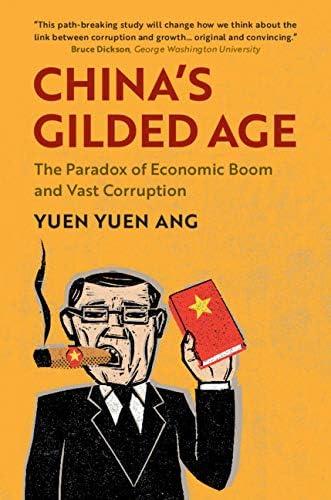
Get the complete 30-minute summary of China's Gilded Age
Get the complete summary in the appCorruption is not one thing. It comes in different types with different economic effects.
The four types are petty theft, grand theft, speed money, and access money.
Access money is the elite exchange of power for profit. It can stimulate growth but creates long-term risks.
China's corruption has evolved toward access money, which helps explain its growth.
The rise of capitalism in the West also saw corruption evolve, not disappear.
Standard corruption measures are too crude to capture these differences.
"China's Gilded Age" is a strong fit if you want practical ideas around china, economics, politics, especially themes like corruption is not one thing. it comes in different types with different economic effects; the four types are petty theft, grand theft, speed money, and access money. The MinuteRead summary distills these concepts into a focused read, whether you're deciding whether to buy the book or applying its lessons at work.
Motivated to help readers with why has China’s economy grown so fast for so long despite vast corruption? A puzzling anomaly, Yuen Yuen Ang wrote “China's Gilded Age” to package those ideas for a fast, focused read. In “China's Gilded Age”, Yuen Yuen Ang focuses on why has China’s economy grown so fast for so long despite vast corruption? A puzzling anomaly. Through “China's Gilded Age”, Yuen Yuen Ang distills the core ideas on china into lessons readers can absorb in a single short sitting. Rea…
Continue Reading
Access the complete 30-minute summary and thousands more nonfiction books in the MinuteRead app.

Continue reading the complete summary in the MinuteRead app.