MinuteRead
30 min
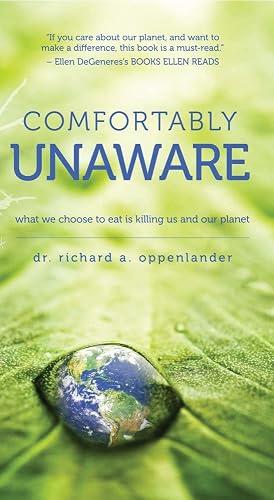
Comfortably Unaware is a well-researched compendium on how our food choices and animal agriculture impact the well-being of the whole planet.
Comfortably Unaware is a well-researched compendium on how our food choices and animal agriculture impact the well-being of the whole planet.
The most basic message you need to swallow up here is that meat and other animal products consumption has a severe impact on the environment. Scientists have proven beyond doubt that raising livestock simply requires incomparably more resources than plant production.
One of these resources is land. Raising animals requires doubling down on the use of farming lands because, on top of the space needed for the livestock itself, farmers also need vast areas to grow food for them.
This causes the destruction of valuable wildlife areas in order to acquire the necessary amount of land. Sadly, a lot of that land comes from cutting down the rainforests, which are arguably the most valuable natural formations in terms of maintaining ecological balance.
Rainforests are considered “the lungs of the Earth,” as they absorb millions of tons of carbon dioxide and produce the oxygen which is vital for human (and other animals) survival. They are also home to numerous species that are key for the local and global ecosystem.
According to Raintree, we are currently losing 78 million acres of rainforests every year. This means 150 acres per minute! That is certainly a speed which is very far from what we may call “sustainable.” And much of this destruction comes from animal farming.
Once we recognize how resource-demanding animal farming is, one natural conclusion should arise. If people, on the global level, adjusted the proportions between their animal and plant consumption – we could easily produce more food with the same amount of resources. Or even – use up fewer resources and still feed every person in the world. Oppenlander claims that if a sufficient chunk of the grains we use to feed livestock was distributed to humans instead, we could overcome the problem of world hunger in no time. This is hardly surprising when you get to see some numbers. According to an ecology professor, David Pimentel, “More than half the U.S. grain and nearly 40 percent of world grain is being fed to livestock rather than being consumed directly by humans.” This means that with the grain it feeds animals, the U.S. could instead provide food for 800 million people. The case of water use is no different. In fact, it seems that livestock consumes even more water than humans do. Worldwatch Institute states that “agriculture uses about 70 percent of the world’s available freshwater, and one third of that is used to grow the grain fed to livestock.” This shows us that any type of agriculture is already incredibly costly. The animal agriculture, however, costs our planet…
Continue reading in the MinuteRead app
Get the complete 5-minute summary of Comfortably Unaware
Get the complete summary in the appAnimal production requires big areas of land, which usually take away from rainforests.
We can easily solve world hunger by a mass transition to a plant-based diet.
One of the biggest problems caused by animal agriculture is pollution.
"Comfortably Unaware" is a strong fit if you want practical ideas around culture, environment, health, especially themes like animal production requires big areas of land, which usually take away from rainforests; we can easily solve world hunger by a mass transition to a plant-based diet. The MinuteRead summary distills these concepts into a focused read, whether you're deciding whether to buy the book or applying its lessons at work.
Motivated to help readers with well-researched compendium on how our food choices and animal agriculture impact the well-being of the whole, explaining how what you eat might be killing you and the planet wrote “Comfortably Unaware” to package those ideas for a fast, focused read. In “Comfortably Unaware”, explaining how what you eat might be killing you and the planet focuses on well-researched compendium on how our food choices and animal agriculture impact the well-being of the whole. Through…
View all summaries by Dr. Richard A. OppenlanderContinue Reading
Access the complete 5-minute summary and thousands more nonfiction books in the MinuteRead app.

Continue reading the complete summary in the MinuteRead app.