MinuteRead
30 min
Book summary
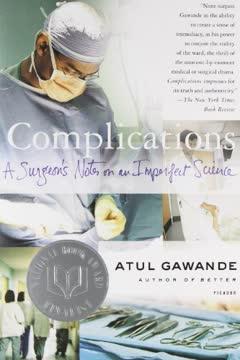
by Atul Gawande
Premium summary · Opens in the app · 30 min read
Medicine presents itself with confidence. White coats, advanced imaging machines, precise laboratory values, and the steady accumulation of scientific knowledge all suggest a field that knows what it is doing. Patients arrive expecting answers. They want a diagnosis, a treatment plan, and a prediction of what will happen next. They want certainty.
**Author:** Atul Gawande **Estimated Reading Time:** 45 minutes
**What You'll Learn:**
Why medicine is far more uncertain than most people believe, how doctors learn to make decisions without complete information, why medical errors happen despite best intentions, and what the true nature of medical expertise looks like in practice.
**Who This Book Is For:**
Anyone who has ever been a patient, anyone who works in healthcare, anyone training to become a clinician, and anyone curious about how imperfect humans practice an imperfect science with remarkable results.
Medicine presents itself with confidence. White coats, advanced imaging machines, precise laboratory values, and the steady accumulation of scientific knowledge all suggest a field that knows what it is doing. Patients arrive expecting answers. They want a diagnosis, a treatment plan, and a prediction of what will happen next. They want certainty. But spend time inside a hospital and you will discover something different. You will find doctors puzzling over symptoms that do not fit any textbook description. You will watch surgeons make judgment calls in the middle of operations when the anatomy does not match what they expected. You will see residents learning procedures on real patients because there is no other way to learn. You will witness errors that harm people despite everyone trying their best. Atul Gawande wrote Complications to pull back the curtain on this reality. As a surgical resident at Brigham and Women's Hospital in Boston, he occupied a unique position. He was learning to become a surgeon while simultaneously observing the profession with the eye of a writer. What he saw was not the polished image of medicine that patients imagine. He saw a field defined by uncertainty, fallibility, and constant adaptation. The book addresses a fundamental tension. Medicine has made extraordinary progress. Diseases that killed people a century ago are now treatable. Surgeries that were once impossible are now routine. Yet the practice of medicine remains deeply human, which means it remains deeply imperfect. Doctors make decisions with incomplete information. They rely on intuition developed through experience. They make mistakes. They learn from those mistakes, sometimes at the expense of patients. Gawande's central insight is that acknowledging this imperfection is not a criticism of medicine. It is the key to understanding how medicine actually works and how it can improve. The doctors who pretend to be certain are often the most dangerous. The ones who recognize their limitations, who question their assumptions, who seek help when they are unsure, are the ones who provide the best care. This matters because every reader will eventually be a patient. Understanding the reality of medicine helps you ask better questions, make better decisions, and navigate a system that is far…
Continue reading in the MinuteRead app
Get the complete 30-minute summary of Complications
Get the complete summary in the appMedicine is defined by uncertainty. Doctors must make decisions without complete information.
Every expert was once a beginner. Medical training requires practicing on real patients.
Most medical errors are caused by systemic flaws, not individual incompetence.
Fixing systems is more effective than blaming individuals.
Specialization and repetition lead to better outcomes.
Technology supplements but does not replace clinical judgment.
"Complications" is a strong fit if you want practical ideas around health & fitness, medicine, medical, especially themes like medicine is defined by uncertainty. doctors must make decisions without complete information; every expert was once a beginner. medical training requires practicing on real patients. The MinuteRead summary distills these concepts into a focused read, whether you're deciding whether to buy the book or applying its lessons at work.
Atul Gawande is a renowned surgeon, writer, and public health researcher. Born to Indian parents and raised in Ohio, he has authored several bestselling books, including "Complications," "Better," and "Being Mortal." Gawande works as a surgeon at Brigham and Women's Hospital in Boston and is a staff writer for The New Yorker. He holds professorships at Harvard Medical School and the Harvard School of Public Health. Gawande's contributions to medical literature have earned him numerous accolades,…
View all summaries by Atul GawandeContinue Reading
Access the complete 30-minute summary and thousands more nonfiction books in the MinuteRead app.

Continue reading the complete summary in the MinuteRead app.