MinuteRead
30 min
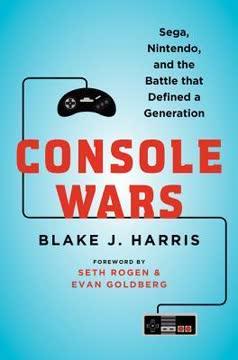
In the late 1980s, the video game industry was not really an industry at all. It was a kingdom. And Nintendo ruled it with absolute authority.
**Author:** Blake J. Harris **Estimated Reading Time:** 45 minutes
**What You'll Learn:** How a struggling toy company executive took on the most dominant entertainment brand in America and nearly won. You will learn the inside story of how Sega challenged Nintendo's monopoly, the marketing battles that defined a generation, the corporate infighting that ultimately doomed Sega's success, and the timeless business lessons hidden inside one of the greatest underdog stories in modern business history.
**Who This Book Is For:** This book is for anyone who has ever rooted for an underdog. It is for business leaders who want to understand how bold marketing and calculated risk can topple giants. It is for gamers who grew up during the 16-bit era and want to know what really happened behind the scenes. And it is for anyone fascinated by the intersection of creativity, competition, and corporate ambition.
In the late 1980s, the video game industry was not really an industry at all. It was a kingdom. And Nintendo ruled it with absolute authority. Nintendo controlled which games could be made, how many copies could be manufactured, when they would ship, and how they would be priced. Retailers who displeased Nintendo found their supplies mysteriously delayed. Developers who questioned Nintendo's policies discovered that their licensing agreements were suddenly in jeopardy. The company's mascot, a cheerful plumber named Mario, had become more recognizable to American children than Mickey Mouse. By 1990, Nintendo controlled roughly 90 percent of the American video game market. The company generated more revenue than all of its competitors combined, and its profits rivaled those of major Hollywood studios. To most observers, the game was over. Nintendo had won. Then Tom Kalinske walked into a meeting that would change everything. Kalinske was not a gamer. He had spent his career at Mattel, where he had resurrected the Barbie brand and turned He-Man into a cultural phenomenon. He understood something that the engineers and programmers running the video game industry did not: entertainment is not about technology. It is about emotion. It is about identity. It is about making people feel something. When Kalinske took over as CEO of Sega of America in 1990, the company was an afterthought. The Genesis console had launched to modest sales, and Sega's American division was losing money. The Japanese parent company viewed the American market as a secondary concern. Nintendo's dominance seemed absolute. Kalinske saw something different. He saw a company with superior technology and no idea how to sell it. He saw a market that was ready to grow beyond children and into teenagers and adults. He saw an opportunity to position Sega not as a Nintendo competitor but as the anti-Nintendo, the choice…
Continue reading in the MinuteRead app
Get the complete 30-minute summary of Console Wars
Get the complete summary in the appDominance is never permanent. Complacency creates vulnerability.
The most powerful weapon against a monopolist is a better story, not just a better product.
Bold action, backed by clear reasoning, can produce outsized results.
A strong brand identity is a statement about who you are and who you serve.
The best positioning is often defined in contrast to the dominant competitor.
Marketing creates identity and meaning, not just awareness.
"Console Wars" is a strong fit if you want practical ideas around history, video games, business, especially themes like dominance is never permanent. complacency creates vulnerability; the most powerful weapon against a monopolist is a better story, not just a better product. The MinuteRead summary distills these concepts into a focused read, whether you're deciding whether to buy the book or applying its lessons at work.
Blake J. Harris is an author and filmmaker known for his work on video game history. His writing style blends non-fiction with narrative techniques, aiming to create engaging stories from historical events. Harris conducted extensive interviews with industry figures to write Console Wars, his first book. He has also been involved in producing a documentary and feature film adaptation of the book. Harris's approach to storytelling has been both praised for its readability and criticized for takin…
View all summaries by Blake J. HarrisContinue Reading
Access the complete 30-minute summary and thousands more nonfiction books in the MinuteRead app.

Continue reading the complete summary in the MinuteRead app.