MinuteRead
30 min
Book summary
by Alan T. Norman
Premium summary · Opens in the app · 30 min read
Money is one of the oldest technologies in human civilization. For thousands of years, people have used shells, salt, gold, paper notes, and digital entries in bank ledgers to exchange value. Each transition brought new possibilities and new problems. Each transition also met resistance from people who believed the old system was the only system that could work.
**Author:** Alan T. Norman
**Estimated Reading Time:** 45 minutes
**What You'll Learn:** - How cryptocurrency fundamentally changes the relationship between people and money - Why Bitcoin emerged as the first viable decentralized currency and how it works - What blockchain technology actually does and why it matters beyond crypto - How Ethereum and smart contracts expanded what decentralized systems can accomplish - Practical methods for securing digital assets, choosing exchanges, and evaluating investments - Trading techniques, mining fundamentals, and the risks and rewards of ICOs
**Who This Book Is For:** This book is for anyone who has heard about cryptocurrency but feels uncertain about what it actually is, how it works, or whether it deserves a place in their financial life. It is for the curious beginner who wants a clear explanation without hype, and for the experienced investor who wants a structured overview of the entire crypto landscape. If you have ever wondered whether Bitcoin is a legitimate innovation or a speculative bubble, this book will give you the tools to form your own informed opinion.
Money is one of the oldest technologies in human civilization. For thousands of years, people have used shells, salt, gold, paper notes, and digital entries in bank ledgers to exchange value. Each transition brought new possibilities and new problems. Each transition also met resistance from people who believed the old system was the only system that could work. We are now living through another transition. Cryptocurrency represents something genuinely new in the history of money. For the first time, it is possible to transfer value directly between two people anywhere in the world without a bank, without a government, without any intermediary at all. This is not a minor improvement to the existing financial system. It is a fundamental change in how trust is established and maintained. Traditional money relies on centralized authority. A bank verifies that you have funds before you can spend them. A government guarantees that a paper note has value. A payment processor confirms that a transaction is legitimate. These intermediaries provide trust, but they also extract fees, impose limits, and exercise control. They can freeze accounts, block transactions, and inflate the money supply. Cryptocurrency takes a different approach. Instead of trusting an institution, you trust mathematics. Instead of relying on a central authority, you rely on a distributed network of computers that collectively verify every transaction. Instead of asking permission to move your own money, you simply move it. This idea first captured public attention in 2008, when an anonymous person or group using the name Satoshi Nakamoto published a white paper describing Bitcoin. The timing was not coincidental. The global financial crisis had just demonstrated the fragility…
Continue reading in the MinuteRead app
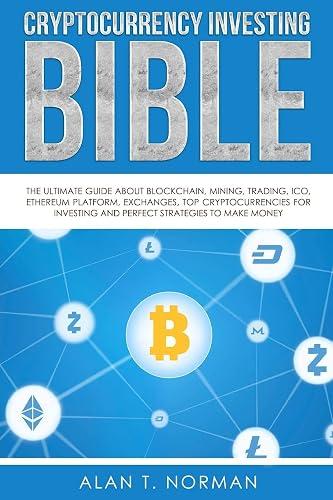
Get the complete 30-minute summary of Cryptocurrency Investing Bible
Get the complete summary in the appCryptocurrency replaces trust in institutions with trust in mathematics and code.
Bitcoin is the first decentralized digital currency, with a fixed supply of 21 million coins.
Blockchain is an immutable, distributed ledger that records transactions without a central authority.
Ethereum introduced smart contracts, enabling decentralized applications and decentralized finance.
Your private key is the most important thing to protect. If you lose it, you lose your funds. If someone steals it, they
Never invest more than you can afford to lose. The crypto market is extremely volatile.
"Cryptocurrency Investing Bible" is a strong fit if you want practical ideas around technology, business, finance, especially themes like cryptocurrency replaces trust in institutions with trust in mathematics and code; bitcoin is the first decentralized digital currency, with a fixed supply of 21 million coins. The MinuteRead summary distills these concepts into a focused read, whether you're deciding whether to buy the book or applying its lessons at work.
Motivated to help readers with 1) Cryptocurrency: The Future of Finance and Trust 2) Bitcoin: The Pioneer of Digital Currency 3) Blockchain:, Alan T. Norman wrote “Cryptocurrency Investing Bible” to package those ideas for a fast, focused read. In “Cryptocurrency Investing Bible”, Alan T. Norman focuses on 1) Cryptocurrency: The Future of Finance and Trust 2) Bitcoin: The Pioneer of Digital Currency 3) Blockchain:. Through “Cryptocurrency Investing Bible”, Alan T. Norman distills the core ideas …
Continue Reading
Access the complete 30-minute summary and thousands more nonfiction books in the MinuteRead app.

Continue reading the complete summary in the MinuteRead app.