MinuteRead
30 min
Book summary
Premium summary · Opens in the app · 30 min read
The year is 1871. Japan, having emerged from centuries of self-imposed isolation just seventeen years earlier, is racing to catch up with the Western world. The Meiji government has dismantled the old feudal order and is sending diplomats, students, and observers across the globe to absorb everything they can about modern industry, government, science, and culture. The country is transforming at a dizzying pace, and every institution is being reexamined.
**Author:** Janice P. Nimura **Estimated Reading Time:** 45 minutes
**What You'll Learn:**
How three young Japanese girls, sent to America in 1871, became pioneers who shaped the future of women's education in Japan. You will discover their struggles with identity, their triumphs in learning, and the profound ways their lives bridged two worlds during a time of extraordinary change.
**Who This Book Is For:**
Readers fascinated by untold stories of women in history, those interested in cross-cultural exchange, anyone curious about Japan's transformation during the Meiji era, and people who appreciate narratives about courage, adaptation, and the quiet power of education.
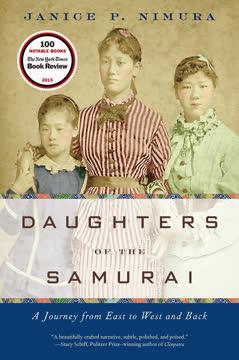
The year is 1871. Japan, having emerged from centuries of self-imposed isolation just seventeen years earlier, is racing to catch up with the Western world. The Meiji government has dismantled the old feudal order and is sending diplomats, students, and observers across the globe to absorb everything they can about modern industry, government, science, and culture. The country is transforming at a dizzying pace, and every institution is being reexamined. In the midst of this upheaval, a remarkable decision is made. The government will send five young girls to America to be educated. They are not princesses or daughters of the highest nobility. They are the children of samurai families, families that had fought against the new order and lost. Their fathers, seeking to secure a place for their daughters in the new Japan, volunteer them for an unprecedented experiment. The girls range in age from six to fourteen. They speak no English. They have never left Japan. They do not know when they will return or what will be expected of them when they do. Their mission is simple to state and staggering in its implications: go to America, learn everything you can, and come back to help build a new kind of Japanese woman. This book tells the story of three of those girls. Sutematsu Yamakawa, the eldest at eleven, who would become a baroness and one of the most influential women in Japan. Shige Nagai, ten years old, who would marry a naval hero and become a pioneer in music education. And Ume Tsuda, the youngest at just six, who would found one of Japan's most prestigious women's universities. Their story spans decades and continents. It begins in a Japan still emerging from feudalism, moves through the parlors and classrooms of Victorian America, and returns to a Japan struggling to define itself as a modern nation. Along the way, these three women would navigate questions that remain urgent today: How do you honor your heritage while embracing change? What does it mean to be educated? What is the role of women in building a society? Janice…
Continue reading in the MinuteRead app
Get the complete 30-minute summary of Daughters of the Samurai
Get the complete summary in the appIn 1871, the Japanese government sent five young girls to America to be educated, an unprecedented decision driven by th
Three of these girls, Sutematsu Yamakawa, Shige Nagai, and Ume Tsuda, spent a decade in America, becoming thoroughly imm
Their American education taught them not just knowledge but how to think independently, a skill that would prove invalua
Returning to Japan was jarring. The women had become strangers in their own country, struggling to reconcile their Ameri
Each woman found her own path: Sutematsu used her position as the wife of a powerful man to advocate for women's educati
Ume Tsuda founded the Women's Home School of English in 1900, which became Tsuda College, one of Japan's most prestigiou
"Daughters of the Samurai" is a strong fit if you want practical ideas around history, japan, biography, especially themes like in 1871, the japanese government sent five young girls to america to be educated, an unprecedented decision driven by th; three of these girls, sutematsu yamakawa, shige nagai, and ume tsuda, spent a decade in america, becoming thoroughly imm. The MinuteRead summary distills these concepts into a focused read, whether you're deciding whether to buy the book or applying its lessons at work.
Janice P. Nimura is an accomplished author and historian. Her work on Daughters of the Samurai earned her critical acclaim, with the book being named a New York Times Notable book in 2015. Nimura's research has been supported by prestigious institutions, including a Public Scholar Award from the National Endowment for the Humanities for her work on The Doctors Blackwell. Her writing extends beyond books, with essays and reviews appearing in major publications such as the New York Times, Washingt…
View all summaries by Janice P. NimuraContinue Reading
Access the complete 30-minute summary and thousands more nonfiction books in the MinuteRead app.

Continue reading the complete summary in the MinuteRead app.