MinuteRead
30 min
Book summary
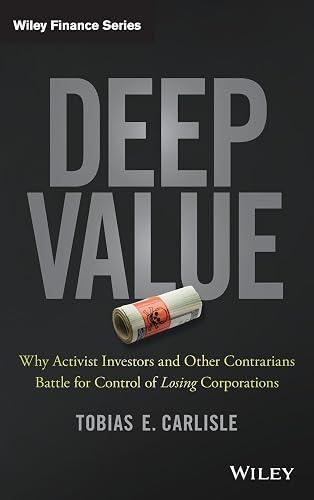
by Tobias E. Carlisle
Premium summary · Opens in the app · 30 min read
The stock market is not a rational machine. It is a collection of human beings, each carrying their own fears, biases, and tendencies to overreact. When a company reports bad news, investors flee. When a stock price collapses, analysts downgrade it. When an industry enters a downturn, capital rushes elsewhere. The result is predictable: certain stocks become so disliked, so abandoned, that their prices fall far below what the underlying businesses are actually worth.
**Author:** Tobias E. Carlisle
**Estimated Reading Time:** 45 minutes
**What You'll Learn:**
- Why the most hated stocks in the market often deliver the best returns - How mean reversion creates predictable opportunities for patient investors - What quantitative metrics actually identify undervalued companies - Why activist investors accelerate value realization - How to combine screening tools with qualitative analysis to avoid value traps - The psychological discipline required to buy when others are selling
**Who This Book Is For:**
This book is for investors who want to understand why buying out-of-favor stocks works, how to identify genuine opportunities, and what it takes to profit from market pessimism. It is for those willing to think independently when everyone else is running for the exits. If you have ever wondered whether the market's most despised companies might actually be its best investments, this book will show you why that is often true.
The stock market is not a rational machine. It is a collection of human beings, each carrying their own fears, biases, and tendencies to overreact. When a company reports bad news, investors flee. When a stock price collapses, analysts downgrade it. When an industry enters a downturn, capital rushes elsewhere. The result is predictable: certain stocks become so disliked, so abandoned, that their prices fall far below what the underlying businesses are actually worth. This is where deep value investing lives. Tobias Carlisle spent years studying the phenomenon of deep value, examining decades of market data, academic research, and the careers of legendary investors. What he found challenges conventional wisdom. The stocks that look most dangerous often turn out to be the most profitable. The companies everyone hates frequently deliver the strongest future returns. The investments that feel comfortable rarely outperform. The problem is that human psychology works against us. We are wired to avoid pain, and buying a stock that has fallen 60 percent feels painful. We are wired to follow the crowd, and buying what everyone else is selling feels lonely. We are wired to extrapolate recent trends into the future, and assuming a struggling company will keep struggling feels natural. None of these instincts serve investors well. Carlisle's work draws on the foundational insights of Benjamin Graham, the father of value investing, who understood that the market's mood swings create opportunities. Graham taught that a stock is not just a ticker symbol but a fractional ownership in a real business. When the market prices that business far below its liquidation value, the investor who buys it has a margin of safety. Even if things go wrong, the downside is limited. If things go right, the upside is substantial. But Carlisle goes further. He examines the empirical…
Continue reading in the MinuteRead app
Get the complete 30-minute summary of Deep Value
Get the complete summary in the appDeep value stocks are out-of-favor companies trading at significant discounts to intrinsic value due to temporary proble
The margin of safety, the gap between price and value, protects against permanent loss and creates potential for substan
Mean reversion drives returns: poor performance tends to improve, and good performance tends to deteriorate.
Behavioral biases, including loss aversion, recency bias, and herding, create persistent mispricings that deep value inv
The enterprise value-to-EBIT multiple is the most effective metric for identifying undervalued stocks.
Activist investors accelerate value realization by forcing changes in underperforming companies.
"Deep Value" is a strong fit if you want practical ideas around finance, business, economics, especially themes like deep value stocks are out-of-favor companies trading at significant discounts to intrinsic value due to temporary proble; the margin of safety, the gap between price and value, protects against permanent loss and creates potential for substan. The MinuteRead summary distills these concepts into a focused read, whether you're deciding whether to buy the book or applying its lessons at work.
Motivated to help readers with investment triumph disguised as business disaster, Tobias E. Carlisle wrote “Deep Value” to package those ideas for a fast, focused read. In “Deep Value”, Tobias E. Carlisle focuses on investment triumph disguised as business disaster. Through “Deep Value”, Tobias E. Carlisle distills the core ideas on finance into lessons readers can absorb in a single short sitting. Readers turn to this work when they want Tobias E. Carlisle's perspective on the subject without w…
Continue Reading
Access the complete 30-minute summary and thousands more nonfiction books in the MinuteRead app.

Continue reading the complete summary in the MinuteRead app.