MinuteRead
30 min
Book summary
Premium summary · Opens in the app · 30 min read
In the late 1990s, as stock markets soared to unprecedented heights, a peculiar phenomenon swept across America. Day trading firms opened in shopping malls. Taxi drivers offered stock tips. A sock puppet became a cultural icon by mocking the absurdity of internet stock valuations. The belief that technology had fundamentally transformed the economy, and that old rules of valuation no longer applied, gripped the public imagination.
**Author:** Edward Chancellor
**Estimated Reading Time:** 45 minutes
**What You'll Learn:**
- Why speculative manias have recurred throughout history with remarkable consistency - How technological innovation repeatedly fuels financial bubbles - The psychological forces that drive otherwise rational people into speculative frenzies - Why governments consistently fail to prevent or control speculative excess - What the history of speculation reveals about human nature and modern markets
**Who This Book Is For:**
This book is for anyone who has ever wondered why financial markets swing between euphoria and despair. It is for investors seeking to understand the forces that shape market cycles, for students of history who want to grasp how speculation has influenced the rise and fall of nations, and for curious readers who sense that the story of financial markets is ultimately a story about human nature itself.
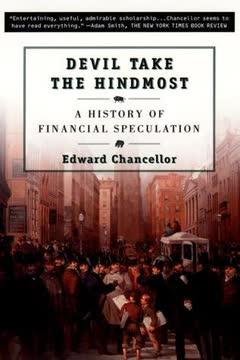
In the late 1990s, as stock markets soared to unprecedented heights, a peculiar phenomenon swept across America. Day trading firms opened in shopping malls. Taxi drivers offered stock tips. A sock puppet became a cultural icon by mocking the absurdity of internet stock valuations. The belief that technology had fundamentally transformed the economy, and that old rules of valuation no longer applied, gripped the public imagination. Then, as suddenly as it began, it ended. Trillions of dollars evaporated. The Nasdaq collapsed. The sock puppet disappeared. What made this episode so remarkable was not its uniqueness but its familiarity. The internet bubble of the late 1990s was not an aberration. It was the latest chapter in a story that stretches back centuries, a story of human beings repeatedly convincing themselves that this time is different, that the old rules no longer apply, that the future holds unlimited promise. Edward Chancellor wrote *Devil Take the Hindmost* to explore this recurring pattern. The book traces the history of financial speculation from ancient Rome through the modern era, examining how speculative manias have shaped economies, societies, and individual lives. Chancellor's central insight is both simple and profound: speculation is not a flaw in the capitalist system but a fundamental feature of it. The same human impulses that drive economic progress also drive periodic episodes of collective madness. The problem, Chancellor argues, is not that speculation exists but that we consistently fail to recognize it for what it is. Each generation believes it has learned from the mistakes of the past, yet each generation repeats them. The tulip mania of seventeenth-century Holland, the South Sea Bubble of eighteenth-century England, the railway mania of the nineteenth century, the stock market boom of the 1920s, the Japanese bubble of the 1980s, and the internet mania of the 1990s all follow remarkably similar patterns. The technologies change. The financial…
Continue reading in the MinuteRead app
Get the complete 30-minute summary of Devil Take the Hindmost
Get the complete summary in the appSpeculation is a fundamental human impulse, not a financial aberration. It has existed in every era and will continue to
Speculative manias follow predictable patterns: a new opportunity emerges, early participants profit, others rush to joi
Technological innovation is the primary catalyst for speculative manias. The technology can be real while the speculativ
Credit fuels speculation. Leverage magnifies gains during booms and losses during busts.
Fraud and manipulation are endemic to speculative periods. When something seems too good to be true, it probably is.
Governments consistently fail to prevent speculative excess. Regulators are subject to the same psychological forces as
"Devil Take the Hindmost" is a strong fit if you want practical ideas around finance, history, economics, especially themes like speculation is a fundamental human impulse, not a financial aberration. it has existed in every era and will continue to; speculative manias follow predictable patterns: a new opportunity emerges, early participants profit, others rush to joi. The MinuteRead summary distills these concepts into a focused read, whether you're deciding whether to buy the book or applying its lessons at work.
Edward Chancellor is a British journalist, financial historian, and investment strategist. He gained recognition for his work on financial speculation and market history. Chancellor's background includes experience as an investment banker and a stint at GMO, a prominent asset management firm. His writing is characterized by thorough research and a keen understanding of financial markets. Chancellor's expertise extends beyond historical analysis to contemporary market trends, as evidenced by his …
View all summaries by Edward ChancellorContinue Reading
Access the complete 30-minute summary and thousands more nonfiction books in the MinuteRead app.

Continue reading the complete summary in the MinuteRead app.