MinuteRead
30 min
Book summary
Premium summary · Opens in the app · 30 min read
Every year, millions of Indians make investment decisions that will determine the quality of their retirement, their children's education, and their family's financial security. Most of these decisions are made without understanding the fundamental principles that separate successful investing from speculation. The result is predictable: wealth gets parked in assets that barely keep pace with inflation, savings get depleted by poorly understood risks, and opportunities to build lasting prosperit
**Author:** Saurabh Mukherjea
**Estimated Reading Time:** 45 minutes
**What You'll Learn:** How to identify exceptional Indian companies with sustainable competitive advantages, avoid accounting fraud, understand why conventional investment wisdom fails in India, and build a portfolio of stocks that can compound wealth over decades.
**Who This Book Is For:** Individual investors seeking a rigorous framework for investing in Indian equities, professionals wanting to understand the nuances of the Indian market, and anyone who has wondered why conventional financial advice often leads to disappointing results.
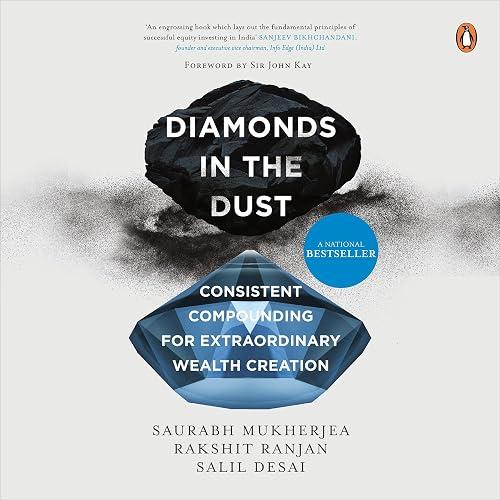
Every year, millions of Indians make investment decisions that will determine the quality of their retirement, their children's education, and their family's financial security. Most of these decisions are made without understanding the fundamental principles that separate successful investing from speculation. The result is predictable: wealth gets parked in assets that barely keep pace with inflation, savings get depleted by poorly understood risks, and opportunities to build lasting prosperity slip away. Saurabh Mukherjea wrote this book to address a specific problem: the Indian stock market is fundamentally different from developed markets, yet most investment advice available to Indian investors is imported wholesale from the United States and Europe. The assumptions underlying that advice often do not hold in India. The result is that investors apply tools and frameworks that were never designed for the Indian context, and they suffer the consequences. The Indian market presents unique challenges. Accounting fraud is more prevalent than in developed markets. The economy's structure creates unusual competitive dynamics, with a handful of companies dominating entire industries for decades. Liquidity is concentrated in a small number of stocks. The relationship between risk and return behaves differently than standard financial theory predicts. These differences are not minor adjustments; they fundamentally change how an investor should approach the market. Mukherjea's central insight is that successful investing in India requires a different playbook. Instead of chasing high-beta stocks in the hope of outsized returns, investors should focus on crushing risk. Instead of trying to time the market, they should identify companies with sustainable competitive advantages and hold them for long periods. Instead of trusting financial statements at face value, they should develop forensic accounting skills to separate genuine businesses from fraudulent ones. The book's title captures this philosophy. The Indian market contains genuine diamonds: companies with extraordinary competitive positions, honest management, and the ability to compound capital at high rates for decades. But these diamonds are buried in dust: the thousands of mediocre, overvalued, and sometimes fraudulent companies that populate the market. The investor's job is to develop the skills to find the diamonds and avoid the dust. This matters because the stakes are high. The Reserve Bank of India has documented that Indian households…
Continue reading in the MinuteRead app
Get the complete 30-minute summary of Diamonds in the Dust
Get the complete summary in the appCrush risk, do not chase it. In India, lower-risk stocks have historically delivered higher returns.
Verify accounting quality before anything else. If the numbers cannot be believed, no analysis can save you.
Reduce allocation to physical assets like gold and real estate, which have failed to deliver returns exceeding inflation
Reject CAPM. Its assumptions do not hold in India, and its predictions fail empirically.
Focus on four risks: accounting, revenue, profit, and liquidity.
Identify Consistent Compounders: companies with dominant positions and sustained high returns on capital.
"Diamonds in the Dust" is a strong fit if you want practical ideas around finance, business, money, especially themes like crush risk, do not chase it. in india, lower-risk stocks have historically delivered higher returns; verify accounting quality before anything else. if the numbers cannot be believed, no analysis can save you. The MinuteRead summary distills these concepts into a focused read, whether you're deciding whether to buy the book or applying its lessons at work.
Motivated to help readers with financial statements provide the critical window to understanding and evaluating the operating performance, Saurabh Mukherjea wrote “Diamonds in the Dust” to package those ideas for a fast, focused read. In “Diamonds in the Dust”, Saurabh Mukherjea focuses on financial statements provide the critical window to understanding and evaluating the operating performance. Through “Diamonds in the Dust”, Saurabh Mukherjea distills the core ideas on finance into lessons rea…
View all summaries by Saurabh MukherjeaContinue Reading
Access the complete 30-minute summary and thousands more nonfiction books in the MinuteRead app.

Continue reading the complete summary in the MinuteRead app.