MinuteRead
30 min
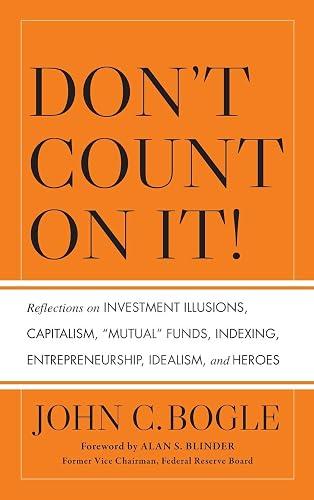
Most people believe the financial system exists to help them build wealth. They trust that mutual fund managers, financial advisors, and corporate executives are working diligently on their behalf. They assume that the stock market, for all its ups and downs, ultimately rewards patient investors who participate in the growth of American business.
**Author:** John C. Bogle
**Estimated Reading Time:** 45 minutes
**What You'll Learn:** - Why the financial system extracts massive value from investors while claiming to serve them - How costs, taxes, and speculation silently destroy long-term wealth - Why index funds represent a superior investment approach for most people - How corporate governance and fiduciary standards have eroded over decades - What true entrepreneurship looks like when built on ethical vision and service
**Who This Book Is For:** Individual investors who want to understand what really happens to their money, professionals seeking a clearer view of the financial industry's structural problems, and anyone who suspects the investment world is not working in their best interest.
Most people believe the financial system exists to help them build wealth. They trust that mutual fund managers, financial advisors, and corporate executives are working diligently on their behalf. They assume that the stock market, for all its ups and downs, ultimately rewards patient investors who participate in the growth of American business. John C. Bogle spent his entire career discovering that these assumptions are dangerously wrong. The financial system, as Bogle came to understand it over more than five decades in the investment industry, has gradually transformed from a mechanism for allocating capital to productive enterprises into a massive extraction machine. It takes value from investors rather than creating value for them. It enriches intermediaries at the expense of the people whose money makes the entire system possible. This book, a collection of Bogle's essays and speeches written during the financial crisis of 2008 and its aftermath, represents the culmination of his thinking about what went wrong and what must change. Bogle wrote these pieces not as an academic exercise but as a warning. He saw the collapse coming. He understood the structural flaws that made it inevitable. And he believed that ordinary investors deserved to know the truth about how the system really works. The core problem Bogle identifies is deceptively simple. The stock market generates returns based on the earnings and dividends of American businesses. Those returns are real and substantial over time. But between the market's gross returns and what investors actually receive stands a vast apparatus of costs: management fees, transaction costs, sales loads, marketing expenses, taxes, and the profits of financial intermediaries. Each layer takes its cut. By the time investors receive what remains, the miracle of compound growth has been severely diminished. Bogle illustrates this with a stark example. An initial investment of $1,000 in the stock market, left untouched for fifty years at historical rates of return, would grow to approximately $212,000 in nominal terms. But after accounting for the costs of active management, transaction fees, and…
Continue reading in the MinuteRead app
Get the complete 30-minute summary of Don't Count on It!
Get the complete summary in the app**Costs matter more than almost anything else in investing.** The lower your costs, the higher your net returns.
**The financial system extracts value from investors rather than creating value for them.** Intermediation costs consume
**Index funds outperform most actively managed funds over time.** This is arithmetic, not opinion.
**Past performance does not predict future results.** Chasing hot funds is a recipe for buying high and selling low.
**Speculation is a game that most players lose.** The market's long-term returns belong to patient investors, not active
**The fiduciary principle has been eroded.** Many financial professionals are not required to act in your best interests
"Don't Count on It!" is a strong fit if you want practical ideas around finance, business, economics, especially themes like **costs matter more than almost anything else in investing.** the lower your costs, the higher your net returns; **the financial system extracts value from investors rather than creating value for them.** intermediation costs consume. The MinuteRead summary distills these concepts into a focused read, whether you're deciding whether to buy the book or applying its lessons at work.
Motivated to help readers with "Net returns to investors = Gross returns on the assets - Costs of operating the financial system" Hidden, John C. Bogle wrote “Don't Count on It!” to package those ideas for a fast, focused read. In “Don't Count on It!”, John C. Bogle focuses on "Net returns to investors = Gross returns on the assets - Costs of operating the financial system" Hidden. Through “Don't Count on It!”, John C. Bogle distills the core ideas on finance into lessons readers can absorb in a…
View all summaries by John C. BogleContinue Reading
Access the complete 30-minute summary and thousands more nonfiction books in the MinuteRead app.

Continue reading the complete summary in the MinuteRead app.