MinuteRead
30 min
A man walks through a field at dusk and sees a ghost. His heart pounds. His breath quickens. He freezes, certain that something terrible stands before him. But when he draws closer, he discovers the truth: it is not a ghost at all. It is dried grass swaying in the evening wind.
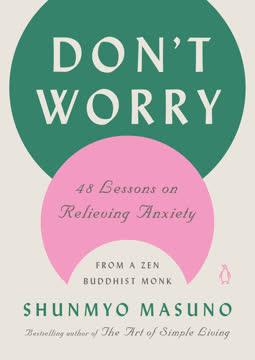
**Author:** Shunmyō Masuno **Estimated Reading Time:** 45 minutes
**What You'll Learn:** - Why most worries are illusions created by your own mind - How Zen principles can strip away anxiety and restore calm - Practical techniques for living with greater presence and less fear - How to transform comparison, attachment, and judgment into peace
**Who This Book Is For:** Anyone who lies awake at night replaying conversations, dreading tomorrow, or feeling crushed by the weight of imagined disasters. If your mind manufactures problems faster than life can deliver them, this book offers a different way.
A man walks through a field at dusk and sees a ghost. His heart pounds. His breath quickens. He freezes, certain that something terrible stands before him. But when he draws closer, he discovers the truth: it is not a ghost at all. It is dried grass swaying in the evening wind. This Japanese proverb captures something essential about human suffering. Most of what terrifies us is not real. It is a projection, an assumption, a shadow cast by our own anxious minds. We see ghosts everywhere, but almost none of them exist. Shunmyō Masuno has spent decades listening to people describe their fears. As the head priest of a 450-year-old Zen Buddhist temple in Japan, he has counseled countless individuals through grief, anxiety, career uncertainty, relationship struggles, and existential dread. What he has discovered is remarkably consistent: nearly every worry that torments people lacks substance. It is withered grass mistaken for something monstrous. The problem is not that life is uniquely difficult. The problem is that our minds have developed terrible habits. We compare ourselves to others and find ourselves lacking. We judge people based on fragments of information. We cling to possessions, status, and outcomes as though they could protect us from uncertainty. We replay the past and dread the future while missing the only moment that actually exists. Zen Buddhism offers a radically different approach. It does not promise to eliminate problems. It promises something more valuable: a way of seeing clearly enough to recognize which problems are real and which are phantoms. When you stop chasing ghosts, you discover that most of your suffering was self-inflicted. Masuno's approach is practical rather than mystical. He draws on centuries of Zen wisdom but translates it into simple, actionable guidance for modern life. He does not ask you to meditate for hours or retreat to a monastery. He asks you to examine how you think, what you cling to, and where you place your attention. Small shifts in these areas produce dramatic reductions in worry. The book's central promise is bold but achievable: by adopting Zen principles of simplicity, presence, and non-attachment, you can…
Continue reading in the MinuteRead app
Get the complete 30-minute summary of Don't Worry
Get the complete summary in the appMost worries are delusions, not realities. The ghost is grass.
Comparison creates anxiety. Stop comparing, and ninety percent of your worries disappear.
Remove the colored glasses. Look for the good in people, and the irritation dissolves.
Do not fight your thoughts. Let them drift like clouds, and your mind will settle on its own.
Let go of attachments. Physical clutter creates mental clutter.
Own your morning. The first hour shapes the entire day.
"Don't Worry" is a strong fit if you want practical ideas around inspiration, self help, buddhism, especially themes like most worries are delusions, not realities. the ghost is grass; comparison creates anxiety. stop comparing, and ninety percent of your worries disappear. The MinuteRead summary distills these concepts into a focused read, whether you're deciding whether to buy the book or applying its lessons at work.
Shunmyō Masuno is a Japanese monk, garden designer, and author. He serves as the chief priest of Kenkō-ji, a Sōtō Zen temple, and holds a professorship at Tama Art University. Masuno is also the president of a design firm that has completed numerous projects both in Japan and internationally. His expertise in garden design has earned him recognition as "Japan's leading garden designer." Masuno's work extends beyond traditional roles, blending his monastic background with modern design principles…
View all summaries by Shunmyō MasunoContinue Reading
Access the complete 30-minute summary and thousands more nonfiction books in the MinuteRead app.

Continue reading the complete summary in the MinuteRead app.