MinuteRead
30 min
Book summary
Premium summary · Opens in the app · 30 min read
For decades, the standard medical advice for type 2 diabetes has followed a predictable pattern. You receive a diagnosis. Your doctor prescribes medication. You are told to watch your portions, count your carbohydrates, and perhaps lose some weight. As the condition progresses, the medications increase. More pills. Eventually insulin injections. The underlying assumption is that diabetes is a chronic, progressive disease that can be managed but never reversed.
**Author:** Neal D. Barnard, MD, FACC
**Estimated Reading Time:** 45 minutes
**What You'll Learn:**
- Why the conventional approach to diabetes management often fails to address the root cause - How fat inside your cells, not sugar in your blood, creates insulin resistance - The exact dietary framework that has helped thousands reduce or eliminate diabetes medications - How to protect your heart, eyes, nerves, and kidneys from diabetes complications - A practical 30-day plan to transform your health
**Who This Book Is For:**
This book is for anyone living with type 2 diabetes, prediabetes, or metabolic syndrome who wants to address the underlying cause of their condition rather than simply managing symptoms. It is also for people with type 1 diabetes who want to reduce insulin requirements and lower complication risk. Family members, caregivers, and healthcare providers who want to understand the power of nutrition in diabetes care will find this an invaluable resource.
For decades, the standard medical advice for type 2 diabetes has followed a predictable pattern. You receive a diagnosis. Your doctor prescribes medication. You are told to watch your portions, count your carbohydrates, and perhaps lose some weight. As the condition progresses, the medications increase. More pills. Eventually insulin injections. The underlying assumption is that diabetes is a chronic, progressive disease that can be managed but never reversed. Dr. Neal Barnard challenges this assumption at its foundation. His message is direct and revolutionary: "We will focus on changes in your menu, not on drugs." This is not a minor adjustment to conventional treatment. It is a paradigm shift in how we understand and treat diabetes. The problem with the traditional approach is that it treats the symptom, elevated blood sugar, while leaving the cause untouched. Blood sugar rises because insulin cannot do its job properly. The body produces insulin, but the cells resist its signal. The result is glucose accumulating in the bloodstream while cells remain starved for energy. Medications force more insulin into the system or push the pancreas to produce more, but they do not address why the cells stopped responding in the first place. Barnard's research points to a different culprit: fat. Specifically, fat that accumulates inside muscle and liver cells, interfering with insulin's ability to transport glucose from the blood into the cell. This intracellular fat acts like a wrench thrown into the machinery of cellular metabolism. Remove the wrench, and the machinery can work again. The source of this intracellular fat is primarily the food we eat. Diets high in animal products and added oils flood the body with fat. Over time, some of this fat finds its way into places it should not be, including inside muscle cells. The…
Continue reading in the MinuteRead app
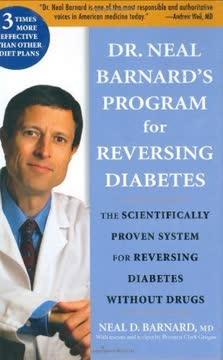
Get the complete 30-minute summary of Dr. Neal Barnard's Program for Reversing Diabetes
Get the complete summary in the appType 2 diabetes is caused by fat inside cells, not by carbohydrates.
Eliminate all animal products to cut animal fat intake to zero.
Minimize added oils, even vegetable oils.
Build your meals from whole grains, legumes, vegetables, and fruits.
Choose low glycemic index foods for stable blood sugar.
Exercise after meals to reduce blood sugar spikes.
"Dr. Neal Barnard's Program for Reversing Diabetes" is a strong fit if you want practical ideas around health, nutrition, vegan, especially themes like type 2 diabetes is caused by fat inside cells, not by carbohydrates; eliminate all animal products to cut animal fat intake to zero. The MinuteRead summary distills these concepts into a focused read, whether you're deciding whether to buy the book or applying its lessons at work.
Neal Barnard, MD, FACC is an Adjunct Professor of Medicine at George Washington University and President of the Physicians Committee for Responsible Medicine. He has led numerous research studies on diet's effects on health, including a groundbreaking NIH-funded study on dietary interventions for type 2 diabetes. Dr. Barnard has authored over 100 scientific publications and 20 books, and is editor-in-chief of the Nutrition Guide for Clinicians. His work has influenced dietary guidelines and medi…
View all summaries by Neal D. BarnardContinue Reading
Access the complete 30-minute summary and thousands more nonfiction books in the MinuteRead app.

Continue reading the complete summary in the MinuteRead app.