MinuteRead
30 min
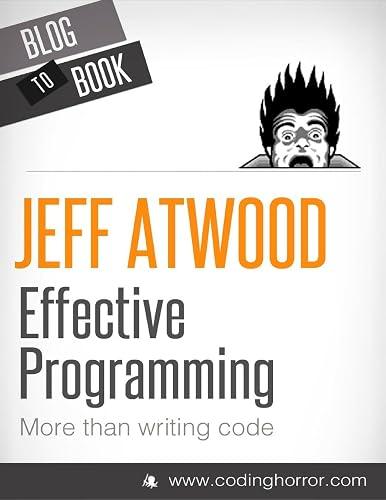
Book summary
by Jeff Atwood
Premium summary · Opens in the app · 30 min read
"The best code is no code at all." Less is more.
**Author:** Jeff Atwood
**Estimated Reading Time:** 42 minutes
**What You'll Learn:**
- Why writing less code is the highest virtue in programming - How to build software that users actually love - Why security failures are failures of imagination - What makes development teams genuinely effective - How to stay relevant in a field that reinvents itself constantly
**Who This Book Is For:**
This book is for anyone who writes software, manages people who write software, or depends on software to run their business. Whether you are a junior developer trying to figure out what actually matters, a senior engineer who suspects your team has been optimizing the wrong things, or a founder who wants to understand why some products feel magical while others feel like a chore, these pages will give you a clearer lens.
Jeff Atwood spent years writing about programming on his blog Coding Horror, then built Stack Overflow and Discourse, two platforms used by millions. Along the way, he developed a set of convictions about what makes software effective. This book collects those convictions into a coherent philosophy.
The central message is deceptively simple: most software problems come from doing too much, not too little. We add features nobody asked for. We write abstractions nobody needs. We hire for credentials instead of character. We build interfaces that impress other programmers while confusing everyone else.
The solution is not more effort. It is better judgment.
Software is eating the world, but software is also choking on itself. Every year, the industry produces billions of lines of code. Every year, teams grow larger, frameworks multiply, and systems become more complex. And every year, the same problems recur: projects run late, budgets explode, users complain, security breaches make headlines, and developers burn out. The uncomfortable truth is that most of this suffering is self-inflicted. We do not have a shortage of code. We have a surplus. We do not have a shortage of features. We have a surplus of features nobody uses. We do not have a shortage of tools. We have a surplus of tools that add complexity without adding clarity. Jeff Atwood built his career on questioning the assumptions behind this state of affairs. His blog Coding Horror became one of the most widely read programming blogs in the world because he asked simple questions that cut through industry dogma. Why do we measure productivity in lines of code when the best code is no code at all? Why do we interview programmers with brain teasers that have nothing to do with the job? Why do we treat security as an afterthought when users trust us with their data? These questions led him to co-found Stack Overflow,…
Continue reading in the MinuteRead app
Get the complete 30-minute summary of Effective Programming
Get the complete summary in the appThe best code is no code at all. Treat every line as a liability.
Users judge software by its interface. Design for them, not for yourself.
Security is a state of mind. Always assume the worst.
Hire for attitude, train for skill. Character matters more than credentials.
Remote work works when you embrace asynchronous communication and trust.
Your users are your best innovators. Listen to them.
"Effective Programming" is a strong fit if you want practical ideas around programming, technology, computer science, especially themes like the best code is no code at all. treat every line as a liability; users judge software by its interface. design for them, not for yourself. The MinuteRead summary distills these concepts into a focused read, whether you're deciding whether to buy the book or applying its lessons at work.
Motivated to help readers with "The best code is no code at all." Less is more, Jeff Atwood wrote “Effective Programming” to package those ideas for a fast, focused read. Through “Effective Programming”, Jeff Atwood distills the core ideas on programming into lessons readers can absorb in a single short sitting. Readers turn to this work when they want Jeff Atwood's perspective on the subject without working through the entire original volume. The book is structured so each chapter highlights a …
Continue Reading
Access the complete 30-minute summary and thousands more nonfiction books in the MinuteRead app.

Continue reading the complete summary in the MinuteRead app.