MinuteRead
30 min
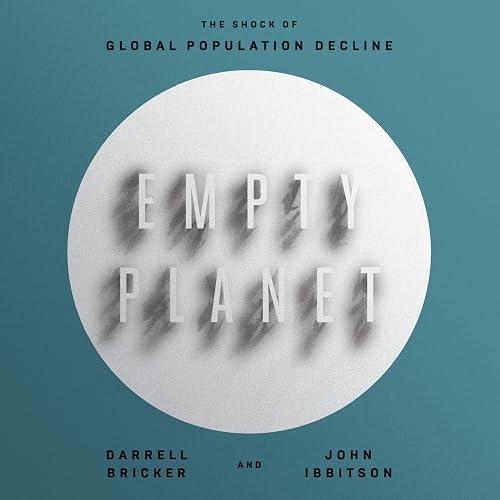
Empty Planet explains why overpopulation alarmists are wrong and how depopulation poses the more imminent threat to the happiness of humanity.
Empty Planet explains why overpopulation alarmists are wrong and how depopulation poses the more imminent threat to the happiness of humanity.
To maintain their numbers, countries need female residents to produce about 2.1 children each. This is enough to replace both a mother and father in the next generation. It also adds a little extra to account for premature deaths and gender ratio imbalance.
When the fertility rate rests above 2.1, population sizes can grow quickly. This observation causes mass unease about food shortages and other problems. However, a fertility rate below 2.1 causes population size to decrease rapidly, too.
The interrelated causes of declining fertility rates are urbanization, education, women’s liberation, and waning religiosity. These turn children into expensive liabilities instead of assets for a family and society. Young adults start to view having just one child or two as a fulfilling life experience, rather than a duty to their families, country, or God.
Urbanization continues, women’s liberation advances, and secularization proceeds speedily. Once there are fewer kids, societies begin to organize themselves differently in ways that discourage future births even more. Thus, the “low fertility trap”: countries that fall below a fertility rate of 1.5 can’t rise back above it again. Unfortunately, many places are already there.
Why does it matter that world population may peak soon, with some countries’ populations having reached their maximum already? Fewer people doesn’t just mean fewer worries and more food to go around.
Instead, an aging population strains a country’s “dependency ratio,” or how many working people there are as compared to government-dependent retirees. Unlike children, retired individuals also vote in large numbers and form a powerful interest group. They are less innovative and spend money in different ways.
This demographic leads to fewer schools and daycares but more retirement communities. Young adults thinking of starting families see fewer of their peers doing it. They face higher costs in taking care of even just one or two kids as compared to life in a family-centric society. Overall industrial growth slows.
Some of the ill effects of population decline are less straightforward and economical, but still touch many lives for the worse even now. The world’s languages are quickly dying out as the small populations speaking them collapse and urbanize into more dominant ones.
It seems like population growth and decline run on a stage theory called the Demographic Transition Model. At first, birth and death rates are both high. Later, when a population begins to industrialize and grow richer, lifespans lengthen as births continue apace, leading to overall growth in numbers. Eventually, births decline to replacement level and then sink below. Population forecast models developed by the United Nations and other organizations…
Continue reading in the MinuteRead app
Get the complete 5-minute summary of Empty Planet
Get the complete summary in the appOnce countries enter the “fertility trap,” they never escape, and the population keeps falling.
World population decline has some severe downsides.
Experts have probably underestimated how quickly the world population will decline
"Empty Planet" is a strong fit if you want practical ideas around culture, future, history, especially themes like once countries enter the “fertility trap,” they never escape, and the population keeps falling; world population decline has some severe downsides. The MinuteRead summary distills these concepts into a focused read, whether you're deciding whether to buy the book or applying its lessons at work.
Dr. Darrell Bricker is CEO, Ipsos Public Affairs. Ipsos’ Public Affairs has offices in 38 countries and a staff of 800 research professionals. It is the world's leading social and public opinion research firm. Ipsos Public Affairs is part of Paris-based Ipsos which is the 3rd largest market research company in the world. Prior to joining Ipsos in 1990, Dr. Bricker was Director of Research in the office of Canada's Prime Minister. He was also a research consultant with firms in Ottawa and Toron…
View all summaries by Darrell BrickerContinue Reading
Access the complete 5-minute summary and thousands more nonfiction books in the MinuteRead app.

Continue reading the complete summary in the MinuteRead app.