MinuteRead
30 min
Book summary
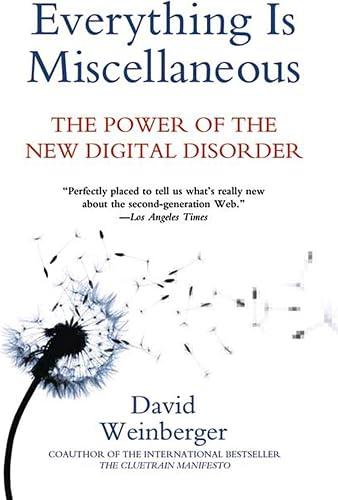
by David Weinberger
Premium summary · Opens in the app · 30 min read
Imagine walking into a library where every book has been shelved not by subject, not by author, not by title, but by the color of its cover. It would be beautiful, perhaps, but nearly useless. Now imagine a library where every book sits on every shelf simultaneously, where a single volume on the history of medicine appears under History, under Biology, under Ethics, under Economics, under whatever category any reader might think to look. That library would be impossible to build with physical bo
### By David Weinberger
**Estimated Reading Time:** 42 minutes
**What You'll Learn**
Why the way we organize information shapes what we can know. How the digital revolution shattered the physical constraints that forced us to put everything in one place. What happens when knowledge no longer needs a single shape. Why messy, overlapping, user-generated categories often work better than expert-designed systems. How authority and expertise are changing in a world where everyone can organize everything.
**Who This Book Is For**
Anyone who has ever wondered why libraries work the way they do. Anyone who has felt the frustration of forcing information into categories that don't quite fit. Anyone curious about how Wikipedia, tagging, and digital search are changing what counts as knowledge. Anyone who wants to understand why the future of information is messy, and why that's a good thing.
Imagine walking into a library where every book has been shelved not by subject, not by author, not by title, but by the color of its cover. It would be beautiful, perhaps, but nearly useless. Now imagine a library where every book sits on every shelf simultaneously, where a single volume on the history of medicine appears under History, under Biology, under Ethics, under Economics, under whatever category any reader might think to look. That library would be impossible to build with physical books. It is exactly what we have built with digital information. David Weinberger's central observation is deceptively simple: the way we organize things reflects the limitations of the physical world. A book can only sit on one shelf. A document can only occupy one folder. A species can only be assigned one branch on the tree of life. For centuries, we treated these physical constraints as if they were logical necessities. We built elaborate systems to decide where each thing belonged, and we treated those decisions as if they revealed something true about the world. But the digital world has no such constraints. A digital file can appear in a thousand places at once. A photograph can be tagged with dozens of labels. An article can be linked to every related concept. The physical need to put everything in its one proper place has vanished. What remains is a question: if we no longer have to choose a single category for everything, what happens to knowledge? Weinberger's answer is that knowledge becomes miscellaneous. Not chaotic, not random, but radically flexible. In the digital world, information can be organized in countless overlapping ways, each one useful for a different purpose, each one reflecting a different perspective. The old dream of a single, perfect classification system that would capture the true order of the world gives way to something…
Continue reading in the MinuteRead app
Get the complete 30-minute summary of Everything Is Miscellaneous
Get the complete summary in the app**Knowledge has no shape in the digital world.** Physical constraints no longer force us to organize information in a si
**There are three orders of order.** Physical organization, metadata, and digital information. Each represents a differe
**Every classification system is biased.** It reflects the values and assumptions of its creators.
**Perfect order is an illusion.** The world has many orders, each useful for a different purpose.
**Tagging democratizes organization.** Anyone can organize anything with any labels they choose.
**Messiness is a feature.** The messiness of user-generated organization reflects the richness of human thought.
"Everything Is Miscellaneous" is a strong fit if you want practical ideas around technology, computer science, philosophy, especially themes like **knowledge has no shape in the digital world.** physical constraints no longer force us to organize information in a si; **there are three orders of order.** physical organization, metadata, and digital information. each represents a differe. The MinuteRead summary distills these concepts into a focused read, whether you're deciding whether to buy the book or applying its lessons at work.
Motivated to help readers with in the third order of order, David Weinberger wrote “Everything Is Miscellaneous” to package those ideas for a fast, focused read. In “Everything Is Miscellaneous”, David Weinberger focuses on in the third order of order. Through “Everything Is Miscellaneous”, David Weinberger distills the core ideas on technology into lessons readers can absorb in a single short sitting. Readers turn to this work when they want David Weinberger's perspective on the subject without…
Continue Reading
Access the complete 30-minute summary and thousands more nonfiction books in the MinuteRead app.

Continue reading the complete summary in the MinuteRead app.