MinuteRead
30 min
Book summary
Premium summary · Opens in the app · 30 min read
Every day, millions of investors buy and sell stocks. They read analyst reports, study financial statements, and listen to earnings calls. They build elaborate models and debate valuation multiples. Yet most of them are asking the wrong questions.
**Author:** Michael J. Mauboussin
**Estimated Reading Time:** 45 minutes
**What You'll Learn:**
- Why stock prices are the best available signal of market expectations - How to read the expectations embedded in any stock price - Why earnings per share mislead investors about value creation - How competitive strategy analysis reveals expectation revision opportunities - How to apply a systematic framework for better investment decisions
**Who This Book Is For:**
Investors who want to move beyond simplistic growth versus value debates. Analysts who want a disciplined process for evaluating stocks. Executives who need to understand how markets interpret their decisions. Anyone who has ever wondered why a company with rising earnings can see its stock price fall.
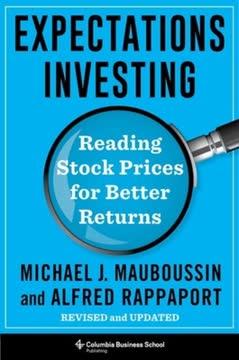
Every day, millions of investors buy and sell stocks. They read analyst reports, study financial statements, and listen to earnings calls. They build elaborate models and debate valuation multiples. Yet most of them are asking the wrong questions. The central problem in investing is not finding good companies. It is not predicting next quarter's earnings. It is not identifying industries with favorable tailwinds. The central problem is understanding what the market already believes and determining whether those beliefs are likely to change. Consider a simple observation. When a company reports earnings that exceed analyst estimates, its stock price sometimes falls. When a company announces disappointing results, its stock price sometimes rises. This seems puzzling until you recognize that stock prices do not respond to absolute performance. They respond to performance relative to expectations. The market is a forward-looking mechanism. It incorporates the collective beliefs of millions of participants about what will happen in the future. The current stock price is not a statement about what a company has done. It is a statement about what the market expects the company to do. Michael Mauboussin spent decades studying how markets process information and how investors make decisions. His work bridges finance, psychology, and competitive strategy. In Expectations Investing, he presents a framework that turns the traditional approach to stock analysis on its head. Instead of starting with a company's fundamentals and working toward a valuation, Mauboussin starts with the stock price and works backward. The price tells you what the market expects. Your job is to determine whether those expectations are reasonable, too high, or too low. This approach has profound implications. It means you cannot simply identify a great business and expect to earn superior returns. If everyone already knows it is a great business, the price will reflect that knowledge. You must find situations where the market's expectations are likely to be revised. The expectations investing framework draws on several disciplines. It uses discounted cash flow analysis to reverse-engineer market expectations. It…
Continue reading in the MinuteRead app
Get the complete 30-minute summary of Expectations Investing
Get the complete summary in the appStock prices contain the market's expectations about future financial performance. Your job is to understand those expec
Reverse-engineer the stock price to understand what the market expects. Solve for the growth rates, margins, and investm
Earnings per share is a poor proxy for value. Focus on cash flows and returns on invested capital instead.
Value creation requires returns above the cost of capital. Growth that earns returns below the cost of capital destroys
Use competitive strategy analysis to assess whether current performance is sustainable. The Five Forces framework reveal
Real options represent the value of flexibility. For growth companies, the value of future opportunities can dwarf curre
"Expectations Investing" is a strong fit if you want practical ideas around finance, business, economics, especially themes like stock prices contain the market's expectations about future financial performance. your job is to understand those expec; reverse-engineer the stock price to understand what the market expects. solve for the growth rates, margins, and investm. The MinuteRead summary distills these concepts into a focused read, whether you're deciding whether to buy the book or applying its lessons at work.
Michael J. Mauboussin is a prominent figure in investment strategy and financial analysis. He serves as Chief Investment Strategist at Legg Mason Capital Management and previously held positions at Credit Suisse. Mauboussin has authored multiple books on investing and decision-making, including "Think Twice" and "More Than You Know." He has been recognized for his work in the food industry and has received accolades for his writing. Mauboussin has been an adjunct professor at Columbia Business S…
View all summaries by Michael J. MauboussinContinue Reading
Access the complete 30-minute summary and thousands more nonfiction books in the MinuteRead app.

Continue reading the complete summary in the MinuteRead app.