MinuteRead
30 min
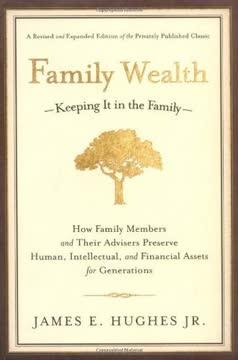
Every family tells itself a story about money. Some families tell stories of scarcity, of grandparents who sacrificed everything so the next generation could have more. Others tell stories of abundance, of fortunes built through luck, timing, or sheer force of will. But beneath almost every family story lies a quiet anxiety: will the wealth survive? Will the children be responsible? Will the grandchildren remember what it took to build all of this?
**Author:** James E. Hughes Jr.
**Estimated Reading Time:** 45 minutes
**What You'll Learn:**
- Why most wealthy families fail to preserve their wealth beyond three generations - How to build a family governance system that survives for a century or more - Why human and intellectual capital matter more than financial capital - How to create rituals, mission statements, and balance sheets that measure what truly matters - How to structure trusts, family banks, and advisor relationships that empower rather than entangle
**Who This Book Is For:**
This book is for anyone who cares about what happens to family wealth after they are gone. It is for founders who built something significant and wonder whether their children and grandchildren will steward it well. It is for inheritors who feel the weight of expectation and want to understand their role. It is for trustees, advisors, and family office professionals who sense that something deeper than financial planning is required. Most of all, it is for families who recognize that their greatest asset walks around in shoes, not in brokerage statements.
Every family tells itself a story about money. Some families tell stories of scarcity, of grandparents who sacrificed everything so the next generation could have more. Others tell stories of abundance, of fortunes built through luck, timing, or sheer force of will. But beneath almost every family story lies a quiet anxiety: will the wealth survive? Will the children be responsible? Will the grandchildren remember what it took to build all of this? The statistics are not encouraging. A well-known proverb, often called the shirtsleeves proverb, captures the pattern: shirtsleeves to shirtsleeves in three generations. The first generation builds the wealth. The second generation enjoys it. The third generation, having never known struggle, dissipates it. The proverb exists in nearly every culture. In Japan they say rice paddies to rice paddies in three generations. In Scotland the saying goes: the father buys, the son builds, the grandchild sells, and his son begs. The pattern is so universal that it suggests something structural, not personal. It suggests that wealth preservation fails not because of bad luck or bad character, but because families misunderstand what wealth actually is. James E. Hughes Jr. spent decades as an attorney and counselor to wealthy families. He watched the same drama play out repeatedly. Families would arrive at his office with sophisticated estate plans, trusts, and tax strategies. They believed they had done everything necessary to preserve their wealth. Yet within a generation or two, the wealth would fragment, the family would scatter, and the financial structures would become sources of conflict rather than sources of strength. What Hughes came to understand is that the problem was…
Continue reading in the MinuteRead app
Get the complete 30-minute summary of Family Wealth
Get the complete summary in the appA family's true wealth is its people and their knowledge, not its money.
The shirtsleeves proverb is the default outcome. Defying it requires deliberate, continuous effort.
Family governance is the single most important factor in long-term wealth preservation.
Create a family mission statement that articulates your shared purpose, vision, values, and goals.
Use ritual to mark important transitions and transmit values across generations.
Measure what matters. The family balance sheet should track all five forms of capital, not just financial capital.
"Family Wealth" is a strong fit if you want practical ideas around finance, business, money, especially themes like a family's true wealth is its people and their knowledge, not its money; the shirtsleeves proverb is the default outcome. defying it requires deliberate, continuous effort. The MinuteRead summary distills these concepts into a focused read, whether you're deciding whether to buy the book or applying its lessons at work.
James E. Hughes Jr. is a renowned expert in family wealth management and preservation. As an attorney and counselor, he has spent decades working with affluent families to develop strategies for maintaining wealth across generations. Hughes emphasizes the importance of human and intellectual capital alongside financial assets. His approach focuses on family governance, mentoring, and long-term planning. Hughes has written several books on the subject, including "Family Wealth--Keeping It in the …
View all summaries by James E. Hughes Jr.Continue Reading
Access the complete 30-minute summary and thousands more nonfiction books in the MinuteRead app.

Continue reading the complete summary in the MinuteRead app.