MinuteRead
30 min
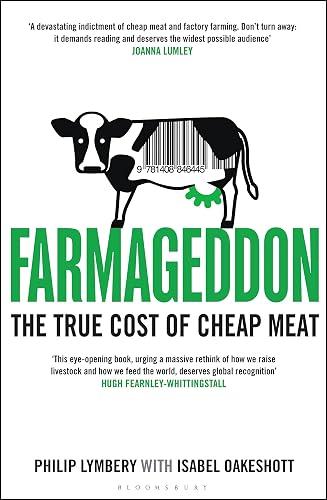
Farmageddon is a shocking compendium of the facts and figures about how the mass production of cheap meat influences our world, ranging from water and air pollution, to threatening species, to making us obese and sick, in order to show why we must return to more traditional farming techniques to sustainably feed the world.
Farmageddon is a shocking compendium of the facts and figures about how the mass production of cheap meat influences our world, ranging from water and air pollution, to threatening species, to making us obese and sick, in order to show why we must return to more traditional farming techniques to sustainably feed the world.
China is the world’s biggest country, with over 1.3 billion people living there. So whenever something becomes a trend in China, it’s likely to affect the whole world, as they make up almost 20% of the entire population of the planet. In the past decade, China has gotten wealthier and wealthier, as it slowly goes from developing to developed country, mimicking a lot of what more Western countries, like the US or Germany, do.
As the middle class in China gets stronger, so does the demand for meat, because now the majority of the Chinese population can finally afford it on a regular basis. The average pork consumption per person, for example, has topped the British average of 25 kg/year already, with the average Chinese person consuming 34 kg of pork annually.
And Chinese meat manufacturers are happy to comply, for example Muyuan Foodstuff Co., Ltd. shoots for 9 million pigs per year in 2017, while others go as far as importing especially well-bred pigs from over 9,000 km away via Boeing 747 – a £330,000 trip.
Next to the usual side effects of mass pig farming, like bacteria development, low quality meat and horrible conditions, these companies are also prone to scandals, often using steroids and adding chemicals to the animal food and meat products, in order to cheat their way to meeting safety standards.
Of course going back to more traditional farming methods is a rather obvious answer to this problem, but it’s still the best one. However, there’s something even easier we can do right now: waste less food. The US alone waste about 30% of all the food consumers purchase. Imagine that! If you spend $30 on food, $10 goes down the drain (or into the trash can, rather). Worldwide, we waste about 11 billion (!) chickens, 270 million pigs and 59 million cows – every year. If we did nothing but cut down how much food we waste, we’d easily be able to feed the world. This would also save precious resources, for example some of the 28% of agricultural land, which is used to produce food that goes to waste, the supply water of which alone could take care of the domestic needs of 9 billion people. Traditional farming is also much more sustainable for all involved: humans, land and animals. Humans can’t eat grass, but cows naturally do, so…
Continue reading in the MinuteRead app
Get the complete 5-minute summary of Farmageddon
Get the complete summary in the appThe more popular factory farming gets, the more problems it causes, and now even China catches on.
Going back to traditional farming can undo the damage mass meat production is causing.
We, the food consumers, must vote with both our voices and the dollars we spend, to save the future of food.
"Farmageddon" is a strong fit if you want practical ideas around culture, environment, health, especially themes like the more popular factory farming gets, the more problems it causes, and now even china catches on; going back to traditional farming can undo the damage mass meat production is causing. The MinuteRead summary distills these concepts into a focused read, whether you're deciding whether to buy the book or applying its lessons at work.
Philip Lymbery is Chief Executive of the international farm animal welfare organisation, Compassion in World Farming. He has played a leading role in many major animal welfare reforms, including Europe-wide bans on veal crates for calves and barren battery cages for laying hens. He was appointed an ambassadorial 'Champion' for the UN Food Systems Summit in 2021. He also spearheaded Compassion in World Farming's engagement with more than 1,000 food companies, leading to genuine improvements in th…
View all summaries by Philip LymberyContinue Reading
Access the complete 5-minute summary and thousands more nonfiction books in the MinuteRead app.

Continue reading the complete summary in the MinuteRead app.