MinuteRead
30 min
Book summary
by Paul Pignataro
Premium summary · Opens in the app · 30 min read
Every day, billions of dollars move through financial markets based on decisions made by people who believe they understand what a company is worth. Investment banks advise on mergers. Portfolio managers buy and sell stocks. Private equity firms acquire entire companies. Corporate executives make strategic decisions about expansion, divestiture, and capital allocation.
**Author:** Paul Pignataro
**Estimated Reading Time:** 45 minutes
**What You'll Learn:**
- How to build a complete financial model from the ground up - The mechanics of the three core financial statements and how they connect - How to construct supporting schedules for depreciation, working capital, and debt - Three valuation methodologies used by investment banking professionals - How to determine whether a stock is undervalued, overvalued, or fairly priced
**Who This Book Is For:**
This condensed edition is for anyone who wants to understand how investment professionals analyze companies. Whether you are a student preparing for a career in finance, an investor seeking to make more informed decisions, a business owner wanting to understand how your company would be valued, or a professional in a related field looking to build technical skills, the principles in this book will give you a rigorous framework for financial analysis.
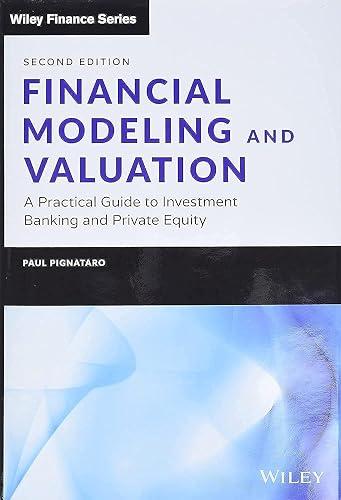
Every day, billions of dollars move through financial markets based on decisions made by people who believe they understand what a company is worth. Investment banks advise on mergers. Portfolio managers buy and sell stocks. Private equity firms acquire entire companies. Corporate executives make strategic decisions about expansion, divestiture, and capital allocation. All of these decisions share a common foundation: someone, somewhere, built a financial model. The financial model is the tool that transforms raw accounting data into a forward-looking view of a company's performance. It is the bridge between what has happened and what might happen. It is the mechanism by which assumptions about growth, margins, and capital structure become concrete estimates of value. Yet for many people, financial modeling remains mysterious. Spreadsheets with thousands of rows and intricate formulas seem impenetrable. The terminology feels like a foreign language. The connections between statements appear arbitrary. And the leap from historical financials to a defensible valuation can feel like guesswork dressed up in mathematical clothing. Paul Pignataro wrote this book to demystify that process. His approach is fundamentally different from most finance textbooks. Rather than presenting abstract theory and hoping readers will eventually figure out how to apply it, he builds a complete financial model step by step, using a real company as the example. Every line item is explained. Every connection is traced. Every assumption is justified. The book's central insight is that financial modeling is not a black box. It is a systematic process that anyone with patience and attention to detail can learn. The six components of a financial model, the income statement, cash flow statement, balance sheet, depreciation schedule, working capital schedule, and debt schedule, fit together in a logical structure. Once you understand how these pieces interlock, the model becomes a powerful tool for understanding a business. Why…
Continue reading in the MinuteRead app
Get the complete 30-minute summary of Financial Modeling and Valuation
Get the complete summary in the appA financial model has six components: income statement, cash flow statement, balance sheet, depreciation schedule, worki
The income statement measures profitability over a period. The cash flow statement measures cash movement. The balance s
Net income is not the same as cash flow. Non-cash expenses and working capital changes create differences.
The balance sheet must always balance. Assets equal liabilities plus equity. If your model does not balance, you have an
Depreciation is a non-cash expense that reduces taxable income. It is added back to net income in the cash flow statemen
Working capital changes affect cash flow. Increases in receivables and inventory consume cash. Increases in payables gen
"Financial Modeling and Valuation" is a strong fit if you want practical ideas around finance, business, economics, especially themes like a financial model has six components: income statement, cash flow statement, balance sheet, depreciation schedule, worki; the income statement measures profitability over a period. the cash flow statement measures cash movement. the balance s. The MinuteRead summary distills these concepts into a focused read, whether you're deciding whether to buy the book or applying its lessons at work.
Motivated to help readers with financial modeling is the fundamental building block of analysis in investment banking, Paul Pignataro wrote “Financial Modeling and Valuation” to package those ideas for a fast, focused read. In “Financial Modeling and Valuation”, Paul Pignataro focuses on financial modeling is the fundamental building block of analysis in investment banking. Through “Financial Modeling and Valuation”, Paul Pignataro distills the core ideas on finance into lessons readers can abso…
Continue Reading
Access the complete 30-minute summary and thousands more nonfiction books in the MinuteRead app.

Continue reading the complete summary in the MinuteRead app.