MinuteRead
30 min
Book summary
Premium summary · Opens in the app · 30 min read
We live in a world that worships speed. The person with the overflowing inbox, the back-to-back meetings, and the phone that never stops buzzing wears urgency like a badge of honor. Busyness has become a status symbol. If you are not overwhelmed, the thinking goes, you must not be important.
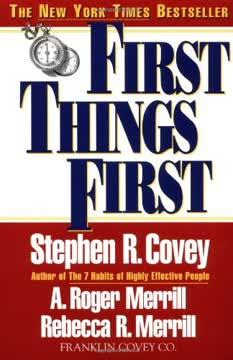
**Author:** Stephen R. Covey **Estimated Reading Time:** 35 minutes
**What You'll Learn** Why your to-do list is failing you, how to distinguish the truly important from the merely urgent, and a complete framework for building a life centered on meaning rather than busyness. You will learn to lead yourself before managing your time, align your daily choices with your deepest values, and create relationships and systems that make effectiveness sustainable.
**Who This Book Is For** Anyone who has ever ended a frantic day feeling exhausted but unfulfilled. Anyone who suspects that checking off tasks is not the same as making progress. Anyone ready to stop reacting to the clock and start navigating by a compass.
We live in a world that worships speed. The person with the overflowing inbox, the back-to-back meetings, and the phone that never stops buzzing wears urgency like a badge of honor. Busyness has become a status symbol. If you are not overwhelmed, the thinking goes, you must not be important. Yet beneath the surface of this frenetic activity, something feels wrong. Many people end their days exhausted but empty. They climbed the ladder only to discover it was leaning against the wrong wall. They achieved goals that looked impressive to everyone else but felt hollow inside. The gap between what they say matters most and how they actually spend their time grows wider every year. This is the problem Stephen R. Covey addresses in *First Things First*. The book is not another time management system promising to help you cram more tasks into your day. Covey argues that the entire premise of time management is flawed. You cannot manage time. Time marches forward regardless of what you do. The real challenge is managing yourself, and that requires something deeper than a better planner or a new productivity app. The core insight is simple but revolutionary. We face a choice between two ways of navigating our lives: the clock and the compass. The clock represents commitments, appointments, schedules, and deadlines. The compass represents vision, values, principles, and direction. Clock-driven people are efficient but often empty. Compass-driven people are effective and fulfilled. The question is not how fast you are moving but where you are headed. Covey identifies urgency addiction as the central disease of modern life. We become addicted to the adrenaline rush of handling crises, answering messages, and crossing items off lists. This addiction provides a temporary high but extracts a devastating long-term cost. It pulls us away from the activities that genuinely matter: building relationships, thinking deeply, planning strategically, renewing ourselves physically and spiritually, and contributing to something larger than ourselves. The book offers a complete framework for breaking this addiction and building a…
Continue reading in the MinuteRead app
Get the complete 30-minute summary of First Things First
Get the complete summary in the appDistinguish the urgent from the important. Urgency screams; importance whispers. Choose importance.
Spend more time in Quadrant II: the important but not urgent activities that prevent crises and create lasting value.
Create a personal mission statement and use it as your compass for decisions.
Plan your week around your highest priorities. Put the big rocks in first.
Attend to all four human needs: physical, social, mental, and spiritual.
Live by principles, not by moods, pressures, or trends. Principles are the lighthouse.
"First Things First" is a strong fit if you want practical ideas around self help, business, productivity—especially themes like distinguish the urgent from the important. urgency screams; importance whispers. choose importance; spend more time in quadrant ii: the important but not urgent activities that prevent crises and create lasting value. The MinuteRead summary distills these concepts into a focused read, whether you're deciding whether to buy the book or applying its lessons at work.
Stephen Richards Covey was a renowned American author, educator, and businessman. His most famous work, "The 7 Habits of Highly Effective People," became a global bestseller. Covey wrote several other influential books on leadership and personal development, including "First Things First" and "Principle-Centered Leadership." He was recognized as one of the 25 most influential people by Time magazine in 1996. Covey's impact extended beyond writing, as he was also a professor at Utah State Univers…
View all summaries by Stephen R. CoveyContinue Reading
Access the complete 30-minute summary and thousands more nonfiction books in the MinuteRead app.

Continue reading the complete summary in the MinuteRead app.