MinuteRead
30 min
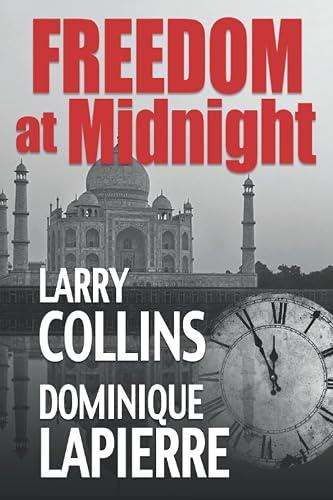
Book summary
by Larry Collins & Dominique Lapierre
Premium summary · Opens in the app · 30 min read
In the spring of 1947, the British Empire still ruled over nearly four hundred million people in the Indian subcontinent. Within a matter of months, that empire would be gone, replaced by two sovereign nations born in a storm of hope and horror. The story of how that happened is not a dry political chronicle. It is a drama of towering personalities, impossible choices, and human suffering on a scale the world had rarely witnessed.
**Authors:** Larry Collins & Dominique Lapierre
**Estimated Reading Time:** 45 minutes
**What You'll Learn:** - The dramatic final year of British rule in India and the forces that shaped independence - The personalities, decisions, and miscalculations that led to partition - The human tragedy of the largest mass migration in history - How the legacy of 1947 continues to shape India, Pakistan, and the world
**Who This Book Is For:** Readers who want to understand one of the defining events of the twentieth century. This condensed edition is for anyone curious about how empires end, how nations are born, and how the decisions of a few individuals can redirect the lives of millions.
In the spring of 1947, the British Empire still ruled over nearly four hundred million people in the Indian subcontinent. Within a matter of months, that empire would be gone, replaced by two sovereign nations born in a storm of hope and horror. The story of how that happened is not a dry political chronicle. It is a drama of towering personalities, impossible choices, and human suffering on a scale the world had rarely witnessed. Larry Collins and Dominique Lapierre set out to capture this story with the urgency it deserves. They interviewed the men and women who lived through those months, from the palaces of viceroys to the refugee camps that stretched across the Punjab. They combed through archives, diaries, and private correspondence. The result is a work that reads less like a history textbook and more like a novel, except that every page is true. The central problem the book addresses is simple to state and almost impossible to resolve. How do you dismantle a colonial empire that has ruled for two centuries without unleashing chaos? How do you draw borders through communities that have lived side by side for generations? How do you hand over power when the people you are handing it to cannot agree on what the new nation should look like? These questions were not abstract. They were debated in the heat of Delhi summers, in the corridors of Government House, and in the streets where communal violence was already beginning to flare. The answers, when they came, were often rushed, imperfect, and tragic. The British had ruled India through a combination of force, bureaucracy, and a carefully cultivated aura of superiority. But by 1947, that aura was shattered. The Second World War had bankrupted Britain and exposed the vulnerability of the empire. Indian soldiers had fought for the Allies, and Indian leaders had made it clear that they would no longer accept subjugation. The question was no longer whether the British would leave, but how, and what they would leave…
Continue reading in the MinuteRead app
Get the complete 30-minute summary of Freedom at Midnight
Get the complete summary in the appThe British left India in 1947 because they were exhausted, not because they were persuaded.
Mountbatten accelerated independence, compressing years of negotiation into weeks.
Jinnah's demand for Pakistan was the single most divisive force in the final negotiations.
Radcliffe drew the borders of India and Pakistan in five weeks, without ever visiting the subcontinent.
The partition triggered the largest mass migration in human history, with ten to fifteen million people displaced.
The violence of partition killed hundreds of thousands of people, and much of it was organized, not spontaneous.
"Freedom at Midnight" is a strong fit if you want practical ideas around history, especially themes like the british left india in 1947 because they were exhausted, not because they were persuaded; mountbatten accelerated independence, compressing years of negotiation into weeks. The MinuteRead summary distills these concepts into a focused read, whether you're deciding whether to buy the book or applying its lessons at work.
Motivated to help readers with in the spring of 1947, Larry Collins & Dominique Lapierre wrote “Freedom at Midnight” to package those ideas for a fast, focused read. In “Freedom at Midnight”, Larry Collins & Dominique Lapierre focuses on in the spring of 1947. Through “Freedom at Midnight”, Larry Collins & Dominique Lapierre distills the core ideas on history into lessons readers can absorb in a single short sitting. Readers turn to this work when they want Larry Collins & Dominique Lapierre's p…
View all summaries by Larry CollinsContinue Reading
Access the complete 30-minute summary and thousands more nonfiction books in the MinuteRead app.

Continue reading the complete summary in the MinuteRead app.