MinuteRead
30 min
Book summary
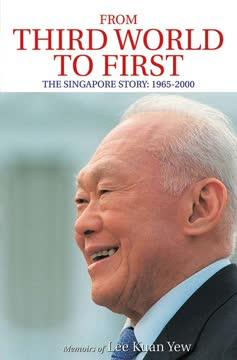
by Lee Kuan Yew
Premium summary · Opens in the app · 30 min read
In 1965, Singapore was an island of two million people with no natural resources, no domestic market to speak of, no army, and no certainty it would survive as an independent nation. It had been expelled from Malaysia amid racial tensions and regional hostility. Unemployment was high. The British military presence, which had anchored the economy, was preparing to withdraw. The conventional wisdom among development economists was that Singapore would become a failed state.
**Author:** Lee Kuan Yew **Estimated Reading Time:** 45 minutes
**What You'll Learn:** How a resource-poor island of two million people became one of the world's most prosperous nations in a single generation. You will learn the principles of pragmatic governance, economic strategy, social cohesion, and diplomatic survival that Lee Kuan Yew applied to transform Singapore.
**Who This Book Is For:** Anyone interested in nation-building, economic development, leadership under extreme constraints, or the story of how visionary thinking and disciplined execution can overcome seemingly impossible odds.
In 1965, Singapore was an island of two million people with no natural resources, no domestic market to speak of, no army, and no certainty it would survive as an independent nation. It had been expelled from Malaysia amid racial tensions and regional hostility. Unemployment was high. The British military presence, which had anchored the economy, was preparing to withdraw. The conventional wisdom among development economists was that Singapore would become a failed state. Lee Kuan Yew, Singapore's first prime minister, did not accept that fate. He understood something fundamental: an island city-state in Southeast Asia could not afford to be ordinary. It had to be exceptional in its governance, its economic strategy, its social cohesion, and its foreign relations. Mediocrity would mean collapse. This book is Lee's account of how Singapore defied the odds. It is not a theoretical treatise on development economics. It is the story of decisions made under pressure, of policies tested against reality, and of a leader who refused to let ideology override pragmatism. Lee writes with the clarity of someone who had to make life-or-death choices for his country and who understood that sentimentality in governance leads to ruin. The central problem Lee faced was simple: how do you build a viable nation from a patchwork of immigrant communities on a small island with no resources? The answer he developed over three decades was equally simple in principle and extraordinarily difficult in practice: create conditions where the world wants to do business with you, where your people are educated and disciplined, where your government is clean and competent, and where your neighbors and major powers see you as a reliable partner rather than a threat. This book matters because the challenges Lee confronted are not unique to Singapore. Every society faces questions about how to balance economic growth with social welfare, how to maintain stability while encouraging innovation, how to attract investment without losing sovereignty, and how to build national identity in diverse populations. Lee's answers were shaped by Singapore's specific circumstances, but the principles behind them have broad relevance. What makes Lee's approach different is his refusal to accept false choices. He rejected the idea that a developing…
Continue reading in the MinuteRead app
Get the complete 30-minute summary of From Third World to First
Get the complete summary in the appPragmatism beats ideology. Judge policies by results, not by conformity to doctrine.
Clean government is the foundation of development. Corruption destroys trust and drives away investment.
Meritocracy maximizes human potential. Reward performance, not connections.
Education is the highest-leverage investment. People are the only resource that compounds.
Foreign investment brings more than capital. It brings technology, markets, and management expertise.
Racial harmony requires active management. Integration does not happen naturally.
"From Third World to First" is a strong fit if you want practical ideas around history, politics, biography, especially themes like pragmatism beats ideology. judge policies by results, not by conformity to doctrine; clean government is the foundation of development. corruption destroys trust and drives away investment. The MinuteRead summary distills these concepts into a focused read, whether you're deciding whether to buy the book or applying its lessons at work.
Lee Kuan Yew was a prominent Singaporean statesman who served as the country's first Prime Minister from 1959 to 1990. Born in 1923, he studied law in England before returning to Singapore to practice and become involved in politics. Lee founded the People's Action Party in 1954 and led Singapore to independence. He is credited with transforming Singapore from a developing nation to a prosperous, modern city-state. After stepping down as Prime Minister, Lee continued to serve in advisory roles w…
View all summaries by Lee Kuan YewContinue Reading
Access the complete 30-minute summary and thousands more nonfiction books in the MinuteRead app.

Continue reading the complete summary in the MinuteRead app.