MinuteRead
30 min
Book summary
Premium summary · Opens in the app · 30 min read
Most people go through life believing that human behavior is unpredictable. They think some people are naturally persuasive, naturally likable, naturally able to get others to cooperate. They assume these skills are personality traits you either have or you do not.
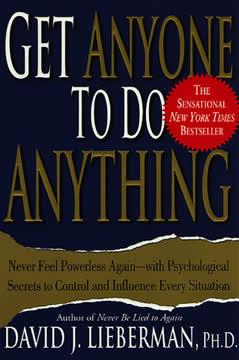
**Author:** David J. Lieberman, PhD
**Estimated Reading Time:** 45 minutes
**What You'll Learn:** - The psychological laws that govern why people say yes or no - How to make people genuinely like you without performing or pretending - The exact phrases that increase compliance by up to 20 percent - How to spot manipulation before it works on you - Why certainty destroys desire and what to do instead - The verbal techniques that reveal when someone is lying or hiding something - How to deliver bad news so it lands gently - The quiet signals that expose bluffers and overcompensators
**Who This Book Is For:** Anyone who has ever wondered why some people seem to get what they want while others struggle. Whether you are negotiating a raise, trying to strengthen a relationship, managing a team, or simply wanting to understand why people behave the way they do, this book gives you the psychological tools to navigate human interactions with confidence and skill.
Most people go through life believing that human behavior is unpredictable. They think some people are naturally persuasive, naturally likable, naturally able to get others to cooperate. They assume these skills are personality traits you either have or you do not. David Lieberman disagrees. And he has spent his career proving it. The central premise of this book is radical in its simplicity: human behavior follows predictable patterns. People respond to psychological triggers in ways that are remarkably consistent across cultures, contexts, and personalities. Once you understand these patterns, you can use them deliberately. Not to manipulate in any harmful sense, but to communicate more effectively, build stronger relationships, and achieve outcomes that benefit everyone involved. Think about the last time someone asked you for a favor. Did you say yes because you carefully weighed the pros and cons? Probably not. You said yes because of how the request was framed, because of who was asking, because of how you felt in that moment, or because of some small commitment you had already made. The decision happened emotionally first. The logic came afterward to justify it. This is not a flaw in human nature. It is how the brain works. And it is something you can work with. The problem most people face is not a lack of good intentions or even a lack of effort. It is that they approach interactions using the wrong tools. They try to persuade with facts when the other person is making decisions based on emotion. They try to make people like them by being impressive when likability actually comes from making others feel good about themselves. They defend themselves against accusations when the smartest move is to make the…
Continue reading in the MinuteRead app
Get the complete 30-minute summary of Get Anyone to Do Anything
Get the complete summary in the appPeople respond to psychological triggers, not random chance. Learn the levers: association, consistency, scarcity, recip
Likability comes from making others feel good, not from being impressive. Focus on them, not yourself.
Ninety percent of decisions are emotional. Arouse emotions first, then provide logic to justify the decision.
Add "because" to your requests. Even weak reasons dramatically increase compliance.
Get a small yes first. The foot-in-the-door technique makes large requests much more likely to succeed.
Frame requests in terms of identity. "You're the kind of person who..." is more powerful than "Please..."
"Get Anyone to Do Anything" is a strong fit if you want practical ideas around psychology, self help, business, especially themes like people respond to psychological triggers, not random chance. learn the levers: association, consistency, scarcity, recip; likability comes from making others feel good, not from being impressive. focus on them, not yourself. The MinuteRead summary distills these concepts into a focused read, whether you're deciding whether to buy the book or applying its lessons at work.
David J. Lieberman, PhD is a renowned psychotherapist and bestselling author of eleven books, including "Get Anyone to Do Anything" and "Never Be Lied to Again." His expertise in psychology and human behavior has led to training roles with prestigious organizations such as the U.S. military, FBI, CIA, and NSA. Lieberman's work extends to government negotiators, mental health professionals, and Fortune 100 executives. His instructional video is a requirement for psychological operations graduates…
View all summaries by David J. LiebermanContinue Reading
Access the complete 30-minute summary and thousands more nonfiction books in the MinuteRead app.

Continue reading the complete summary in the MinuteRead app.