MinuteRead
30 min
Book summary
Premium summary · Opens in the app · 30 min read
Most people believe they understand how to get better at things. They assume improvement follows effort. Work harder. Spend more time. Stay consistent. The formula feels simple.
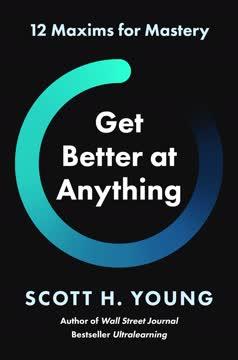
**Author:** Scott H. Young **Estimated Reading Time:** 35 minutes
**What You'll Learn** A complete framework for mastering new skills based on three interconnected elements: learning from examples, engaging in deliberate practice, and seeking reliable feedback. You will discover why most people plateau, how to structure practice for maximum growth, and the science behind turning effort into expertise.
**Who This Book Is For** Anyone who has ever felt stuck trying to improve a skill, whether professional, creative, athletic, or academic. If you have put in the hours without seeing the results, or if you want to understand how the world's best performers actually get that way, this book is for you.
Most people believe they understand how to get better at things. They assume improvement follows effort. Work harder. Spend more time. Stay consistent. The formula feels simple. But the evidence tells a different story. Look around and you will see people who have spent years doing something without getting much better at it. The manager who has led teams for a decade but still struggles with difficult conversations. The guitarist who has played the same songs for twenty years but cannot improvise. The student who studies constantly yet freezes during exams. Time on task does not guarantee growth. Scott H. Young spent two decades investigating what actually separates people who improve steadily from those who stall out. He studied the cognitive science of learning, examined iconic accomplishments in fields like mathematics and music, and conducted his own ambitious experiments, including completing MIT's entire computer science curriculum in one year and learning four languages in twelve months. What he found challenges much of the conventional wisdom about how we acquire skills. The central problem is that most people approach learning as a single activity. They assume that if they just do something enough times, they will inevitably get better. But learning is not one thing. It is a system with multiple components, and when any component is missing, progress grinds to a halt. Young identifies three essential elements that must work together: seeing examples of what good performance looks like, practicing extensively in the right way, and receiving accurate feedback that reveals errors. When all three are present, rapid progress becomes possible. When one is absent, people can work for years without meaningful improvement. This insight explains why some people seem to learn at extraordinary speeds while others remain stuck. It is not primarily about talent or intelligence. It is about whether their learning environment contains all three necessary ingredients. The good news is that once you understand this framework, you can design your own learning experiences to include what is missing. The book also tackles deeper questions about how expertise…
Continue reading in the MinuteRead app
Get the complete 30-minute summary of Get Better at Anything
Get the complete summary in the appLearning requires three things working together: examples, practice, and feedback.
See problems as mazes to be navigated, not walls to be broken through.
Your working memory is severely limited. Break complex skills into small pieces.
Engineer early success to build motivation before introducing greater challenges.
Practice at the edge of your abilities where you make correctable mistakes.
Once you can perform a skill, vary your practice rather than repeating identically.
"Get Better at Anything" is a strong fit if you want practical ideas around self help, productivity, personal development—especially themes like learning requires three things working together: examples, practice, and feedback; see problems as mazes to be navigated, not walls to be broken through. The MinuteRead summary distills these concepts into a focused read, whether you're deciding whether to buy the book or applying its lessons at work.
Scott H. Young is a bestselling author and prolific blogger known for his writings on learning, productivity, and personal development. He gained recognition for his ambitious learning challenges, including completing MIT's computer science curriculum in one year and learning four languages in a year. Young's work has been featured in major publications and he has given TEDx talks. His previous book, "Ultralearning," was a Wall Street Journal and National bestseller. Young's approach combines pe…
View all summaries by Scott H. YoungContinue Reading
Access the complete 30-minute summary and thousands more nonfiction books in the MinuteRead app.

Continue reading the complete summary in the MinuteRead app.