MinuteRead
30 min
Book summary
Premium summary · Opens in the app · 30 min read
Every organization has a personality. Walk into a startup and you feel it immediately: the energy, the chaos, the sense that anything could happen and probably will. Walk into a government agency and you feel something entirely different: the calm order, the clear procedures, the comforting predictability of knowing exactly who does what and when. Walk into a hospital or a university and you encounter yet another atmosphere, one where individual expertise matters more than any title on an office
**Author:** Charles B. Handy
**Estimated Reading Time:** 45 minutes
**What You'll Learn:**
- Why organizations develop distinct personalities rooted in ancient cultural patterns - How four management cultures shape every workplace you will ever enter - Why bureaucracy is collapsing under its own weight and what replaces it - How the nature of work itself is transforming before our eyes - What leadership means when no one wants to be managed
**Who This Book Is For:**
Anyone who works inside an organization, leads one, or wonders why the modern workplace feels increasingly strange. If you have ever felt that your job treats you like a cog, or if you have struggled to understand why some teams hum while others suffocate, this book will give you a new language for what you are experiencing.
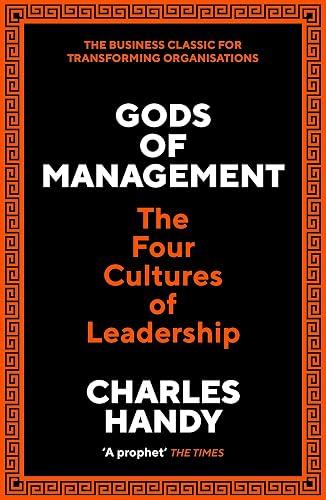
Every organization has a personality. Walk into a startup and you feel it immediately: the energy, the chaos, the sense that anything could happen and probably will. Walk into a government agency and you feel something entirely different: the calm order, the clear procedures, the comforting predictability of knowing exactly who does what and when. Walk into a hospital or a university and you encounter yet another atmosphere, one where individual expertise matters more than any title on an office door. Most of us sense these differences without ever articulating them. We say a workplace feels "stuffy" or "dynamic" or "chaotic" and leave it at that. Charles Handy argues that this is a profound mistake. The personality of an organization is not incidental. It determines who thrives there, who suffers, what work gets done well, and what work quietly fails. It shapes how decisions are made, who gets heard, and whether innovation is possible or merely discussed. Handy's insight, developed over decades of observing organizations as a manager, consultant, and professor at London Business School, is that these personalities are not random. They fall into recognizable patterns, patterns so old that the ancient Greeks had names for them. The Greeks understood that different gods represented different ways of living, different values, different temperaments. You chose your god because you shared the values that god represented. Organizations, Handy realized, work the same way. This book introduces four management cultures, each named after a Greek god. Zeus represents the club culture, built on personal power and relationships. Apollo represents the role culture, built on rules and hierarchy. Athena represents the task culture, built on expertise and problem-solving. Dionysus represents the existential culture, built on individual freedom and professional autonomy. None of these cultures is inherently good or bad. Each has strengths. Each has pathologies. The art of management, Handy argues, lies in understanding which culture fits which situation, and…
Continue reading in the MinuteRead app
Get the complete 30-minute summary of Gods of Management
Get the complete summary in the appOrganizations have cultures, and these cultures fall into four patterns: Zeus (power), Apollo (roles), Athena (tasks), a
There is no one best culture. The right culture depends on the work, the environment, and the people.
Apollo, the bureaucratic culture, is in crisis because the world has become too complex and too fast for rigid hierarchi
The tension between organizational size and human autonomy is structural and cannot be eliminated, only managed.
The traditional employment model is giving way to contractual and portfolio arrangements.
Dionysus, the culture of individual autonomy, is rising as knowledge work becomes more prevalent.
"Gods of Management" is a strong fit if you want practical ideas around management, business, leadership, especially themes like organizations have cultures, and these cultures fall into four patterns: zeus (power), apollo (roles), athena (tasks), a; there is no one best culture. the right culture depends on the work, the environment, and the people. The MinuteRead summary distills these concepts into a focused read, whether you're deciding whether to buy the book or applying its lessons at work.
Motivated to help readers with "To the Greeks, Charles B. Handy wrote “Gods of Management” to package those ideas for a fast, focused read. In “Gods of Management”, Charles B. Handy focuses on "To the Greeks. Through “Gods of Management”, Charles B. Handy distills the core ideas on management into lessons readers can absorb in a single short sitting. Readers turn to this work when they want Charles B. Handy's perspective on the subject without working through the entire original volume. Charles …
View all summaries by Charles B. HandyContinue Reading
Access the complete 30-minute summary and thousands more nonfiction books in the MinuteRead app.

Continue reading the complete summary in the MinuteRead app.