MinuteRead
30 min
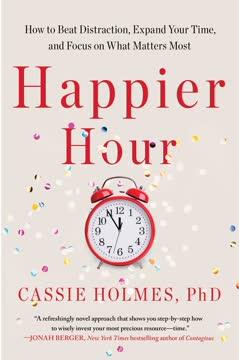
You know the feeling. It is Sunday evening and you are already dreading the week ahead. The calendar is packed with meetings, obligations, and commitments. Your to-do list has grown longer than your arm. Somewhere between work demands and family responsibilities, the idea of time for yourself has become laughable. You feel stretched thin, constantly behind, and vaguely guilty no matter what you are doing.
**Author:** Cassie Holmes **Estimated Reading Time:** 45 minutes
### What You'll Learn
How to transform your relationship with time so you feel less rushed, more present, and genuinely happier. You will discover why time poverty is largely a matter of perception, how to identify the activities that truly bring you joy, and practical strategies for protecting those moments from the constant pull of distraction.
### Who This Book Is For
Anyone who has ever said "I don't have enough time" while simultaneously spending hours scrolling on their phone. Busy professionals who feel stretched thin. Parents juggling competing demands. Students navigating overwhelming schedules. Anyone who suspects that the answer to happiness is not more time, but better use of the time they already have.
You know the feeling. It is Sunday evening and you are already dreading the week ahead. The calendar is packed with meetings, obligations, and commitments. Your to-do list has grown longer than your arm. Somewhere between work demands and family responsibilities, the idea of time for yourself has become laughable. You feel stretched thin, constantly behind, and vaguely guilty no matter what you are doing. If this sounds familiar, you are not alone. Nearly half of Americans report feeling time-poor. They do not have enough time to do what they want, and this feeling of scarcity takes a measurable toll. Time poverty leads to higher stress levels, increased anxiety, and a significant decrease in overall happiness. In fact, research shows that feeling time-poor can be as damaging to well-being as being unemployed. But here is the surprising truth that Cassie Holmes discovered through years of research at UCLA and Stanford: time poverty is largely a matter of perception. Two people can have identical schedules, identical demands, and identical responsibilities. One feels overwhelmed and depleted. The other feels in control and satisfied. The difference is not in their calendars. It is in how they think about and use their time. Holmes stumbled onto this insight through her own experience. As a young professor juggling research, teaching, and a growing family, she found herself constantly overwhelmed. She assumed the solution was better time management. She tried every productivity system, every calendar hack, every efficiency trick. Nothing worked. She still felt like she was drowning. Then she started studying the actual research on time and happiness. What she found changed everything. The problem was not that she had too little time. The problem was that she was spending her time on things that did not actually matter to her while allowing the things that did matter to get squeezed out. This book is the result of that discovery. It draws on decades of research from psychology, behavioral economics, and neuroscience…
Continue reading in the MinuteRead app
Get the complete 30-minute summary of Happier Hour
Get the complete summary in the appTime poverty is subjective. You have more control over how you feel about time than you think.
Relationships are the single biggest predictor of happiness. Prioritize them above everything else.
Identify your joyful tiles, the activities that reliably bring you happiness, and protect them fiercely.
Transform mundane activities by bundling them with enjoyable ones, reframing them, or practicing mindfulness.
Minimize distractions. Put your phone away during meals and conversations. Create boundaries around your attention.
Take a broader perspective. Ask yourself what will matter in the long run, not just what feels urgent now.
"Happier Hour" is a strong fit if you want practical ideas around self help, psychology, productivity, especially themes like time poverty is subjective. you have more control over how you feel about time than you think; relationships are the single biggest predictor of happiness. prioritize them above everything else. The MinuteRead summary distills these concepts into a focused read, whether you're deciding whether to buy the book or applying its lessons at work.
Cassie Holmes is a professor at UCLA's Anderson School of Management, specializing in time and happiness research. She holds a PhD from Stanford's Graduate School of Business and a BA in psychology from Columbia. Holmes is recognized for her award-winning teaching and research, which has been published in leading academic journals and featured in prominent media outlets such as NPR, the Economist, and the New York Times. Her work focuses on understanding the relationship between time management …
View all summaries by Cassie HolmesContinue Reading
Access the complete 30-minute summary and thousands more nonfiction books in the MinuteRead app.

Continue reading the complete summary in the MinuteRead app.