MinuteRead
15 min
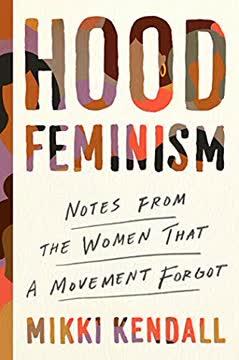
My grandmother did not call herself a feminist. She raised children, managed households, and cared for the families of white women who were breaking into the workforce. She did the work that made their liberation possible. Yet when she looked at the feminist movement, she did not see herself reflected in its priorities or its promises. She saw a movement concerned with advancing women who already had their basic needs met, while women like her were still fighting for food, shelter, and safety.
**Author:** Mikki Kendall
**Estimated Reading Time:** 45 minutes
**What You'll Learn:** Why mainstream feminism has failed the most vulnerable women, how issues like hunger, gun violence, housing instability, and education are feminist issues, and what it truly means to build a movement that serves all women rather than only the most privileged.
**Who This Book Is For:** Anyone who has ever felt that feminism did not speak to their lived experience. Anyone who wants to understand why the movement must address basic survival needs before it can talk about glass ceilings. Anyone ready to move beyond performative allyship and into meaningful action.
My grandmother did not call herself a feminist. She raised children, managed households, and cared for the families of white women who were breaking into the workforce. She did the work that made their liberation possible. Yet when she looked at the feminist movement, she did not see herself reflected in its priorities or its promises. She saw a movement concerned with advancing women who already had their basic needs met, while women like her were still fighting for food, shelter, and safety. This is the central tension that Mikki Kendall explores in Hood Feminism. The mainstream feminist movement has spent decades focused on issues that primarily affect middle-class and wealthy white women: breaking the glass ceiling, achieving equal representation in boardrooms, and accessing birth control on demand. These are important conversations. But they ignore a fundamental truth. Before a woman can worry about the corner office, she needs to know her children will eat tonight. Before she can fight for workplace equality, she needs to live in a neighborhood where gun violence does not dictate whether her son comes home from school. Kendall writes from experience. She has known poverty. She has been a single mother. She has lived in public housing. She understands that for millions of women, feminism is not an intellectual exercise or a political identity. It is a daily struggle for survival. And the movement that claims to speak for all women has largely abandoned them. The problem is not simply neglect. It is active exclusion. When white feminists call the police on Black children in public spaces. When reproductive rights advocates focus exclusively on abortion access while ignoring forced sterilization of women of color. When the movement demands that marginalized women wait patiently for equality while white women consolidate their own gains first. In each of these moments, feminism reveals its true priorities. Hood Feminism is a call to reckon with these failures. It demands that we expand our understanding of what counts as a feminist issue. Hunger is a feminist issue. Gun violence is a feminist issue. Housing instability is a…
Continue reading in the MinuteRead app
Get the complete 30-minute summary of Hood Feminism
Get the complete summary in the app**Basic needs are feminist issues.** Hunger, housing, healthcare, and safety must come before glass ceilings and board r
**Trickle-down feminism does not work.** Advancing privileged women does not automatically help everyone else. The most
**Gun violence is a women's issue.** Women are the ones surviving, grieving, and holding communities together in the aft
**Reproductive justice is bigger than abortion.** It includes the right to have children, not to have children, and to r
**The Strong Black Woman is a myth that kills.** It justifies medical neglect, dismisses pain, and denies Black women ca
**White women's political choices harm other women.** Gender solidarity does not automatically override racial privilege
"Hood Feminism" is a strong fit if you want practical ideas around feminism, race, social justice—especially themes like **basic needs are feminist issues.** hunger, housing, healthcare, and safety must come before glass ceilings and board r; **trickle-down feminism does not work.** advancing privileged women does not automatically help everyone else. the most. The MinuteRead summary distills these concepts into a focused read, whether you're deciding whether to buy the book or applying its lessons at work.
Микки Кендалл — автор, активист и культурный критик, известная своей работой в области интерсекционального феминизма и социальных вопросов. Она приобрела популярность благодаря своему присутствию в социальных сетях и публикациям на различных платформах. Опыт Кендалл включает в себя жизнь в бедности, одиночное родительство и проживание в общественном жилье, что формирует её взгляд на феминизм и социальные проблемы. Её тексты часто ставят под сомнение мейнстримные феминистские нарративы и выступаю…
View all summaries by Mikki KendallContinue Reading
Access the complete 30-minute summary and thousands more nonfiction books in the MinuteRead app.

Continue reading the complete summary in the MinuteRead app.