MinuteRead
30 min
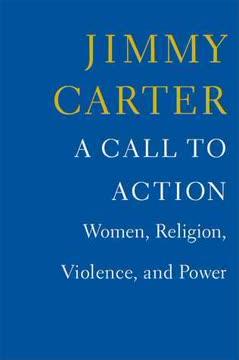
Book summary
by Jimmy Carter
Premium summary · Opens in the app · 30 min read
Most people believe the world is getting better for women. They point to female heads of state, women running Fortune 500 companies, and girls outperforming boys in schools across many developed nations. They assume that while problems remain, the trajectory is clear and progress is inevitable.
**Author:** Jimmy Carter
**Estimated Reading Time:** 45 minutes
**What You'll Learn:** The real state of women's rights around the world, the root causes of gender-based discrimination and violence, and what ordinary people can do to create meaningful change.
**Who This Book Is For:** Anyone who believes the world should be more just, who wants to understand why gender inequality persists despite decades of progress, and who is ready to move from awareness to action.
Most people believe the world is getting better for women. They point to female heads of state, women running Fortune 500 companies, and girls outperforming boys in schools across many developed nations. They assume that while problems remain, the trajectory is clear and progress is inevitable. Jimmy Carter wrote this book because that assumption is dangerously wrong. After leaving the White House in 1981, Carter dedicated his life to humanitarian work through The Carter Center. He traveled to more than 145 countries, negotiated peace agreements, monitored elections, and fought diseases in remote villages. But over decades of this work, he kept encountering something that disturbed him deeply. In country after country, across every religion and culture, he saw women treated as less than human. He saw girls denied education, women beaten by their husbands with impunity, young girls sold into marriage, and mothers dying in childbirth from preventable causes. The more he looked, the worse the picture became. And he realized that this was not a problem confined to developing nations or particular religions. It was everywhere. It was in the United States, where women earned less than men for the same work and held only a fraction of leadership positions. It was in wealthy European democracies. It was in every major religion, where selective interpretations of sacred texts were used to justify treating women as subordinate. Carter's central insight is uncomfortable but essential. The oppression of women is not a side effect of poverty or lack of education. It is not a problem that will naturally resolve as economies develop. It is a deliberate, systematic effort rooted in the belief that women are inferior to men. And this belief is often justified by religion. This is what makes Carter's perspective unique. He is a deeply religious man, a lifelong Baptist who taught Sunday school for decades. He does not attack religion. Instead, he argues that religious leaders have distorted their own sacred texts to maintain male dominance. He points out that Jesus treated women as equals in a society that did not, that the Prophet Muhammad improved conditions for women in seventh-century Arabia, and that Hindu scriptures contain powerful female deities. The problem is not faith itself. The problem is how men have interpreted faith…
Continue reading in the MinuteRead app
Get the complete 30-minute summary of A Call to Action
Get the complete summary in the appGender inequality is the most pervasive human rights violation in the world, affecting every country and culture.
The root cause is the belief that women are inferior to men, a belief that is taught and can be untaught.
Religion has been used to justify discrimination, but the true teachings of the world's great faiths support equality.
Violence against women is a global epidemic affecting one in three women, and it is enabled by cultural norms that blame
Child marriage and female genital cutting are systematic violations of girls' rights that persist because communities be
Human trafficking is modern slavery, driven by demand for commercial sex and cheap labor.
"A Call to Action" is a strong fit if you want practical ideas around politics, feminism, religion, especially themes like gender inequality is the most pervasive human rights violation in the world, affecting every country and culture; the root cause is the belief that women are inferior to men, a belief that is taught and can be untaught. The MinuteRead summary distills these concepts into a focused read, whether you're deciding whether to buy the book or applying its lessons at work.
James Earl Carter, Junior , known as Jimmy, served as the 39th President of the United States from 1977 to 1981. He focused on energy conservation, negotiated important treaties, and later won the 2002 Nobel Peace Prize. After his presidency, Carter founded a nongovernmental organization to advance human rights, observed elections, and worked on disease prevention in developing nations. He has been involved with Habitat for Humanity and vocal on the Palestinian conflict. Carter's post-presidency…
View all summaries by Jimmy CarterContinue Reading
Access the complete 30-minute summary and thousands more nonfiction books in the MinuteRead app.

Continue reading the complete summary in the MinuteRead app.