MinuteRead
30 min
Book summary
Premium summary · Opens in the app · 30 min read
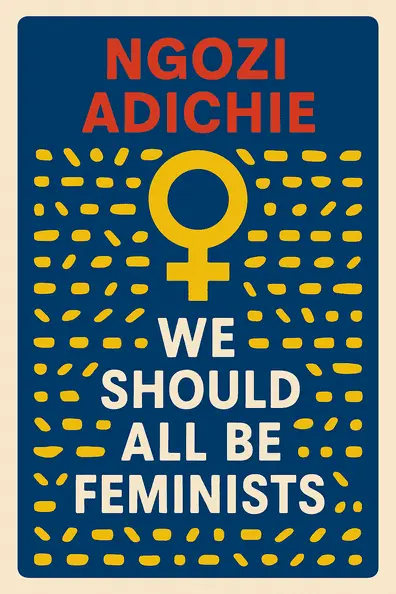
Chimamanda Ngozi Adichie did not set out to become a feminist icon. In fact, for much of her early life, she did not call herself a feminist at all. The word felt heavy, loaded with assumptions she did not recognize in herself. She liked lip gloss. She wore high heels. She did not hate men. So when a friend first called her a feminist, she bristled.
**Author:** Chimamanda Ngozi Adichie **Estimated Reading Time:** 35 minutes
### What You'll Learn
Why the word "feminist" carries so much unnecessary weight, how gender expectations quietly shape every life, and what a fairer world would actually look like for both women and men.
### Who This Book Is For
Anyone who has ever wondered why gender roles feel so rigid, questioned whether feminism is still relevant, or wanted a clear and human explanation of why equality benefits everyone.
Chimamanda Ngozi Adichie did not set out to become a feminist icon. In fact, for much of her early life, she did not call herself a feminist at all. The word felt heavy, loaded with assumptions she did not recognize in herself. She liked lip gloss. She wore high heels. She did not hate men. So when a friend first called her a feminist, she bristled. The moment that changed her thinking came during a conversation with a male friend in Nigeria. He had just read one of her novels and offered what he considered a compliment. He told her she should not call herself a feminist because feminists were unhappy women who could not find husbands. The comment stung, not because it was original, but because it revealed something deeper. The word "feminist" had become so distorted that it no longer meant what it was supposed to mean. That conversation forced Adichie to confront a question many people avoid. Why does the pursuit of gender equality make people so uncomfortable? Why is a word that simply describes the belief that men and women should have equal rights treated as an accusation? The answer, she discovered, lies in how deeply gender shapes our lives from the very beginning. Before we learn to walk, we are sorted into categories that determine what toys we play with, what clothes we wear, what emotions we are allowed to express, and what futures we are permitted to imagine. These categories feel natural because we have never known a world without them. But they are not natural. They are constructed. And they come at a cost. Adichie grew up in Nigeria, but she is careful to point out that gender inequality is not an African problem or a Western problem. It is a human problem. In Lagos, a woman who speaks her mind in a meeting is called aggressive. In New York, a woman who negotiates her salary is called difficult. The details change, but the pattern remains. Women are expected to shrink, to accommodate, to make themselves smaller so that others can feel bigger. The cost of this arrangement is not borne by women alone. Men suffer too, though their suffering is often harder to see.…
Continue reading in the MinuteRead app
Get the complete 30-minute summary of We Should All Be Feminists
Get the complete summary in the appFeminism is the belief in equality, nothing more and nothing less.
Gender roles are socially constructed, not biologically determined.
The narrow definition of masculinity harms men as well as women.
Girls are taught to shrink themselves from an early age.
Women face systemic discrimination that is often invisible to those who do not experience it.
Culture is constantly changing, and harmful practices can be changed.
"We Should All Be Feminists" is a strong fit if you want practical ideas around feminism, essays, politics, especially themes like feminism is the belief in equality, nothing more and nothing less; gender roles are socially constructed, not biologically determined. The MinuteRead summary distills these concepts into a focused read, whether you're deciding whether to buy the book or applying its lessons at work.
Chimamanda Ngozi Adichie is a renowned Nigerian author whose work has gained international acclaim. Her novels, including Purple Hibiscus and Half of a Yellow Sun, have won numerous awards and been translated into over 30 languages. Adichie's writing often explores themes of identity, culture, and gender. Her TED Talks on storytelling and feminism have garnered millions of views, with "We Should All Be Feminists" sparking a global conversation and later being published as a book. Adichie divides…
View all summaries by Chimamanda Ngozi AdichieContinue Reading
Access the complete 30-minute summary and thousands more nonfiction books in the MinuteRead app.

Continue reading the complete summary in the MinuteRead app.