MinuteRead
30 min
Book summary
Premium summary · Opens in the app · 30 min read
There is a particular kind of suffering that rarely shows on the outside. A person can look perfectly well, hold a conversation, go to work, and yet be fighting a private battle with a racing heart, a churning stomach, waves of dizziness, and thoughts that will not settle. This is the world of nervous illness, and it is far more common than most people realize.
**Author:** Claire Weekes
**Estimated Reading Time:** 45 minutes
**What You'll Learn:** Why nervous suffering feels so frightening, how fear perpetuates the cycle of symptoms, and a practical method for recovery based on facing, accepting, and floating through anxiety rather than fighting it.
**Who This Book Is For:** Anyone who has experienced panic, chronic anxiety, nervous exhaustion, or the frustrating cycle of fearing their own symptoms. Also for family members who want to understand and support a loved one through recovery.
There is a particular kind of suffering that rarely shows on the outside. A person can look perfectly well, hold a conversation, go to work, and yet be fighting a private battle with a racing heart, a churning stomach, waves of dizziness, and thoughts that will not settle. This is the world of nervous illness, and it is far more common than most people realize. The tragedy is that so many who suffer in this way believe they are alone. They believe something uniquely wrong with them, something that doctors cannot quite identify and friends cannot quite understand. They visit physicians, undergo tests, and receive reassurance that nothing is physically wrong. Yet the symptoms persist. The heart still pounds. The mind still races. The fear still comes in waves. This is where Claire Weekes enters. Dr. Weekes was an Australian physician who spent decades working with people suffering from what she called "nervous illness." She was not content to simply prescribe sedatives and send patients home. She listened. She observed. She began to notice patterns in how nervous suffering developed, how it perpetuated itself, and most importantly, how it could be overcome. What she discovered was both simple and profound. Nervous illness is not a mysterious disease. It is not a sign of weakness or a character flaw. It is, at its core, a state of extreme sensitivity and fatigue brought on by prolonged stress and maintained by fear. The symptoms that feel so frightening are actually normal bodily reactions that have become exaggerated and self-perpetuating. The problem, Weekes realized, is not the initial symptoms. The problem is how people respond to them. When a person experiences a racing heart or a wave of dizziness, they naturally become frightened. That fear produces more adrenaline, which intensifies the symptoms, which produces more fear. Before long, the person is trapped in a cycle that feels impossible to escape. Weekes' great contribution was to show that this cycle can be broken. Not through willpower, not through fighting, not through avoiding situations that trigger symptoms. The way out is through a counterintuitive approach: facing the fear, accepting the symptoms, floating through the experience, and letting time do its healing work. This book is a…
Continue reading in the MinuteRead app
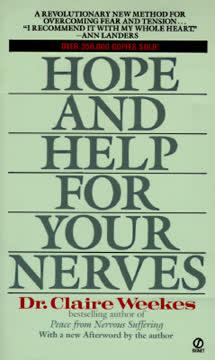
Get the complete 30-minute summary of Hope and Help for Your Nerves
Get the complete summary in the appNervous illness is extreme fatigue maintained by fear, not a mysterious disease or character flaw.
Your symptoms are normal stress reactions that have become intensified. They are uncomfortable but not dangerous.
Every panic episode involves two fears. The second fear, the fear of the first fear, is what keeps the cycle going.
The core method is Face, Accept, Float, Let Time Pass.
Fighting symptoms makes them worse. Acceptance reduces their power.
True acceptance means being willing to have symptoms present, even if they do not go away.
"Hope and Help for Your Nerves" is a strong fit if you want practical ideas around health & fitness, self help, psychology, especially themes like nervous illness is extreme fatigue maintained by fear, not a mysterious disease or character flaw; your symptoms are normal stress reactions that have become intensified. they are uncomfortable but not dangerous. The MinuteRead summary distills these concepts into a focused read, whether you're deciding whether to buy the book or applying its lessons at work.
Dr. Hazel Claire Weekes was an Australian general practitioner, health writer, and pioneering researcher in anxiety treatment. Initially working in comparative reproduction, she later focused on helping people with anxiety disorders. Her books on the subject continue to influence modern cognitive therapy and self-help literature. Weekes developed a simple yet effective approach to managing anxiety, emphasizing understanding and acceptance of symptoms rather than fighting them. Her work earned he…
View all summaries by Claire WeekesContinue Reading
Access the complete 30-minute summary and thousands more nonfiction books in the MinuteRead app.

Continue reading the complete summary in the MinuteRead app.