MinuteRead
30 min
Book summary
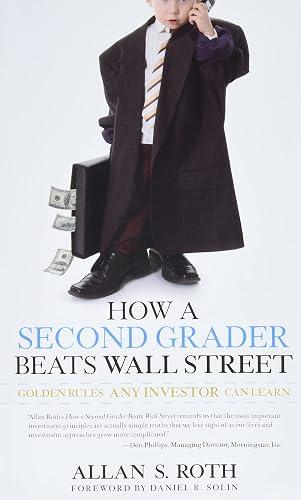
by Allan S. Roth
Premium summary · Opens in the app · 30 min read
Wall Street has a problem. The financial industry spends billions of dollars convincing you that investing is complicated, that you need experts, that sophisticated strategies and complex products are the only path to wealth. They hire brilliant mathematicians, build powerful computers, and create intricate financial instruments that few people truly understand.
**Author:** Allan S. Roth **Estimated Reading Time:** 45 minutes
Why a child's simple arithmetic beats the complex strategies of Wall Street professionals. How to build a portfolio that outperforms most experts using nothing more than low-cost index funds, patience, and common sense. Why the financial industry profits when you believe investing is complicated, and how to reclaim your money by embracing simplicity.
Anyone who has ever felt confused by investing. Anyone who suspects their financial advisor might not have their best interests at heart. Anyone who wants to grow wealth without spending hours researching stocks or watching financial news. And anyone who appreciates the wisdom of a second grader's straightforward logic.
Wall Street has a problem. The financial industry spends billions of dollars convincing you that investing is complicated, that you need experts, that sophisticated strategies and complex products are the only path to wealth. They hire brilliant mathematicians, build powerful computers, and create intricate financial instruments that few people truly understand. Then a second grader walks in and beats them all. The child doesn't have an MBA. She doesn't know how to read a balance sheet or analyze a price-to-earnings ratio. She can't explain derivatives or hedge funds or structured products. What she can do is simple arithmetic. And that simple arithmetic, it turns out, is more powerful than all the complexity Wall Street can muster. The equation is this: 10 minus 2 equals 8. When the stock market returns 10 percent in a given year, and you pay 2 percent in fees to your mutual fund, your advisor, or your insurance company, you keep 8 percent. The second grader understands this instantly. Wall Street hopes you never think about it. Allan Roth wrote this book because he watched too many people lose too much money to the financial industry's complexity machine. As a financial planner, he saw clients arrive with portfolios stuffed with expensive funds, unnecessary insurance products, and confusing annuities. They had been sold the idea that complexity equaled sophistication, that higher fees meant better management, that paying more would somehow yield more. The reality is precisely the opposite. Every dollar you pay in fees is a dollar that leaves your pocket forever. It doesn't buy you better returns. In fact, the evidence shows overwhelmingly that higher fees lead to lower returns. The financial industry has built a massive wealth transfer machine, moving money from your account to theirs, and they've done it by making investing seem far more difficult than it actually is. This book strips away the confusion. It explains why a simple portfolio of low-cost index funds outperforms the vast majority of professional money managers. It shows why diversification across the entire global market…
Continue reading in the MinuteRead app
Get the complete 30-minute summary of How a Second Grader Beats Wall Street
Get the complete summary in the app**10 minus 2 equals 8.** Market returns minus costs equals your returns. Minimize costs.
**Use index funds.** They capture the market's return at minimal cost and beat most active managers.
**Diversify globally.** Own U.S. stocks, international stocks, and bonds through three simple index funds.
**Control your behavior.** Don't buy high and sell low. Stick to your plan through market cycles.
**Choose your asset allocation wisely.** It determines most of your results. Pick an allocation you can maintain.
**Be tax-efficient.** Place tax-inefficient investments in tax-advantaged accounts.
"How a Second Grader Beats Wall Street" is a strong fit if you want practical ideas around finance, money, business, especially themes like **10 minus 2 equals 8.** market returns minus costs equals your returns. minimize costs; **use index funds.** they capture the market's return at minimal cost and beat most active managers. The MinuteRead summary distills these concepts into a focused read, whether you're deciding whether to buy the book or applying its lessons at work.
Motivated to turn hard-won expertise into something readers can use every day, Allan S. Roth wrote “How a Second Grader Beats Wall Street” to distill the ideas behind the work into clear, actionable lessons. Through “How a Second Grader Beats Wall Street”, Allan S. Roth distills the core ideas on finance into lessons readers can absorb in a single short sitting. Readers turn to this work when they want Allan S. Roth's perspective on the subject without working through the entire original volume.…
Continue Reading
Access the complete 30-minute summary and thousands more nonfiction books in the MinuteRead app.

Continue reading the complete summary in the MinuteRead app.